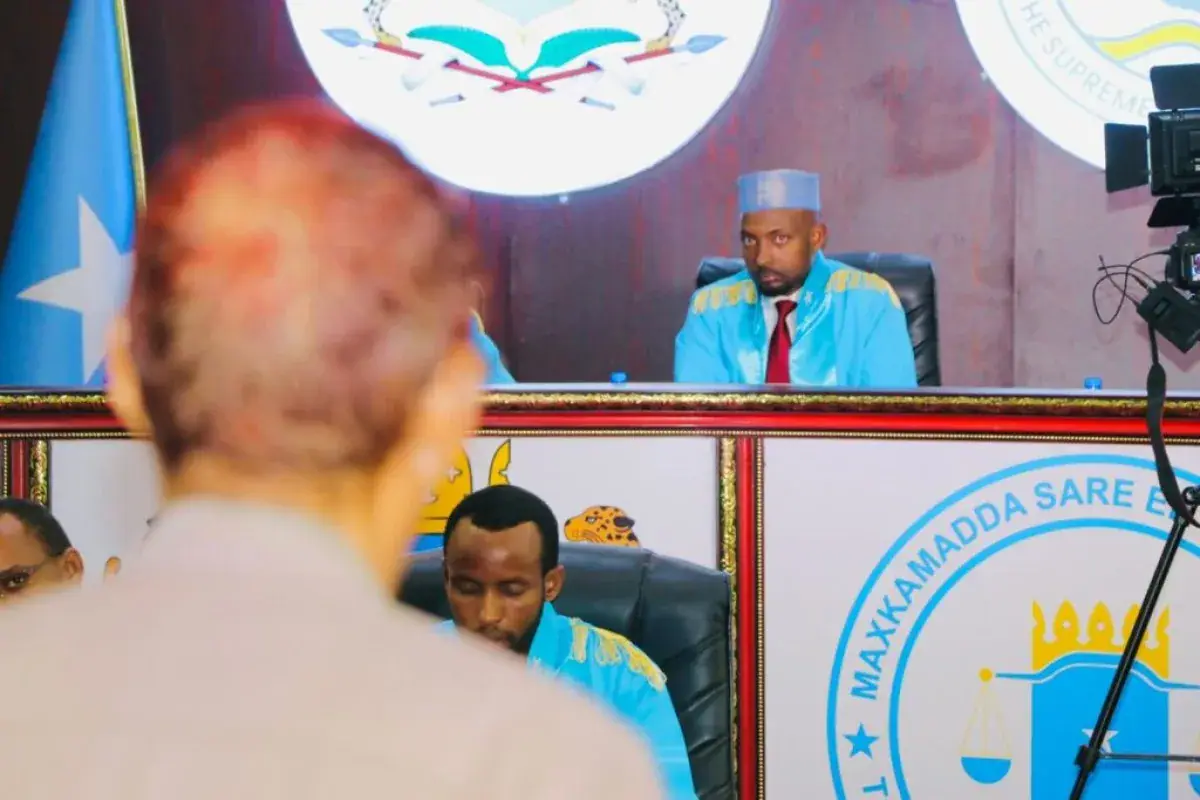
Somalia's Supreme Court has ruled that President Hassan Sheikh Mohamud's term extension was unlawful, sparking a deeper political crisis in the country. The court's decision, delivered on Thursday, has intensified tensions between the government and opposition groups, with accusations of interference in the judiciary and concerns over the country's constitutional order. Residents of Mogadishu have expressed sharply divided views on the ruling, with some welcoming the court's decision and others questioning its position.
The dispute over presidential mandate has been a major point of contention in Somalia's politics. President Mohamud has sought to move the country towards a fully democratic electoral system, replacing the longstanding clan-based arrangement. However, his opponents have rejected the proposed changes, describing them as a political power grab. The dispute escalated after Mohamud declared a transition period that effectively extended his presidency by one year following the expiration of his mandate in May.
The Supreme Court's ruling has significant implications for Somalia's political future. The court called on political parties to reach a new agreement within 30 days and urged that elections be held within 90 days. However, the president's office announced that Chief Justice Bashe Yusuf Ahmed had been dismissed, citing concerns about the need for an efficient and fair judiciary. The Supreme Court rejected the move, arguing that the president had no constitutional authority to remove the chief justice.
The dispute has exposed longstanding divisions within Somalia's political establishment. Most opposition groups and regional administrations boycotted the parliamentary vote on constitutional amendments in March, with some claiming they had been prevented from participating. The disagreements later spilled onto the streets, with violent clashes between rival political factions reported in Mogadishu in June.
The political instability comes as Somalia continues to battle the Al-Qaeda-linked militant group Al-Shabaab, which maintains control over parts of the country and has waged an insurgency against the government for years. The security situation has been further complicated by declining international support for the military campaign against the group. International donors have expressed frustration over the limited progress against the militants and persistent political divisions.
The Supreme Court's ruling has added another layer of uncertainty to Somalia's political crisis, raising questions about the country's leadership, the independence of its judiciary, and the future of its planned democratic transition. Former Prime Minister Hassan Ali Khaire accused the president of launching an assault on the judiciary and deploying troops to the court's premises. He called on Somalis across the country to defend constitutional governance.
With political tensions escalating, international assistance under pressure, and the fight against Al-Shabaab continuing, Somalia faces mounting challenges to its political stability and security. The country's future hangs in the balance as it navigates this complex crisis. The international community is watching closely, and it remains to be seen how the situation will unfold in the coming weeks and months.
Key points
- The Supreme Court's ruling has significant implications for Somalia's political future, with the court calling for a new agreement within 30 days and elections within 90 days.
- The dispute has exposed longstanding divisions within Somalia's political establishment, with opposition groups and regional administrations boycotting the parliamentary vote on constitutional amendments.
- The political instability comes as Somalia continues to battle the Al-Qaeda-linked militant group Al-Shabaab, which maintains control over parts of the country and has waged an insurgency against the government for years.