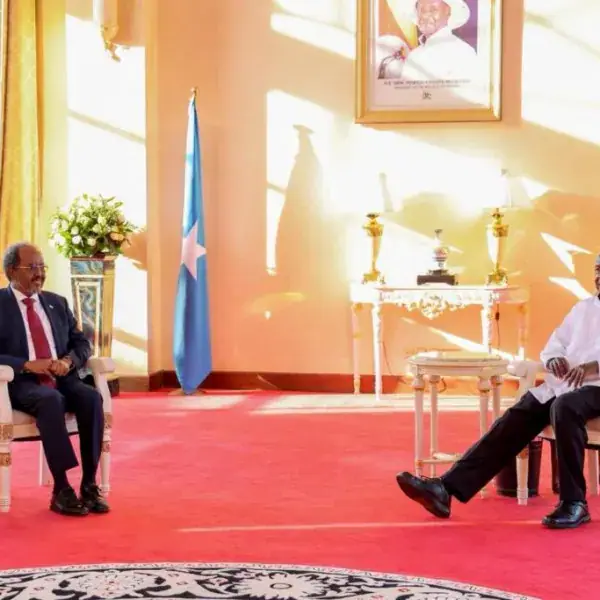
Somali President Hassan Sheikh Mohamud has traveled to Uganda, a move that comes as the country grapples with a deepening dispute over federal elections. The president's trip follows his recent invitation to opposition groups and leaders of semi-autonomous states to talks aimed at addressing the crisis. The talks, scheduled for next month, are seen as a crucial step towards resolving the impasse over the country's electoral system. The Somali presidency has not publicly confirmed that the trip is directly linked to the election dispute.
The timing of President Hassan Sheikh's trip to Uganda has drawn attention to Kampala's potential role in efforts to ease the political crisis in Somalia. During a meeting in Entebbe in August 2026, Ugandan President Yoweri Museveni reportedly pressed Hassan Sheikh to engage with Somali opposition groups and seek a negotiated settlement to the country's growing political crisis. Museveni also reportedly warned that Uganda could withdraw its troops from Somalia if the government failed to reach an agreement with political stakeholders opposed to its proposed electoral system.
The opposition has accused the administration of pursuing an electoral framework that has deepened political divisions and created uncertainty over the country's democratic transition. Uganda, a major troop contributor to the African Union Support and Stabilization Mission in Somalia (AUSSOM), is concerned that a prolonged political deadlock in Mogadishu could distract the government and security institutions from counterinsurgency operations. This could undermine the stability of the African Union mission, which supports Somali security forces in their fight against Al-Shabaab.
President Museveni has reportedly urged Somali leaders to engage in inclusive dialogue, stressing the need for a political settlement that would allow the country to maintain its security gains and strengthen state institutions. Uganda has also emphasized the importance of building a capable Somali national army that can eventually assume full responsibility for the country's security as African Union forces withdraw. The transition is part of broader plans to transfer security duties to Somali forces by 2027.
Uganda has played a central role in international security efforts in Somalia for years, with its troops forming a key part of the African Union's military presence. The political dispute in Somalia therefore carries implications beyond the electoral process, potentially affecting the fight against Al-Shabaab and plans to transfer security responsibilities to Somali forces. President Hassan Sheikh's invitation to opposition leaders and the subsequent trip to Uganda come at a sensitive moment for Somalia.
The country's electoral crisis has been escalating, with the president's term in office and the country's electoral system being key points of contention. President Hassan Sheikh's term expired in May 2026, but he has not yet been succeeded. The opposition has expressed concerns over the government's proposed electoral framework, which they believe will deepen divisions and undermine the country's democratic transition.
The international community is closely watching the developments in Somalia, with Uganda's President Museveni expressing concern that Ugandan troops could face continued risks while Somali political leaders remain divided over the distribution of power and the electoral process. The situation in Somalia remains uncertain, with the outcome of the talks between the government and opposition groups yet to be seen.
Key points
- President Hassan Sheikh Mohamud's trip to Uganda is seen as a crucial step towards resolving the electoral crisis in Somalia.
- The opposition has accused the administration of pursuing an electoral framework that has deepened political divisions.
- Uganda has emphasized the importance of building a capable Somali national army that can assume full responsibility for the country's security.