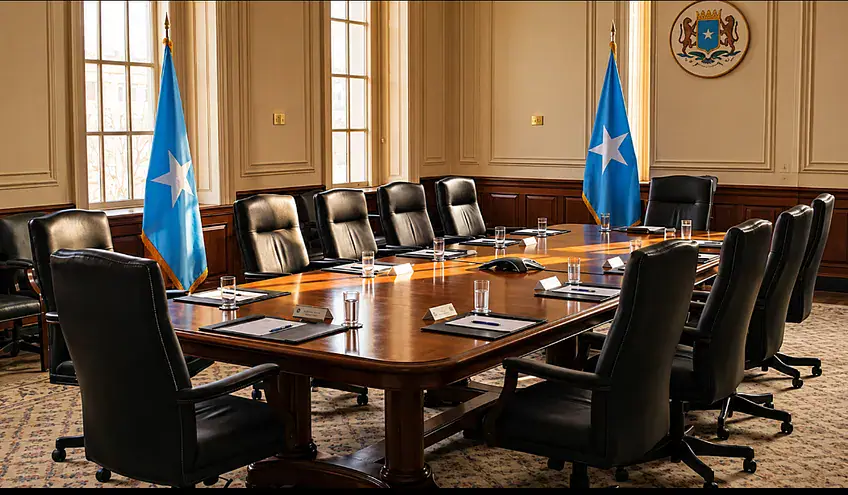
Somalia's national consultative forum, called by Villa Somalia, ended without a resolution after five days of empty chairs. The forum's collapse comes amid a diplomatic rupture with the United Arab Emirates, with the administration giving the UAE ambassador 72 hours to leave the country. This recent development is a culmination of escalating tensions between the incumbent administration and the opposition.
The standoff follows a Supreme Court ruling that a unilateral term extension was unlawful and ordered the country to hold elections within 90 days. Instead of respecting the judgment, the administration issued a decree dismissing Chief Justice Bashe Yusuf Ahmed and swore in a handpicked replacement, sparking condemnation from UN legal experts. The move was seen as an assault on judicial independence.
The failure of the November 14-18 talks exposes a deeper trap that implicates more than just the presidency. Somalia is caught between two equally dangerous dead ends: an incumbent administration trying to govern by executive decree and diplomatic brinkmanship, and a fractured opposition caught between regional blocs boycotting the capital and factions quietly testing separate side-deals.
The Supreme Court's ruling has handed the country a clear constitutional clock. To move forward, the political class must de-escalate tensions with the judiciary, move talks to a neutral venue under international facilitation, insulate security and foreign policy from election politics, and negotiate an audited, consensus roadmap. These steps are crucial to preventing the unraveling of the state.
The citizens of Somalia's capital have endured decades of sacrifice, displacement, and insecurity to keep the heart of the republic beating. They deserve better than having their city turned into a militarized staging ground for political survival. The millions of Somalis across every region who rely on a functioning federal state also deserve better than watching the entire political class fight over who controls the referees.
The era of one faction dictating terms to the rest of the republic is over. The empty chairs at Villa Somalia are a warning. Either Somali leaders summon the maturity to sit at a neutral table and forge a broad, constitutional settlement, or they will preside over the unraveling of the very state they are fighting to lead. The country's future hangs in the balance.
The international community is watching closely, with the US, UK, EU, and Turkey facilitating talks. The outcome will determine the course of Somalia's history. A negotiated settlement that prioritizes the country's stability and prosperity is essential. The Somali people expect their leaders to put the nation's interests above personal ambitions.
Key points
- The national consultative forum ended without a resolution due to the incumbent administration's actions.
- The Supreme Court's ruling has handed the country a clear constitutional clock.
- Somalia's future hangs in the balance as leaders consider their next steps.
Reporting sources
- Empty Chairs at Villa Somalia · Puntland Post