Somalia is facing a critical challenge as its political elite fails to adapt to changing circumstances, leaving the country exposed to various threats. The nation's direction is shaped by the outlook, character, and conduct of its elite, particularly those entrusted with political leadership. Leaders influence how citizens understand domestic challenges and international threats through their priorities and public discourse. Somalia's current situation is a prime example of the consequences of fixed thinking while the world around them changes.
The country's political settlement, which rested on federalism, a parliamentary system, elections every four years, and power-sharing, is being dismantled. This settlement provided guarantees for a fragmented country to rebuild common institutions while protecting the participation and representation of its constituent communities. The settlement depended on compromise, consensus-building, and shared leadership, as no single actor possessed sufficient authority or legitimacy to determine the country's direction alone. Hassan Sheikh's approach has undermined the settlement's foundations and the practices that sustained it.
The current government's approach is characterised by centralisation, presidential dominance, mandate extension, and concentrated authority. This approach is accompanied by an attitude that conveys a disregard for consultation and collective deliberation. The expression "loo joojin maayo" ("We will proceed regardless of objections") and "talo dhexda la dhigayo ma jirto" ("decisions are not open to collective deliberation") capture the government's mindset. This approach has led to the erosion of confidence in institutions' ability to protect interests and resolve disputes.
The government's policy has created strategic vulnerability by dismantling the political settlement and combining transactional politics with intimidation reinforced by foreign backing. Opponents feel threatened, humiliated, and politically subjugated, leading them to seek guarantees outside institutions. Disputes that could have been resolved through negotiation have created openings for armed mobilisation and external involvement. The government bears primary responsibility for preventing this deterioration, as it controls federal institutions.
Three strategic shifts make Somalia's vulnerabilities especially dangerous. Firstly, Al-Shabaab appears to be exploiting political fractures through greater tactical flexibility, accommodating forces associated with displaced administrations and aggrieved clans. This flexibility should not be confused with moderation, as temporary accommodation can advance an insurgent project without changing its objectives. The consequences of this accommodation may outlast the arrangement, establishing an insurgent foothold that cannot be subsequently removed.
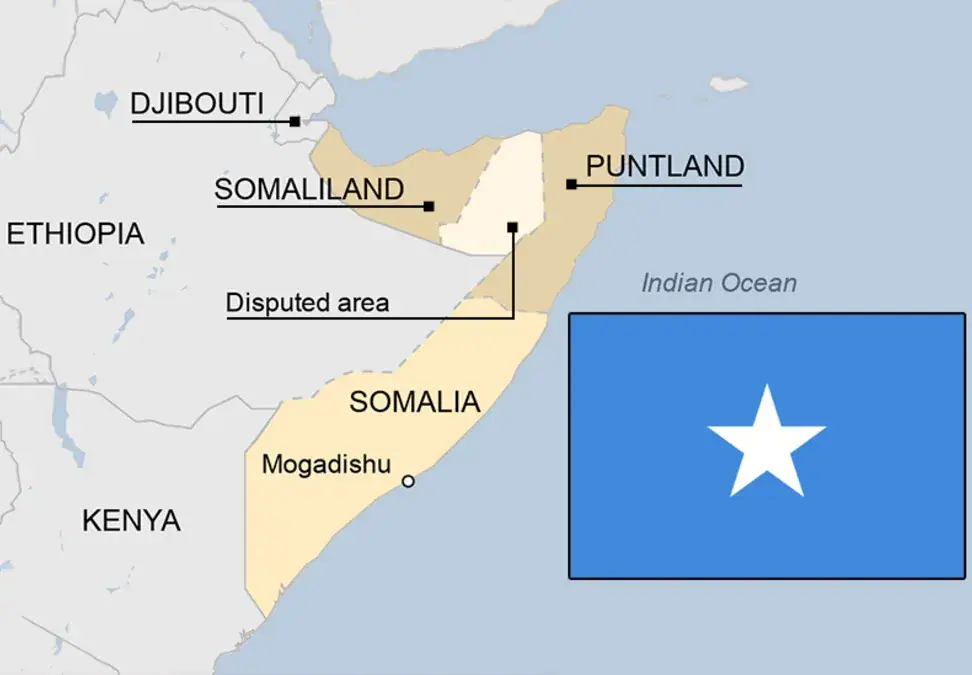
Regional powers may find opportunities in Somalia's instability, although their objectives differ. One may seek to preserve a local partner, another to weaken a geopolitical rival, and another to erode Somali sovereignty by deepening fragmentation and limiting the country's ability to act independently. As Somali actors seek external backing, domestic confrontations become entangled with competition across the Horn of Africa, the Red Sea, and the Middle East.
The government's opponents remain accountable for their choices, but government policy must also be judged by the reactions it encourages and the vulnerabilities it creates. No political grievance justifies cooperation with Al-Shabaab, but condemning such cooperation cannot substitute for addressing the exclusion that weakens collective resistance to insurgency. The situation requires a negotiated national undertaking, rather than a presidential project that others are expected to accept.
Key points
- The Somali government's approach has undermined the country's political settlement, leading to strategic vulnerability and exploitation by insurgents and regional powers.
- Al-Shabaab is adapting its tactics to exploit political fractures, while regional powers are recalculating their interests in the region.
- The government's policy has created openings for armed mobilisation and external involvement, making Somalia's vulnerabilities especially dangerous.