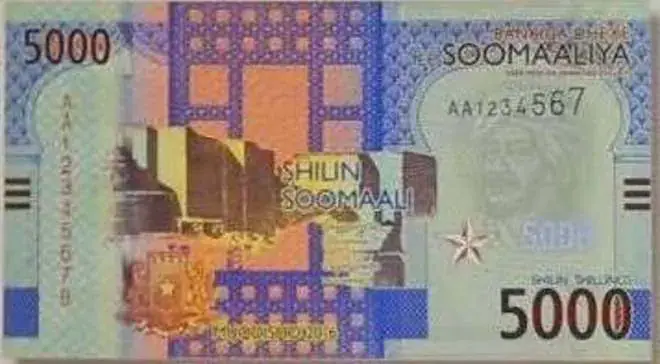
Somalia's government is planning to introduce a new currency, the Shilinka Soomaaliga, after over 30 years without a new national currency. The country's economy is heavily reliant on the US dollar. The introduction of a new currency is not just about printing new banknotes, but also about rebuilding trust in the country's monetary system. Dr. Saadaq Maxamuud Xasan, Ph.D., has emphasized the need for a well-planned approach.
Dr. Xasan has suggested that the government focus on several key aspects, including establishing a Currency Board Arrangement (CBA) to ensure the new currency is backed by sufficient foreign exchange reserves. A fixed exchange rate is not enough to maintain the value of the currency; a legal and financial framework is needed to guarantee the new currency's stability. The framework should include reserves covering 100-110% of the currency's liabilities.
The fixed exchange rate should be based on a technical study considering market rates, purchasing power, wages, commodity prices, and the state of the banking system. It should not be determined by a political decision or mere desire. The government must also ensure the protection of foreign exchange reserves, which should not be used to finance government budgets, cover political expenses, or bail out commercial banks.
The Central Bank of Somalia must maintain its independence in managing the monetary system, free from political pressure to issue currency without sufficient reserves. Strict regulations should be implemented to prevent direct government financing using the new currency. A special financial rescue mechanism is also needed to address potential banking crises and liquidity issues.
The Central Bank should regularly disclose data on foreign exchange reserves, currency issuance, and reserve coverage to ensure transparency and accountability. An independent auditor should also be appointed to oversee the process. The experience of countries like Hong Kong, Bulgaria, and Estonia shows that a Currency Board Arrangement can contribute to currency stability with robust laws, sufficient reserves, and reliable institutions.
In contrast, Argentina's experience in the 1990s demonstrates that announcing a fixed exchange rate does not guarantee currency stability if fiscal discipline and banking regulations are weak. The national discussion should focus on ensuring the new Shilinka Soomaaliga can maintain its purchasing power for the Somali people, both now and in the future.
The introduction of a new currency is a crucial step, but it requires careful planning and consideration of the potential risks. The government must prioritize economic stability, public trust, and transparency to ensure the success of the new currency. By doing so, Somalia can rebuild its monetary system and promote economic growth.
Key points
- Establishing a Currency Board Arrangement with sufficient foreign exchange reserves is crucial for the stability of the new currency.
- The fixed exchange rate should be based on a technical study considering market rates and economic indicators.
- The Central Bank of Somalia must maintain its independence and transparency in managing the monetary system.