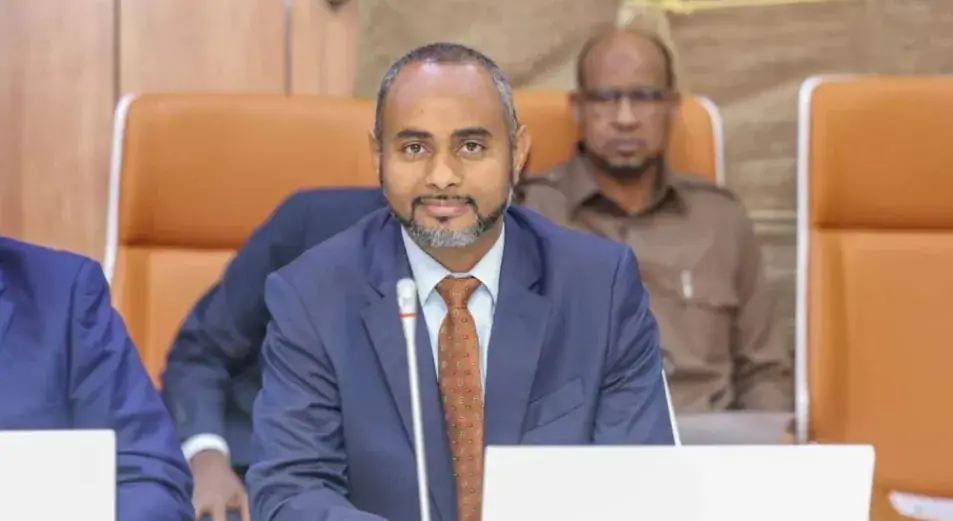
Somalia's parliamentary speaker Abdulkadir Mohamed Nur, also known as Jaamac, has made alarming accusations against neighbouring countries, claiming that Kenya, Ethiopia and Uganda are colluding with militant group Al-Shabaab to undermine the federal government. He made these allegations during a conference on Somalia's economic resources organised by Magan Forum in Mogadishu. Nur warned that foreign powers are seeking to recolonise Somalia and urged citizens to defend the country's sovereignty.
Nur's accusations are not new; he has previously questioned the role of Ethiopian troops serving under the African Union Support and Stabilisation Mission in Somalia (AUSSOM) in areas where Al-Shabaab operates. He also accused Kenya of providing shelter to individuals linked to militant activities, specifically referring to former South West State leader Abdiaziz Hassan Mohamed Laftagareen, who has been based in Nairobi since March. Kenyan officials had received no formal diplomatic complaint from Somalia at the time.
The allegations come amid a political and security crisis in South West State, where federal forces took control of Baidoa in March, removed Laftagareen and installed Aden Mohamed Nur, known as Madobe, as the region's leader. Forces loyal to Laftagareen later captured several towns in the Bay region, including Buurhakaba, Qansahdhere and Berdaale, in October. This fighting has complicated government operations against Al-Shabaab and displaced civilians.
In October, Somalia's federal government imposed financial sanctions on Laftagareen and nine others over alleged links to the financing of Al-Shabaab. The government cited an assessment of available information and evidence but did not publicly disclose details against each individual. Nur's comments also come as relations between Mogadishu and the United Arab Emirates deteriorate, following Somalia's cancellation of agreements with the UAE in January due to sovereignty concerns.
Tensions escalated in November after President Hassan Sheikh Mohamud accused Abu Dhabi of interfering in Somalia's internal affairs and supporting armed groups outside federal control. On November 19, Somalia's Cabinet ordered the UAE ambassador to leave within 72 hours and recalled its envoy from Abu Dhabi. The UAE condemned the decision as hostile and escalatory.
At the conference, Nur called for greater economic self-reliance, urging Somalia to increase domestic production in agriculture, livestock, fisheries, manufacturing and mining. He said improved security and efforts to defeat Al-Shabaab were essential to attracting investment and developing the economy. This call for self-reliance comes as Somalia seeks to strengthen its economy and reduce dependence on external aid.
The situation in Somalia remains complex, with ongoing security challenges and a fragile political landscape. Nur's allegations against Kenya, Ethiopia and Uganda have added to the tensions in the region, and it remains to be seen how these accusations will impact Somalia's relations with its neighbours. The country's federal government will need to navigate these challenges carefully to maintain stability and promote economic growth.
Key points
- Somalia's parliamentary speaker accused Kenya, Ethiopia and Uganda of colluding with Al-Shabaab against the federal government.
- The allegations come amid a political and security crisis in South West State and strained relations with the United Arab Emirates.
- Nur called for greater economic self-reliance, urging Somalia to increase domestic production in key sectors.