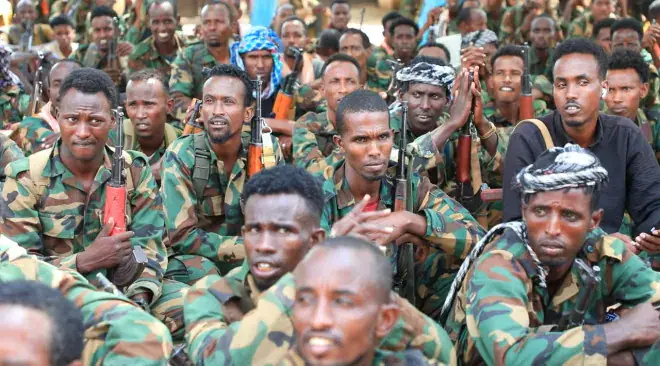
Somalia is facing a critical political juncture as tensions escalate between the federal government, led by President Hassan Sheikh Mohamud, and political voices in Hiiraan. The growing rift reflects a deeper national crisis, including the absence of political consensus and declining public confidence in federal institutions. Disagreements over the legitimacy of the country's political transition have raised concerns about stability. The warning from Hiiraan should not be dismissed as a regional security issue but understood as a call for a peaceful and negotiated solution to the country's political problems.
At the center of the dispute is the question of President Hassan Sheikh Mohamud's constitutional mandate, with critics arguing that his term expired on May 15, 2026. The government and its opponents must resolve this disagreement through constitutional procedures and political negotiations. The people of Hiiraan have a legitimate right to express their grievances and demand accountability from the federal government. However, military warnings must not lead to armed confrontation, given Somalia's history of conflict.
The international community, including the US, UK, European Union, African Union, IGAD, and United Nations, must engage to prevent violence and encourage political negotiations. Their focus should be on supporting a peaceful constitutional transition. President Hassan Sheikh Mohamud must recognize that political authority cannot be sustained through military pressure or unilateral decisions. The disagreement over his presidential mandate requires a credible constitutional process and an electoral agreement accepted by major stakeholders.
The Supreme Court's reported November 2026 ruling that the presidential and parliamentary mandates have expired adds urgency to the situation. The court reportedly called for an electoral agreement within 30 days and elections within 90 days. This development highlights the need for the government and opposition to respect constitutional procedures and establish an agreed electoral timetable.
The international community can take five urgent steps to address the crisis: prevent military escalation, support constitutional order, facilitate inclusive negotiations, demand credible elections, and guarantee a peaceful transition. These measures aim to ensure that no political leader uses state institutions or security forces to remain in power outside an agreed constitutional framework.
Somalia's international partners have invested heavily in security, institution-building, and humanitarian assistance. It would be a tragic failure if these investments were undermined by political leaders unwilling to compromise. The people of Hiiraan deserve to be heard, and their concerns should be addressed through political dialogue rather than dismissed as a security threat.
The situation in Somalia requires responsible leadership, constitutional accountability, national reconciliation, and credible elections. President Hassan Sheikh Mohamud should accept the need for a negotiated political settlement and respect the judicial process. The international community must act to prevent another national tragedy and ensure that Somalia moves toward fair elections, avoiding another civil war.
Key points
- The international community must engage to prevent violence and encourage political negotiations in Somalia.
- President Hassan Sheikh Mohamud's constitutional mandate is disputed, with critics arguing that his term expired on May 15, 2026.
- Somalia needs credible elections, national reconciliation, and responsible leadership to avoid another civil war.