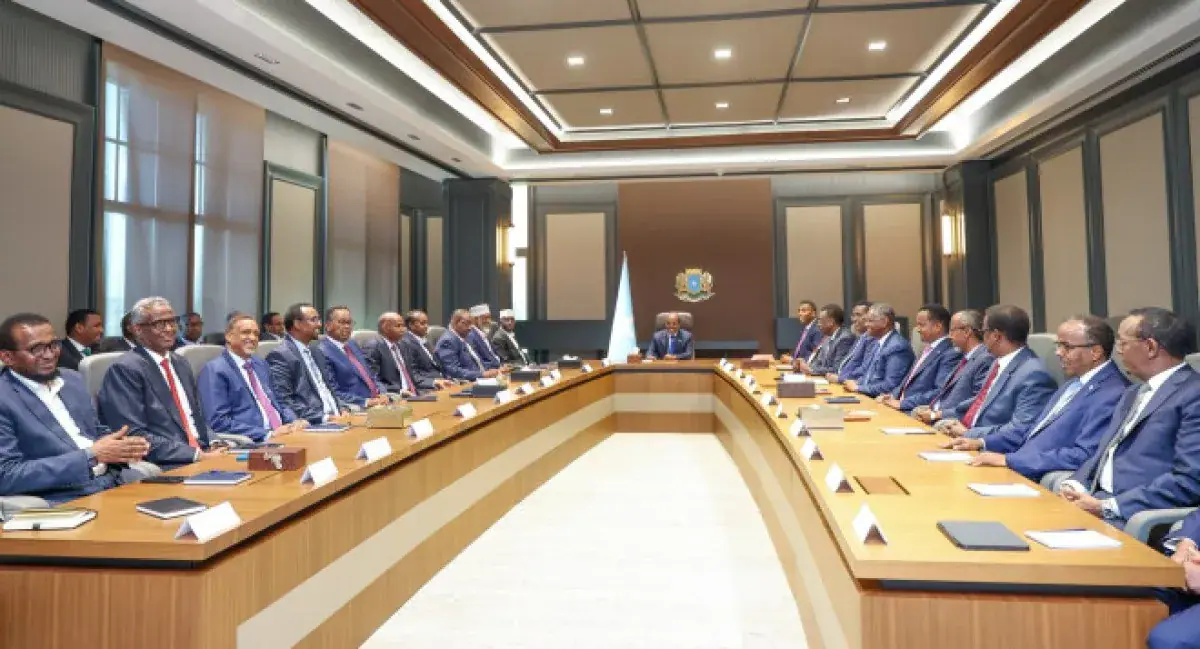
Somalia's planned National Consultative Forum, announced by President Hassan Sheikh Mohamud for November 14-18, has been postponed due to a lack of agreement on conditions and procedures. The postponement represents another setback for efforts to resolve Somalia's escalating political crisis, with opposition groups questioning the legitimacy of the government's electoral roadmap. The opposition has demanded internationally mediated negotiations and guarantees that electoral preparations will be suspended until a political agreement is reached.
The government has continued pursuing its electoral timetable, setting parliamentary elections for April 15, 2027, and a presidential vote for May 15, 2027. However, the opposition has raised concerns about the constitutional and political basis for continuing with the current arrangements. A Supreme Court ruling on the expiration of the government's mandate has added to the controversy, raising further questions about the legitimacy of the process.
The opposition's demands have remained broadly consistent, including the immediate suspension of election-related activities and the appointment of an independent and credible mediator. The Somali Future Council has proposed an alternative Transitional Direct Elections Model, combining direct voting with Somalia's established 4.5 clan-based power-sharing formula. However, the government has rejected the opposition's preconditions and continued with preparations under the electoral commission's timetable.
The postponement of the National Consultative Forum reflects a deeper crisis of political trust in Somalia. The country's electoral disputes have repeatedly exposed the fragility of its political institutions and the difficulty of reaching consensus on the transfer of power. The latest impasse risks reviving the very political confrontations that previous negotiations were intended to prevent.
The international community, including the United States, Britain, Türkiye, and the European Union, had agreed to facilitate the proposed talks. However, the arrangement has failed to secure the participation of the Somali Future Council, which has insisted on formal international mediation. The opposition grouping has also expressed concerns about the neutrality and ownership of the process.
Former President Mohamed Abdullahi Farmaajo's position has added another layer of uncertainty to the opposition landscape. His party, Nabad iyo Nolol, has denied participating in joint opposition meetings, although it confirmed that military commanders visited Farmaajo at his residence to deliver President Mohamud's invitation. Farmaajo reportedly outlined conditions for dialogue, including a demand that negotiations resume from where they broke down in September.
The government's insistence on moving forward with the electoral process while key political actors dispute its legitimacy risks deepening the crisis. President Hassan Sheikh Mohamud faces significant challenges in establishing a credible, constitutional, and inclusive electoral process. The country's future depends on resolving the current impasse and finding a way forward that addresses the concerns of all parties involved.
Key points
- Opposition groups demand internationally mediated negotiations and guarantees that electoral preparations will be suspended until a political agreement is reached.
Reporting sources
- Somalia’s Election Crisis Deepens as Talks Collapse · Horseed Media