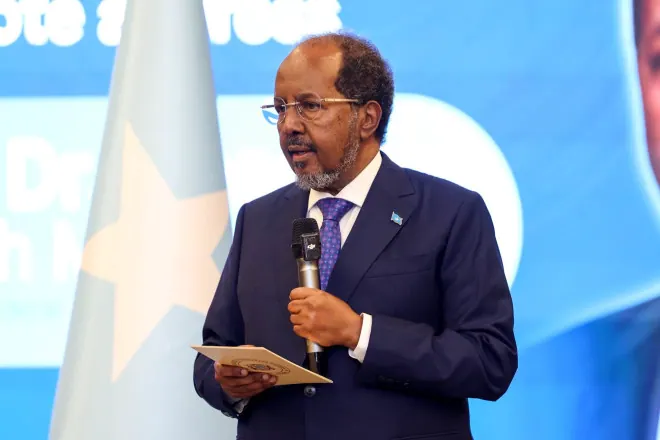
Somalia's President Hassan Sheikh Mahamud has held the office twice, and during his tenure, his slogans have been "Somalia in peace, and the world in peace with it" and "The incomplete man will complete it." Two decades after his presidency began, Somalis are questioning whether the nation has moved closer to or further from achieving these goals. The current state of the nation appears to be fragmented, with different regions forming their own alliances.
Somaliland has established new relationships and agreements with foreign nations, including Israel. Puntland has strengthened its ties with the United Arab Emirates, while Jubbaland has close relationships with Kenya and the UAE. The Southwest region is experiencing severe political tensions, and Hiiraan and other areas are witnessing movements that indicate eroding trust in the central government. These developments suggest that Somalia may be drifting further apart.
The second slogan, "The incomplete man will complete it," has also been called into question. President Hassan Sheikh has the opportunity to lead a government that he claims is responsible for guiding the nation. However, critics argue that instead of completing what was left undone, he has led the country into new conflicts and weakened its institutions and political trust.
Many Somalis had hoped that their nation had moved beyond the chaos and divisions of the past. If the current politics continue to drive regions apart, create new conflicts, and invite foreign interference, there is a fear that Somalia may revert to its previous state. Effective governance is not just a slogan; it requires a political agreement, trust, legitimacy, and the ability to unite the population.
The current situation in Somalia raises concerns about the nation's future. The developments in Somaliland, Puntland, Jubbaland, and the Southwest region indicate that Somalia may be losing its unity. The international community is also taking notice, with Egypt preparing to deploy troops to Somalia as tensions rise in the African Horn.
The concerns about Somalia's future are not limited to its internal politics. The nation is also facing external threats, including the recent Houthi attacks on Saudi airports. Somalia has condemned these attacks, and the situation in the region remains volatile.
In conclusion, Somalia's current state is marked by division and fragmentation. The nation's leadership must work to create a more unified and peaceful country. The alternative is a return to the chaos and instability of the past, which would have severe consequences for the Somali people.
Key points
- Somalia's regions are forming alliances with foreign nations, further fragmenting the country.
- The nation's leadership is criticized for creating new conflicts and weakening institutions.
- Somalia's future is uncertain, with concerns about its unity and stability.