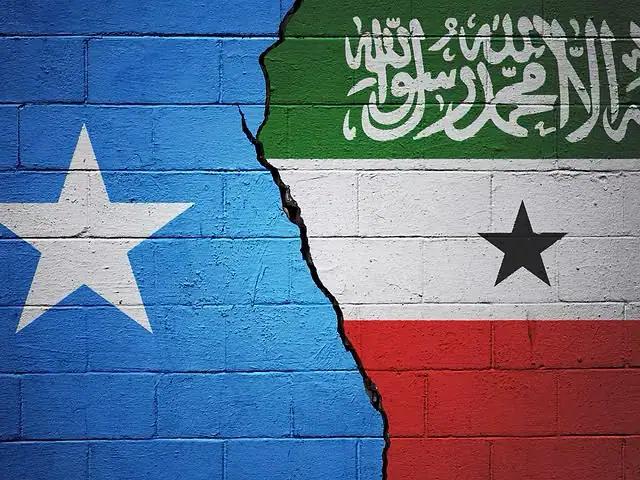
The Federal Government of Somalia has strongly condemned Israel's accreditation of an ambassador in Hargeisa, the capital of the self-declared Republic of Somaliland. In a statement issued on November 3, 2026, Somalia's Ministry of Foreign Affairs and International Cooperation described the move as a violation of Somalia's sovereignty and territorial integrity. The ministry reaffirmed that Hargeisa and the wider Somaliland region remain an integral part of the Federal Republic of Somalia.
Israel's ambassador to Somaliland, Michael Lotem, presented his credentials to Somaliland President Abdirahman Mohamed Abdullahi at the Presidential Palace in Hargeisa. The ceremony was followed by the laying of a cornerstone for Israel's planned embassy in the city. Israel described the appointment as part of efforts to implement the mutual recognition agreement reached with Somaliland in December 2025. This decision made Israel the first United Nations member state to recognize Somaliland as an independent state since it declared independence from Somalia in 1991.
Somalia's Ministry of Foreign Affairs and International Cooperation stated that Israel took the measures without the consent of the federal government, making them "null and void" and without legal effect. The ministry cited the Vienna Convention on Diplomatic Relations, which states that establishing diplomatic relations and permanent diplomatic missions on Somali territory requires the consent of the sovereign state.
Somalia continues to reject Israel's recognition of Somaliland, maintaining that Somaliland remains part of its sovereign territory. The federal government says Israel's latest actions have taken the dispute beyond diplomatic recognition and into the establishment of a permanent diplomatic presence on territory it considers its own. This development has escalated tensions between Somalia and Israel.
The Somali government warned that actions encouraging fragmentation and disregarding internationally recognized borders could increase tensions in the Red Sea and Gulf of Aden, areas already facing significant security challenges. The government demanded that Israel immediately reverse the measures and called on other governments and international organisations to reject them.
Somalia also said it reserved the right to pursue diplomatic, political and legal measures under international law to defend its sovereignty, national unity and territorial integrity. The African Union, the Intergovernmental Authority on Development (IGAD), the League of Arab States and the Organization of Islamic Cooperation have already rejected Israel's recognition of Somaliland.
The latest dispute adds another chapter to the long-running disagreement over Somaliland's political status. The territory has operated with its own administration and institutions since declaring independence in 1991, but its claim to statehood remains contested internationally. Somalia continues to insist that any change to the country's territorial status cannot be determined through unilateral action by another state.
Key points
- Somalia condemns Israel's accreditation of an ambassador in Hargeisa as a violation of its sovereignty and territorial integrity.
- Israel's recognition of Somaliland as an independent state has been rejected by Somalia and several international organisations.
- The dispute has escalated tensions between Somalia and Israel, with potential implications for relations across the Horn of Africa and the Red Sea region.