A growing health crisis is taking root in Somalia, with cancer-related illnesses and deaths on the rise. The country's environmental vulnerabilities, including the dumping of toxic waste along its coastline, have contributed to the alarming state of cancer. Following the collapse of the central government in 1991, foreign entities took advantage of Somalia's lack of regulatory oversight and dumped hazardous waste, exposing coastal communities to direct threats. This has led to a surge in cancer cases, with many patients presenting with late-stage cancer and swift mortality.
The lack of regulatory oversight and an unrestrained marketplace have compounded the threat of chemical waste exposure. Hazardous goods, including cancerous cosmetics, counterfeit medicine, and substandard food imports, are aggressively marketed and openly sold to the public. The regulatory authorities lack adequate resources and experience to establish and enforce effective basic quality control standards, allowing substandard imported drugs and foodstuff to be sold with impunity. This has created an environment where a skyrocketing cancer crisis is not just predictable but inevitable.
In Somalia, cancer attacks both the young and the old, with hardly any basic capacity for diagnosis, let alone treatment. By the time the disease is detected in a foreign hospital, most patients present with late-stage cancer, leading to swift mortality. Many local communities describe such mortality as a "mysterious illness or death" that can only be explained by exposure to chemical pollutants and environmental radiation. A tragic case illustrates this systemic healthcare failure: Abdulkadir Abdi Dini, a telecom engineer and community leader, was misdiagnosed with nerve damage before being diagnosed with cancer in Saudi Arabia, and eventually died of the disease.
The case of Abdulkadir Abdi Dini highlights the profound medical neglect and lack of specialised oncology expertise that compounds the crisis. Even those who have the means to seek treatment abroad are routinely misadvised, and by the time they realise their illness is cancer, it has already taken root, making it too late for effective intervention. Somalia's healthcare system is failing to address the growing cancer crisis, with only one hospital, Oasis, dedicated to cancer, and it lacks adequate resources and national-level diagnostic capacity.
To confront this public health crisis, a dual strategy is necessary: mobilising private capital and expertise on one front, and environmental cleanup paired with strict regulation on the other. The first strategy involves a bold public-private-partnership (PPP) between the government and Somali financial institutions. The president exercises his moral and executive leadership to convene a high-level national conference on combating cancer, bringing together major local banks and Somali medical professionals.
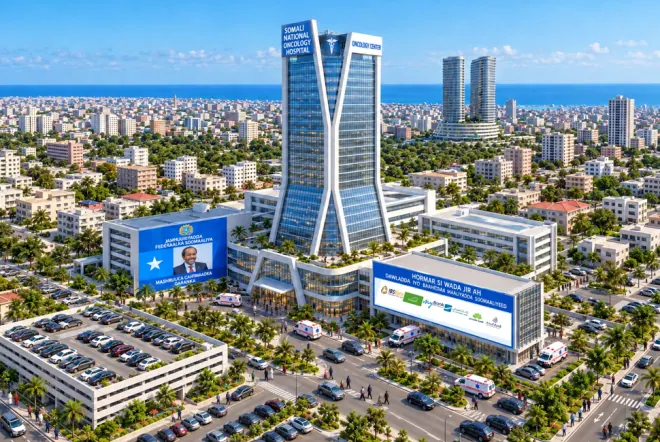
The president challenges Somali financial institutions to invest in national healthcare infrastructure, offering high-value incentives, including sovereign backing, tax incentives, land grants, and political prestige, to de-risk banks' investment in healthcare infrastructure. This approach aims to overcome the hesitation of banks to enter high-risk, complex public-good investments and to encourage them to invest in the healthcare sector. By mobilising private capital and expertise, Somalia hopes to establish a national network of cancer diagnostics and treatment.
The proposed public-private-partnership aims to establish Somalia's first national network of cancer diagnostics and treatment, providing a comprehensive approach to addressing the growing cancer crisis. The initiative has the potential to make a significant impact on the lives of Somalis affected by cancer, and the government is seeking to work with local banks and medical professionals to make it a reality. The success of this initiative will depend on the government's ability to mobilise private capital and expertise, as well as its commitment to environmental cleanup and strict regulation.
Key points
- Somalia's growing cancer crisis is attributed to environmental vulnerabilities, including the dumping of toxic waste along its coastline.
- The country's healthcare system lacks adequate resources and specialised oncology expertise to address the crisis.
- A proposed public-private-partnership aims to mobilise private capital and expertise to establish a national network of cancer diagnostics and treatment.