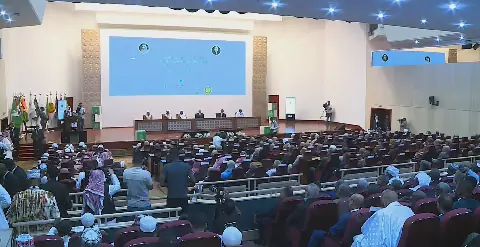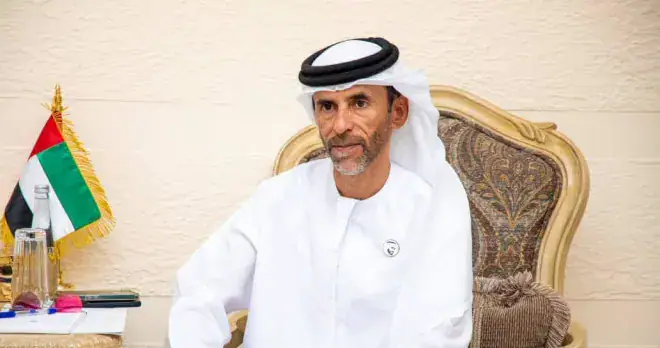
The Somali federal government has ordered the United Arab Emirates' ambassador to leave the country within 72 hours and recalled its ambassador from Abu Dhabi for consultations. This decision was announced following a weekly Cabinet meeting chaired by Prime Minister Hamza Abdi Barre in Mogadishu. The meeting reviewed a Foreign Ministry report outlining threats to Somalia's sovereignty, independence, and national security.
Information Minister Abdulfatah Qasim Mohamud announced the measures at a news conference, stating that the Cabinet had directed the Foreign Ministry to notify the Emirati ambassador of the order to leave Somalia. The ministry was also instructed to summon Somalia's ambassador to the UAE for consultations with the federal government. This move is a response to what Mogadishu describes as continued interference by Abu Dhabi in Somalia's domestic affairs.
The diplomatic tensions between Mogadishu and Abu Dhabi have escalated over the past several days. In a televised address on Tuesday, President Hassan Sheikh Mohamud accused the UAE of providing financial, political, and security assistance to armed groups and regional administrations opposed to the federal government. He also accused Abu Dhabi of establishing military facilities and supporting security arrangements outside the control of Somalia's national institutions.
President Hassan Sheikh criticized agreements between the UAE and the administrations of Somaliland, Puntland, and Jubaland involving the strategic ports of Berbera, Bosaso, and Kismayo. He argued that such arrangements should be negotiated through the federal government, as they undermine Somalia's sovereignty and weaken efforts to establish a unified national security system.
The UAE has rejected accusations of interference. Anwar Gargash, diplomatic adviser to UAE President Sheikh Mohamed bin Zayed Al Nahyan, criticized Hassan Sheikh's remarks, accusing the Somali leader of allowing personal political considerations to influence relations between the two countries. Gargash defended the UAE's longstanding support for Somalia and warned that internal political disputes should not draw the country into wider regional rivalries.
Somalia's Foreign Ministry responded on Wednesday with a statement expressing grave concern over what it described as continued Emirati interference. The ministry insisted that the federal government is the sole authority responsible for Somalia's foreign relations and rejected security agreements or other foreign arrangements concluded without its authorization. It called on the UAE to conduct all diplomatic, economic, and security engagement with Somalia through federal institutions, in accordance with international law.
The diplomatic dispute has intensified since January, when Somalia's Cabinet annulled agreements with the UAE covering security, defense, and economic cooperation, including arrangements involving regional ports. Mogadishu said the decision was intended to protect Somalia's sovereignty and territorial integrity. The UAE maintains longstanding economic and security relationships with several Somali regional administrations, while the federal government has increasingly challenged arrangements made without its approval.
Key points
- Somalia cites UAE interference in domestic affairs as reason for expelling ambassador
- Diplomatic tensions between Mogadishu and Abu Dhabi have escalated over regional security agreements
- Somalia seeks to protect sovereignty and territorial integrity amid foreign engagements
Reporting sources
- Somalia expels UAE ambassador, gives him 72 hours to leave country · Hiiraan Online