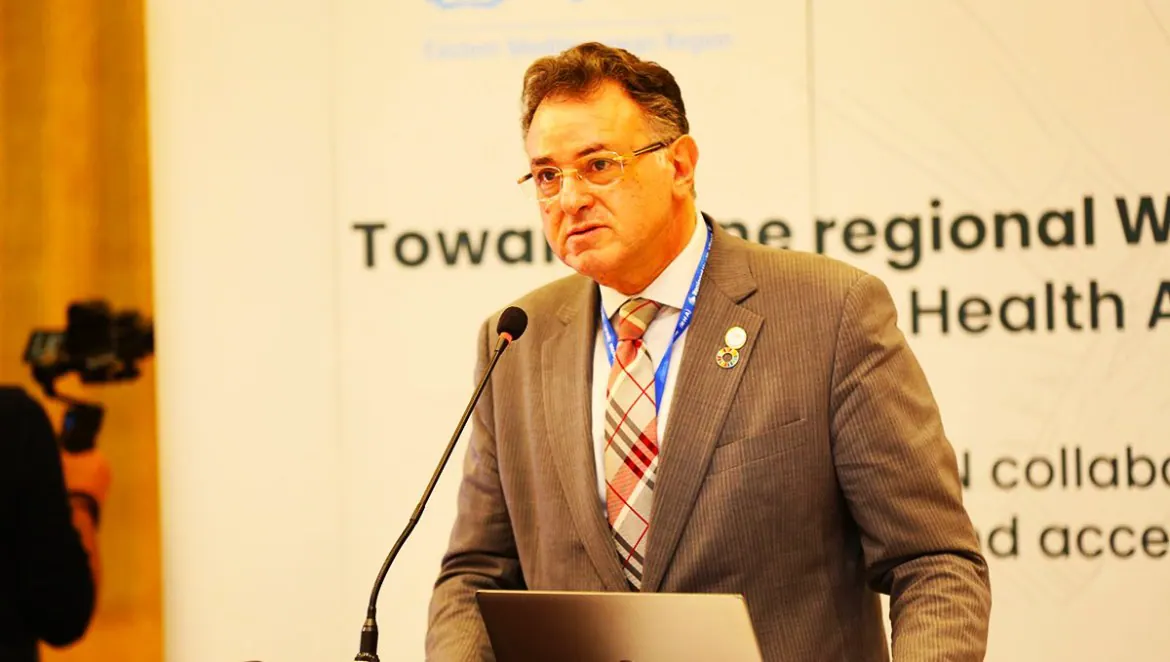
Somalia has made significant progress in reducing cholera deaths, cutting them down by 93 percent, according to Dr. Adham Ismail, the officer in charge of the World Health Organization (WHO) for the Eastern Mediterranean Region. The country has also re-established a national medicines regulatory authority after more than three decades. This achievement is part of a broader effort to improve health outcomes in the region.
Three countries in the Eastern Mediterranean Region have been validated by the WHO for eliminating trachoma as a public health problem. Meanwhile, Sudan has made notable progress in increasing vaccination coverage, with a rise in third-dose pentavalent vaccination coverage from 38 percent to 71 percent in a single year. This increase means many more children are protected against five potentially deadly diseases.
The Eastern Mediterranean Region is home to 9 percent of the world's population, yet almost half of all people globally who need humanitarian assistance live there. The region also bears some of the world's largest displacement crises, with health systems being stretched by conflict, economic pressure, and repeated emergencies. Despite these challenges, countries in the region have continued to deliver health progress.
Between July 2025 and June 2026, the WHO verified 632 attacks on healthcare across the region, causing over 1,530 deaths. The WHO itself is working through a sharp funding contraction, with its base program budget falling by 14 percent, from $618.4 million to $533.7 million. Despite these challenges, the region has seen significant health gains, including a decline in the maternal mortality ratio from 191 to 160 deaths per 100,000 live births between 2020 and 2025.
The WHO has mobilized $1.6 billion for the region during 2024-2025, one of the highest levels among WHO regions. The organization has also directed over 70 percent of its base-programme resources to country offices. These efforts aim to support countries in achieving better health outcomes despite the challenges they face.
The 73rd session of the WHO's Regional Committee will take place in Cairo, Egypt, in October 2026. The committee will discuss two major resolutions, including one on protecting people from the financial consequences of seeking care. The resolution aims to strengthen public financing, improve financial protection, and get better value from available resources.
The second resolution tackles the fragmentation of the response to communicable diseases, including HIV, hepatitis, malaria, and tuberculosis. The aim is to make better use of shared systems, reduce duplication, and accelerate progress towards elimination. The region faces significant health challenges, including an estimated 610,000 people living with HIV, nearly 28 million people living with chronic hepatitis B or C, and a doubling of malaria incidence since 2015.
Key points
- Somalia reduces cholera deaths by 93 percent.
- Sudan increases vaccination coverage to over 71 percent.
- WHO reports progress in the Eastern Mediterranean Region, including a decline in maternal mortality ratio.