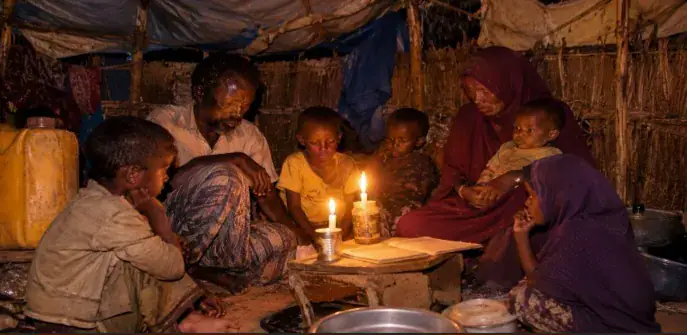
Somalia is grappling with a severe and increasingly untenable cost-of-living crisis driven by electricity tariffs that rank among the highest in Africa and the world. For millions of ordinary Somalis, access to electricity has become an indispensable yet prohibitively expensive necessity. In a nation confronting widespread poverty, chronic unemployment, internal displacement, and economic insecurity, soaring electricity costs impose an acute burden on families struggling to secure basic needs.
The crisis is exacerbated by Somalia's highly concentrated, vertically integrated market architecture. Following the collapse of the Somali state in 1991, private entrepreneurs restored power generation and distribution. However, this private-sector initiative has gradually calcified into an oligopolistic market dominated by entrenched providers, minimal competition, and weak public oversight. In Mogadishu, the Banadir Electricity Company has historically commanded approximately 85 per cent of the market.
The lack of effective competition, transparent pricing mechanisms, or independent regulatory supervision has allowed private providers to operate without meaningful competition. In well-functioning energy markets, competitive pressure compels firms to optimize operations, reduce waste, and pass cost savings on to consumers. Somalia's electricity sector lacks these safeguards, leaving consumers with little choice but to accept unilateral tariffs set by local monopolies.
A comparative price assessment by the Somali Researchers Association revealed alarming residential tariffs across major Somali cities prior to late-2026 price hikes. On 25 October 2026, Mogadishu's three principal providers implemented a uniform US$0.05 per kWh rate increase, citing rising global fuel costs. This tariff hike illustrates the acute vulnerability of Somali households to fluctuations in global fuel prices and providers' operating margins.
Regional capitals face even steeper costs, with tariffs in Kismayo and Baydhabo approaching or exceeding US$0.80 per kWh. Establishing independently verified, transparent tariff benchmarks for commercial hubs such as Bosaso remains an urgent priority. Across virtually the entire country, electricity remains priced far beyond the purchasing power of ordinary citizens.
When benchmarked against neighboring East African economies, Somalia's energy crisis becomes even more pronounced. Indicative residential tariffs across the region demonstrate a staggering disparity, with electricity in Mogadishu costing roughly 2.6 times more than in Nairobi and approximately 17 times more than in Addis Ababa. This disparity poses a critical macroeconomic question: why does a nation endowed with world-class solar and wind resources endure some of the highest energy costs in the region?
The consequences of Somalia's energy crisis extend far beyond household budgets, inflating business overhead, deterring domestic and foreign industrial investment, eroding the price competitiveness of Somali goods, and stifling local manufacturing. Small enterprises, hospitals, pharmacies, schools, and hospitality businesses all rely on affordable power to operate. Somalia cannot realistically pursue industrialization, economic diversification, or sustainable growth while its productive sectors pay energy costs several multiples higher than those of regional competitors.
Key points
- Somalia's electricity tariffs rank among the highest in Africa and the world.
- The crisis is driven by a highly concentrated, vertically integrated market architecture and lack of effective competition.
- Somalia's energy crisis has severe consequences for household budgets, businesses, and the overall economy.