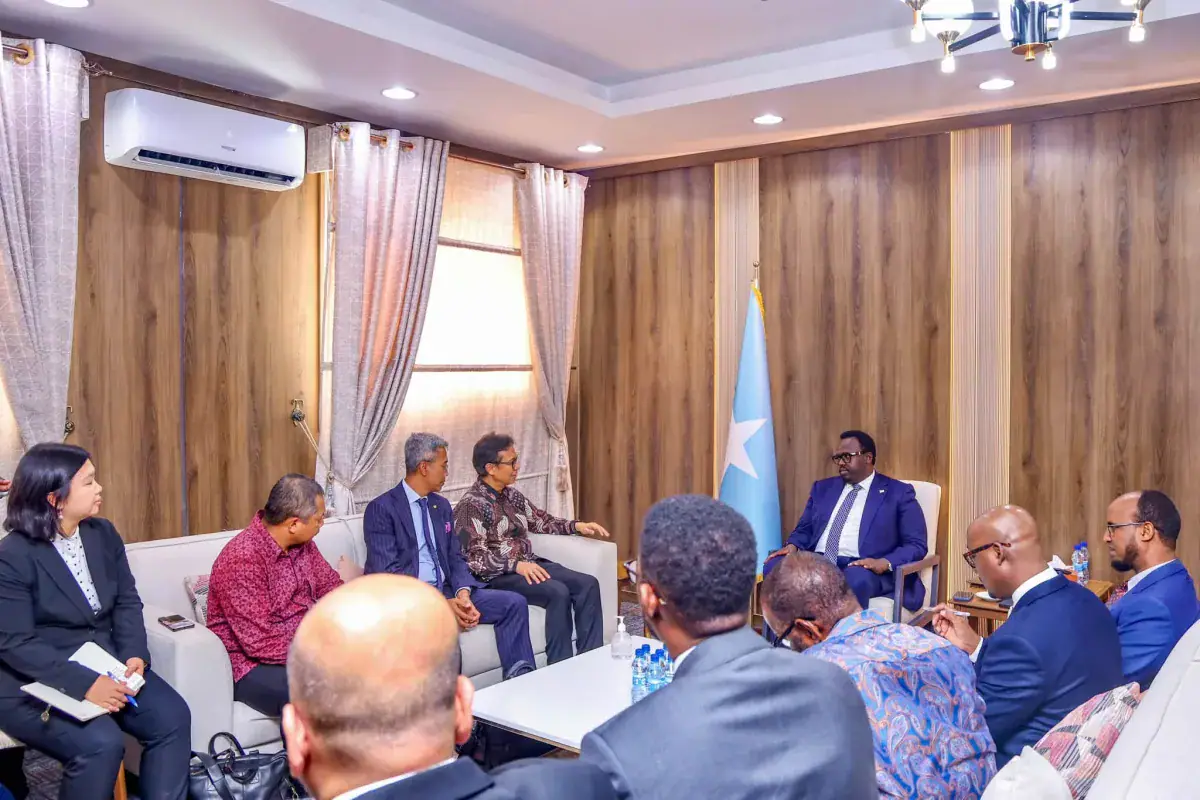
Somalia's Deputy Prime Minister, Salah Ahmed Jama, recently met with Indonesia's Minister of Health, Budi Gunadi Sadikin, in Mogadishu to discuss expanding cooperation in the healthcare sector. The meeting aimed to strengthen bilateral relations and explore opportunities for collaboration in medical training, access to essential medicines, and maternal and child healthcare. This high-level discussion marks a significant step in enhancing ties between the two countries.
The talks focused on practical measures to strengthen Somalia's healthcare workforce, improve the availability of essential pharmaceuticals, and expand maternal and child health services. Indonesia's reported candidacy for the position of Director-General of the World Health Organization (WHO) for the 2027–2032 term was also discussed. Jakarta is seeking support from member states ahead of the leadership election scheduled for next year.
Deputy Prime Minister Jama emphasized the importance of expanding cooperation beyond healthcare to include education, trade, and private-sector investment. He noted that stronger engagement between Mogadishu and Jakarta could create sustainable opportunities and deliver mutual benefits to the citizens of both countries. This meeting highlights the potential for Somalia to benefit from Indonesia's expertise in healthcare and other sectors.
Somalia continues to face significant challenges in its healthcare system, with reduced donor support placing additional pressure on public health facilities, clinics, and referral hospitals. The Federal Government has increasingly sought partnerships with bilateral and multilateral institutions to strengthen healthcare delivery, improve medical infrastructure, and address shortages of qualified health professionals.
Previous diplomatic engagements have focused on expanding cooperation with international health institutions, including discussions between Somali health officials and WHO leadership in Geneva on maternal healthcare and midwifery training. Maternal health remains a major concern across Somalia, with limited access to specialized medical services, shortages of skilled healthcare workers, and challenges surrounding the regulation and availability of pharmaceutical products.
Cooperation with Indonesia could provide opportunities for Somalia to benefit from the country's pharmaceutical manufacturing capabilities, medical training institutions, and broader healthcare experience. Indonesia's expertise in these areas could help address some of the pressing challenges facing Somalia's healthcare system. The meeting underscores Mogadishu's efforts to diversify its international partnerships and mobilize external support to address pressing domestic development priorities.
The discussions between Somalia and Indonesia demonstrate a shared commitment to strengthening healthcare systems and promoting bilateral cooperation. By exploring opportunities for collaboration, both countries can work towards improving healthcare outcomes and enhancing their overall relationship. Key areas of focus include medical training, access to essential medicines, and maternal and child healthcare.
Key points
- Somalia seeks to strengthen its healthcare system through partnerships with international institutions, including Indonesia.
- Indonesia's candidacy for the WHO Director-General position was discussed during the meeting.
- The talks aimed to expand cooperation in medical training, access to essential medicines, and maternal and child healthcare.