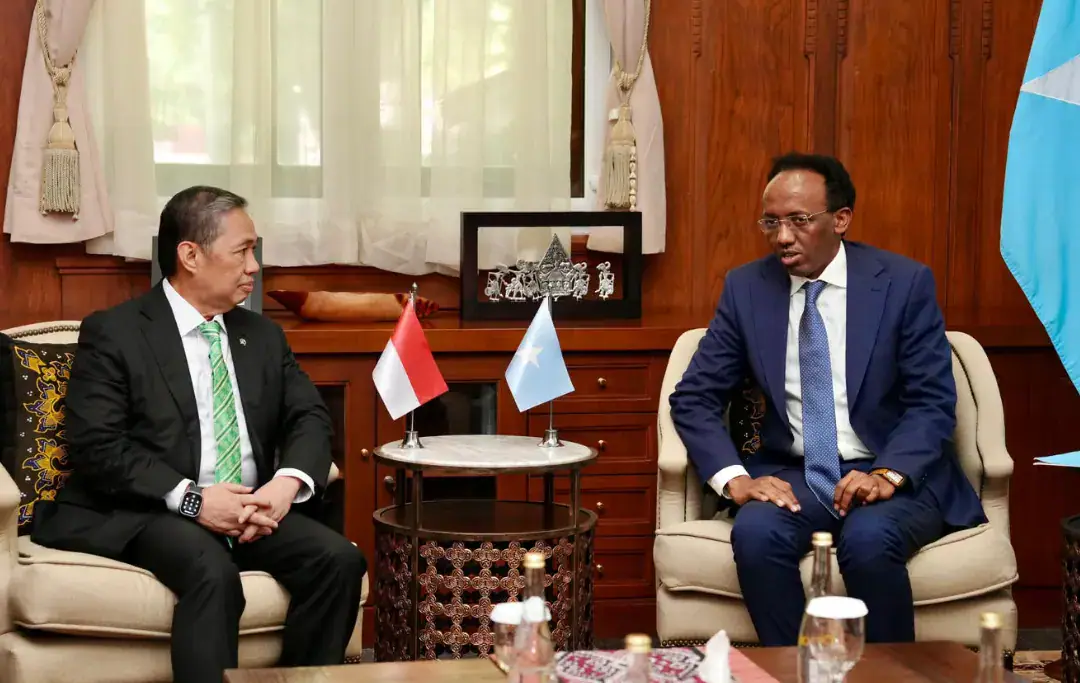
Somalia and Indonesia have engaged in high-level diplomatic talks in Jakarta to explore opportunities for expanding bilateral cooperation across various sectors. The discussions, led by Somalia's Deputy Minister of Foreign Affairs and International Cooperation, Hassan Mohamed Ali, and his Indonesian counterpart, Anis Matta, focused on strengthening longstanding diplomatic relations and identifying areas for deeper cooperation. The talks covered potential partnerships in trade and investment, agriculture, livestock, fisheries, and the blue economy.
The Somali foreign ministry stated that the two officials discussed exchanging views on regional and international political and diplomatic developments, institutional capacity-building, and cooperation within multilateral organisations. Particular attention was given to coordinating the two countries' positions in international forums, especially the United Nations and the Organisation of Islamic Cooperation (OIC). Both sides reaffirmed their commitment to strengthening friendly relations and expanding practical cooperation based on mutual respect, shared interests, and sustainable development.
Somalia is seeking to broaden its international partnerships and attract investment into key sectors of its economy, including agriculture, fisheries, infrastructure, and energy. The country has one of Africa's longest coastlines and substantial livestock and marine resources, making it an attractive partner for countries with relevant expertise. Indonesia, Southeast Asia's largest economy, has significant experience in agriculture, fisheries, infrastructure development, and maritime industries, offering potential opportunities for cooperation with Somalia.
The meeting between Somalia and Indonesia comes as both countries look to strengthen their diplomatic engagement and explore new avenues for economic cooperation. The two governments expressed their willingness to translate the discussions into meaningful cooperation, although no specific agreements, investment commitments, or timelines for implementing the proposed initiatives were announced. The talks underscore efforts by Mogadishu and Jakarta to enhance their bilateral relationship and explore opportunities for mutual benefit.
Indonesia's experience in agriculture, fisheries, and infrastructure development could be particularly valuable for Somalia, which has struggled to develop its productive sectors. Somalia's Deputy Minister of Foreign Affairs and International Cooperation, Hassan Mohamed Ali, and Indonesian Foreign Ministry official Anis Matta discussed potential partnerships in these areas, as well as education, healthcare, and energy. The two countries also explored ways to enhance cooperation in maritime security, a critical area for both nations.
The discussions between Somalia and Indonesia reflect the growing interest of African and Asian nations in strengthening their diplomatic and economic ties. As Somalia seeks to rebuild its economy and attract international investment, it is engaging with countries from various regions, including Southeast Asia. Indonesia's engagement with Somalia also highlights the country's expanding role in African diplomacy and its desire to establish itself as a key player in global affairs.
The meeting between Somalia and Indonesia has laid the groundwork for potential cooperation in various sectors, although the implementation of specific initiatives remains to be seen. Both countries have expressed their commitment to strengthening their bilateral relationship and exploring opportunities for mutual benefit. As Somalia continues to seek international partnerships and investment, its engagement with Indonesia and other countries will likely play a critical role in shaping its economic development and diplomatic relations in the years to come.
Key points
- Somalia and Indonesia discuss expanding cooperation in trade, fisheries, and maritime security.
- The talks focused on strengthening diplomatic relations and identifying areas for deeper cooperation.
- The two countries expressed their willingness to translate the discussions into meaningful cooperation.