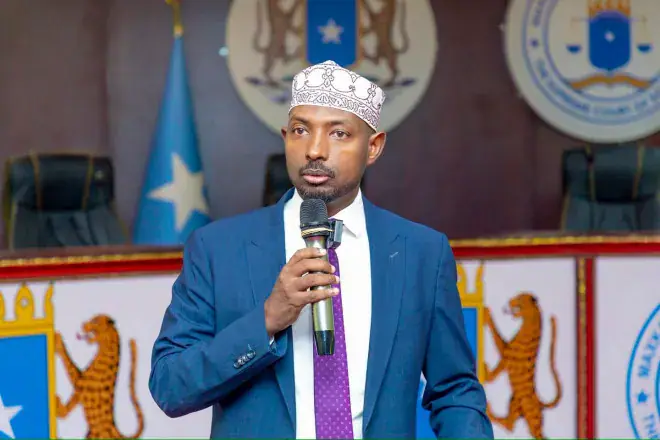
Somali government troops were deployed in large numbers around the Supreme Court in Mogadishu on Thursday, hours after the court ruled that President Hassan Sheikh Mohamud's one-year extension in office was unlawful. The court's Facebook page, which had been used to publish recent rulings and official statements, was also taken offline, a senior judge told BBC Somali. The circumstances surrounding the troop deployment and the removal of the Facebook page could not immediately be independently verified.
The developments sharply escalated a confrontation between Somalia's presidency and judiciary that began after Mohamud announced Wednesday that he had dismissed Chief Justice Baashe Yusuf Ahmed and reinstated former Chief Justice Ibrahim Idle Suleiman. The Supreme Court rejected that dismissal as null and void, saying the president lacked constitutional authority to remove the chief justice unilaterally. The court also ruled that constitutional amendments extending presidential and parliamentary terms from four to five years could not be applied retroactively to Mohamud's current mandate.
The Supreme Court's ruling directly challenged the federal government's position that Mohamud can remain in office until May 2027 under constitutional amendments approved by parliament earlier this year. The court said those amendments did not apply to the president's current term, which it said expired in May. The ruling also ordered political leaders to reach an agreement on an electoral framework within 30 days and hold elections within 90 days.
The Supreme Court had separately accused the presidency of attempting to interfere with a politically sensitive constitutional case pending before it. The case was filed by former President Sharif Sheikh Ahmed and challenges constitutional amendments affecting the mandates of the president, government and federal parliament. The presidency said Wednesday that Baashe was removed after complaints from judges, judicial staff and legal professionals about the need for a more transparent and impartial justice system.
The presidency did not link Baashe's removal to the pending constitutional case or identify specific allegations against him. However, the Supreme Court rejected the presidency's justification and maintained that Baashe remained the lawful chief justice. The deployment of security forces around the court and the disappearance of its official Facebook page now raise further questions about whether the judiciary will be able to continue operating independently amid the constitutional dispute.
The Supreme Court's ruling and the subsequent troop deployment have sparked widespread concern about the potential for further instability in Somalia. The country's opposition has condemned the troop deployment at the Supreme Court, accusing President Hassan Sheikh of judicial interference. The situation remains tense, with many Somalis worried about the impact on the country's fragile political system.
The presidency had not publicly responded to the Supreme Court's term-limit ruling, the court's rejection of Baashe's dismissal or allegations that troops had been deployed around the court. The international community is closely watching the situation, with many countries and organizations calling for calm and respect for the rule of law.
Key points
- The Supreme Court ruled that President Hassan Sheikh Mohamud's term extension was unlawful and that he can only serve until May.
- The presidency and judiciary are in a confrontation over the president's term extension and the dismissal of the chief justice.
- The situation has sparked concern about the potential for further instability in Somalia.