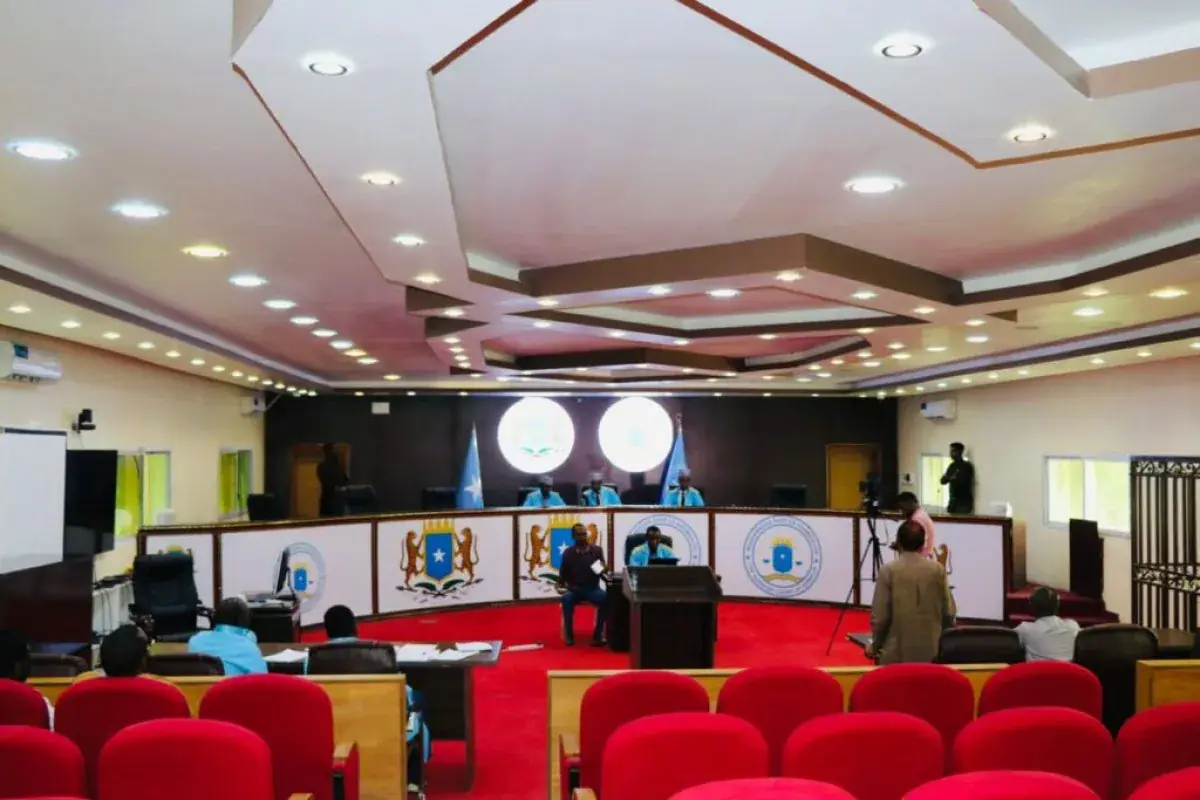
Six Somali Supreme Court judges have taken the Federal Republic of Somalia to the East African Court of Justice, challenging the removal of Chief Justice Bashe Yusuf Ahmed. The judges, including Justice Dr. Bashe Yusuf Ahmed, filed the case after President Hassan Sheikh Mohamud dismissed Chief Justice Ahmed on November 4. The dismissal led to a paralysis of the country's highest judicial institution. The judges are seeking legal intervention at the regional court, placing the government's handling of the Supreme Court leadership crisis under additional judicial scrutiny.
The East African Court of Justice has issued a notification to the Somali government, giving them 45 days to respond to the legal reference. The notification, issued under Rule 26 of the court's procedures, requires the government to submit its response within the prescribed period or risk a default determination. The respondents in the case are the State Attorney General and the Federal Republic of Somalia. The court's First Instance Division issued the notification on November 18.
The dispute over Chief Justice Ahmed's removal began when President Mohamud announced his dismissal, citing complaints concerning the administration of justice. The decision came before the Supreme Court was scheduled to consider a constitutional petition filed by former Somali President Sharif Sheikh Ahmed. The petition challenged constitutional amendments that extended the mandates of the president, parliament, and federal government.
The Supreme Court's five-member Constitutional Division issued a ruling on November 5, stating that the amendments could not be applied retroactively to institutions already in office. The court also directed political stakeholders to reach an agreement on an electoral framework within 30 days and conduct elections within 90 days. In a separate determination, the court declared the dismissal of Chief Justice Ahmed null and void, maintaining that the president lacked the constitutional authority to remove the chief justice unilaterally.
Despite the Supreme Court's ruling, the Somali presidency proceeded with the appointment of Ibrahim Idle Suleiman as the new chief justice. He was sworn into office on November 7 at a ceremony attended by President Hassan Sheikh Mohamud. The appointment deepened the institutional dispute and raised questions about the enforcement of judicial decisions and the constitutional separation of powers in Somalia.
The case before the East African Court of Justice introduces a regional dimension to Somalia's ongoing constitutional dispute. The six judges' decision to seek legal intervention at the regional court places the government's handling of the Supreme Court leadership crisis under additional judicial scrutiny. The proceedings could have significant implications for judicial independence, constitutional governance, and the rule of law in Somalia.
The case also raises wider questions about the protection of judicial institutions and the obligation of state authorities to respect and implement court decisions. The 45-day response period now gives the Federal Republic of Somalia an opportunity to present its legal position before the court. The outcome of the case could have far-reaching consequences for Somalia's judiciary and its ability to function independently.
Key points
- The East African Court of Justice has given the Somali government 45 days to respond to the legal reference.
- The case challenges the removal of Chief Justice Bashe Yusuf Ahmed and the resulting paralysis of the country's highest judicial institution.
- The proceedings could have significant implications for judicial independence, constitutional governance, and the rule of law in Somalia.