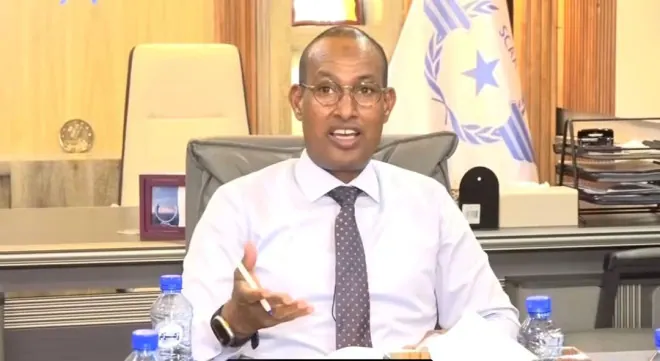
The Somali federal aviation authority announced on Monday that a dispute with Somaliland over the country's electronic visa system (eVisa) had been resolved. According to Ahmed Ma'allin Hassan, director general of the Somali Civil Aviation Authority, obstacles surrounding the eVisa system had been addressed. This development allows businesses across Somalia, including travel agencies based in Hargeisa, to participate in the system. Hassan described the system as nationwide, enabling travel agencies and other businesses in Hargeisa to use payment arrangements connected to airlines and travel services.
Hassan dismissed concerns that the implementation would disadvantage Somaliland-based businesses. He argued that the system could create commercial opportunities for Somali operators regardless of their location. The eVisa system is part of Somalia's efforts to modernize its immigration processes. Somalia introduced its Electronic Travel Authorization System in September 2025, requiring foreign travelers to obtain authorization online before traveling. The federal Immigration and Citizenship Agency describes it as a unified national entry system.
However, a senior Somaliland official later denied that the two sides had reached a new agreement. Fu'aad Ahmed Nuuh, Somaliland's Civil Aviation Minister, rejected the claim that a new agreement had been reached with Mogadishu. According to local reports, Nuuh stated that if an agreement had been reached, the Somalia-issued electronic visa would have been valid in Somaliland, which is not the case. Travelers arriving at Hargeisa airport with a Somalia-issued electronic visa would still be required to obtain a Somaliland visa.
Somaliland's official travel guidance states that visas or electronic travel authorizations issued by Somalia are not accepted for entry. International passengers can obtain visas on arrival at Hargeisa and Berbera airports. This guidance has been consistent, with Somaliland authorities repeatedly instructing airlines and travelers that Somalia-issued electronic visas are not valid at Hargeisa airport. The conflicting accounts underscore the continuing dispute between Mogadishu and Hargeisa over immigration, aviation, and control of Somalia's internationally recognized borders.
The dispute between Somaliland and Somalia dates back to 1991 when Somaliland declared independence from Somalia. Since then, the two regions have had separate immigration and aviation systems. Somaliland has continued to operate its own visa-on-arrival arrangements, which has led to tensions with the federal government. In November 2025, Somaliland's aviation minister told BBC Somali that travelers arriving with Somalia-issued electronic visas would still be subject to Somaliland's own immigration requirements.
The eVisa system is a significant development in Somalia's efforts to modernize its immigration processes. The system aims to streamline the entry process for foreign travelers and provide a unified national entry system. However, the dispute with Somaliland highlights the challenges of implementing such a system in a country with complex regional dynamics. The federal government's announcement that the dispute has been resolved may not have been universally accepted, given Somaliland's denial of a new agreement.
The situation remains unclear, with both sides maintaining their positions. The federal government's eVisa system is now operational, but its validity in Somaliland is disputed. Travelers and airlines will need to navigate these complexities to ensure compliance with the regulations of both Somalia and Somaliland. The ongoing dispute highlights the need for further dialogue and cooperation between Mogadishu and Hargeisa to resolve their differences and establish a unified approach to immigration and aviation.
Key points
- Somali federal government claims eVisa dispute with Somaliland is resolved.
- Somaliland denies that a new agreement has been reached with Mogadishu.
- The dispute highlights the complex regional dynamics and challenges of implementing a unified national entry system in Somalia.