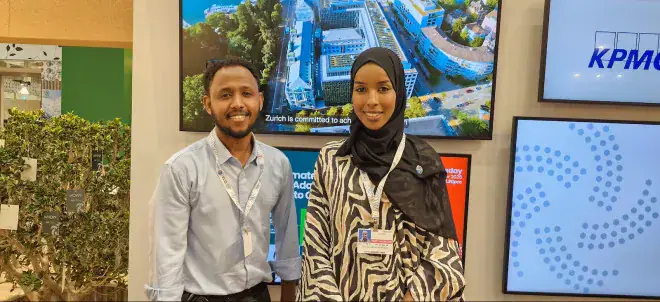
In Mogadishu, Somalia, 75,000 tuk-tuks spew petrol fumes, contributing to air pollution and noise. Only four women are licensed to drive them, including Fadumo Ahmed, who plans to revolutionize the industry. Ahmed and her business partner, Hassan Mumin, founded eBajaaj, a social enterprise that aims to electrify the tuk-tuk fleet. They have already converted 20 tuk-tuks to electric alternatives.
eBajaaj's goal is to convert 5,000 petrol tuk-tuks to electric, starting with a significant reduction in carbon emissions. Ahmed, 32, and Mumin, 31, are seeking support at Cop31 in Antalya, Turkey. They have developed a battery conversion kit that costs $2,500 per tuk-tuk, which eBajaaj will pay for. Tuk-tuk owners will pay a $4 daily subscription for charging and a contribution towards the conversion cost.
The electric tuk-tuks have several benefits, including ease of use for women and individuals with disabilities. The automatic transmission makes it easier for women to drive, and the clear space under the seats facilitates security checks. Additionally, the electric tuk-tuks can help reduce traffic jams at security checkpoints. Ahmed and Mumin have addressed concerns about battery life and waterlogged streets, stating that the batteries last 120km and are waterproof.
Ahmed and Mumin have taken bold steps in their personal lives, with Ahmed moving her family from Sweden and Mumin from California. They aim to make a positive impact on their country and the climate. eBajaaj builds charging depots with solar panels, allowing drivers to quickly swap batteries. The company absorbs the initial conversion cost, and tuk-tuk owners can pay for the conversion over time through their daily subscriptions.
The current state of tuk-tuk operations in Mogadishu is financially challenging for drivers. A driver pays $15 per day for fuel and $20 every two weeks for an oil change, leaving them with only $2-3 per day. eBajaaj's model offers a more sustainable and cost-effective solution. Ahmed emphasizes that the primary concern for drivers is not climate change, but rather savings and supporting their families.
Ahmed and Mumin are seeking investment from banks, investment houses, and financial advisers at Cop31. However, local banks have deemed the risk too high, citing the new technology and fragile market. eBajaaj's innovative approach has garnered attention, with some people finding it inspiring. Ahmed hopes that this inspiration will translate into tangible support and investment for their project.
The impact of eBajaaj's initiative extends beyond environmental benefits. The electric tuk-tuks can improve the livelihoods of drivers and contribute to Somalia's economic growth. With the right support, eBajaaj aims to make a significant difference in the country. Ahmed and Mumin's efforts have the potential to transform the transportation sector in Somalia and serve as a model for other countries.
Key points
- eBajaaj aims to convert 5,000 petrol tuk-tuks to electric alternatives in Somalia.
- The electric tuk-tuks have several benefits, including ease of use for women and individuals with disabilities.
- Ahmed and Mumin are seeking $2,500 per tuk-tuk for the battery conversion kit, which eBajaaj will pay for.