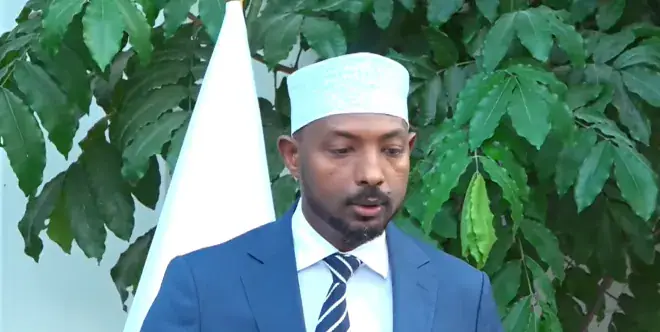
Somalia's Chief Justice Baashe Yusuf Ahmed has expressed concerns over his safety in Mogadishu, citing the presence of approximately 300 security personnel and 30 armed vehicles stationed around the Supreme Court. He described this deployment as an attempt to intimidate judges and undermine judicial independence. Baashe's remarks come amid a dispute with President Hassan Sheikh Mohamud, who announced Baashe's dismissal on November 5.
Baashe, whose dismissal remains contested, called on President Hassan Sheikh to withdraw the security personnel from the court, emphasizing that he is defending the law, not a personal position. He questioned the security of other leaders and citizens in Mogadishu if the head of the judiciary feels threatened. The deployed forces include members of the military, police, intelligence, and custodial services.
The Supreme Court rejected Baashe's dismissal on November 5, declaring it null and void and accusing the presidency of attempting to obstruct a constitutional case. Baashe maintained that the president has no unilateral authority to dismiss the chief justice, and constitutional procedures involving the Judicial Service Commission and parliament must be followed.
Baashe's concerns about his safety and the court's independence come as the Supreme Court handles a case directly affecting President Hassan Sheikh and other federal institutions. He argued that a high-ranking official using their authority to dismiss a judge presiding over a case involving them could undermine public trust in the justice system.
The confrontation between the Supreme Court and the presidency intensified with the court's ruling on constitutional amendments extending presidential and parliamentary terms. The court ruled that these amendments could not be applied retroactively to Hassan Sheikh's current mandate, and his four-year term expired in May 2026.
The Supreme Court also directed political stakeholders to agree on an electoral framework within 30 days and hold elections within 90 days. This ruling followed a constitutional petition filed by former President Sharif Sheikh Ahmed challenging the procedures used to amend Somalia's Constitution.
The presidency has maintained that the leadership change was intended to address complaints about judicial administration and improve the transparency and efficiency of the justice system. However, Baashe rejected this justification, insisting that judicial independence is a constitutional safeguard protecting citizens against unlawful interference.
Key points
- Baashe demanded the withdrawal of 300 security personnel deployed around the Supreme Court, citing concerns over judicial independence and his personal safety.
- The Supreme Court rejected Baashe's dismissal, declaring it null and void and accusing the presidency of attempting to obstruct a constitutional case.
- The confrontation has raised questions about judicial independence and the implementation of Supreme Court rulings in Somalia.