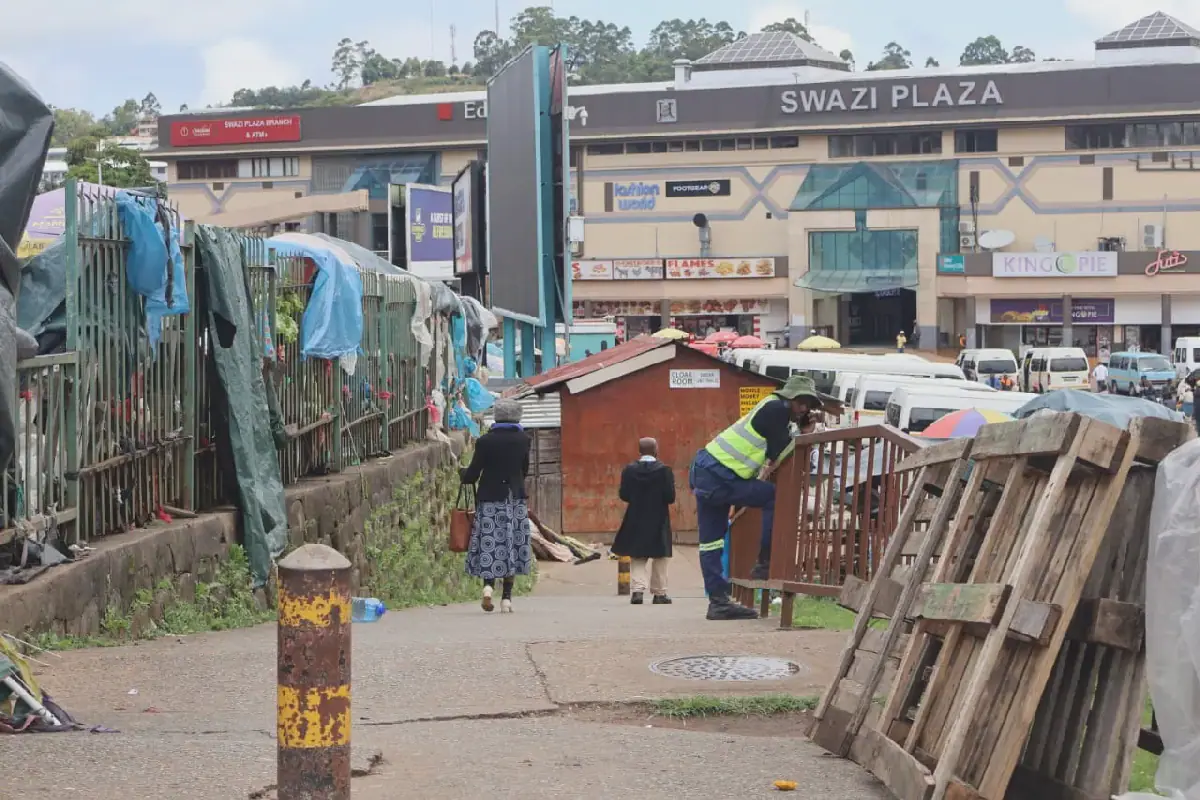
A recent investigation in Mbabane and Manzini found street vendors claiming certain members of the Umbutfo Eswatini Defence Force (UEDF) facilitate the movement of smuggled GT cigarettes across Eswatini's borders. Vendors alleged that soldiers deployed along the border accept money from smugglers in exchange for allowing them to enter the country with their consignments. The Lomahasha and Ngwenya border areas were identified as among the routes allegedly used by smugglers.
Vendors reported that packets of cigarettes cost E25 and loose cigarettes sell for as little as E1.50. Some vendors alleged that not all soldiers accepted bribes, as some confiscated the cigarettes and allowed the smugglers to leave without their consignments. UEDF Public Relations Officer Major Sandile Gwebu denied the allegations, stating that soldiers operated under strict supervision and reported to their superiors hourly.
Major Gwebu said that when smugglers managed to cross the border undetected, it was due to luck. He maintained that soldiers arrested smugglers when they intercepted them and that the army had a zero-tolerance policy towards bribery. Gwebu warned that members found guilty would face serious consequences and that attempting to bribe soldiers constituted an offence.
The Ministry of Health has raised concerns about the illegal cigarette trade and the alleged resale of confiscated tobacco products. Ministry of Health Non-Communicable Diseases, Injuries and Mental Health Coordinator Vusi Shabangu alleged that some law enforcement officers sold confiscated cigarettes through social media instead of ensuring their destruction.
Shabangu stated that such conduct undermined efforts to control tobacco consumption and called for stricter enforcement. He stressed that confiscating cigarettes was insufficient unless authorities ensured their proper destruction. Shabangu warned that the proposed Tobacco Control Bill of 2026 would achieve little if illegal practices persisted among those responsible for enforcing the law.
The investigation also uncovered organised cigarette distribution networks involving vendors who received stock from suppliers operating across the border. Several vendors, predominantly Mozambican nationals, described arrangements under which suppliers delivered stock and set sales targets. Vendors reported daily earnings of between E1 000 and E1 500.
The cheap cigarettes were found to be reaching schoolchildren, with one vendor admitting to selling loose cigarettes to pupils wearing school uniforms. Health officials have raised concerns about the practice, warning that it undermines efforts to control tobacco consumption.
Key points
- Allegations of corruption among soldiers and law enforcement officers have emerged in Eswatini's cigarette trade.
- The illegal cigarette trade has been linked to organised distribution networks and resale of confiscated tobacco products.
- Health officials warn that the persistence of illegal practices undermines efforts to control tobacco consumption.
Reporting sources
- Soldiers accused of aiding cigarette smugglers · Times of Swaziland