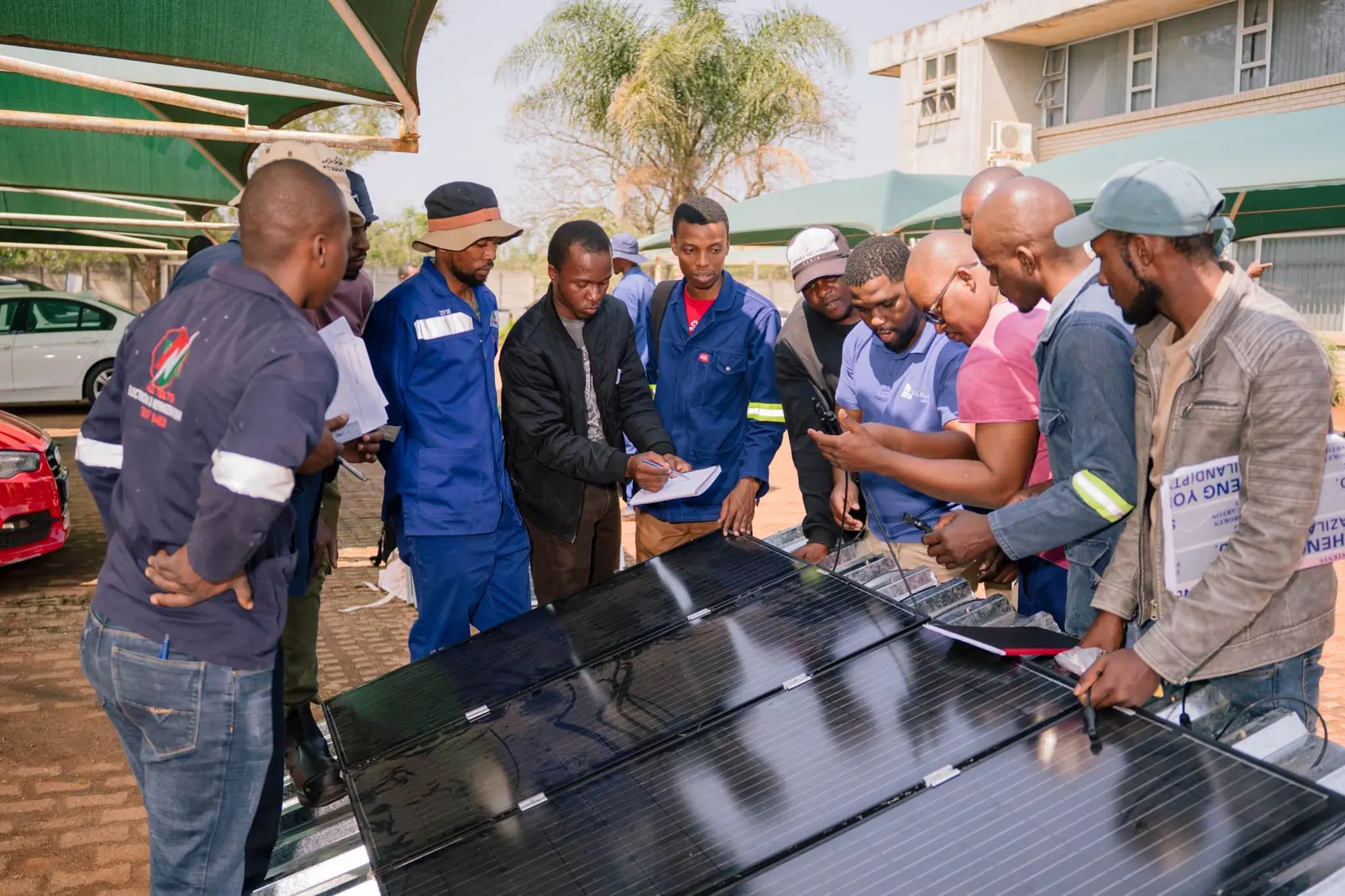
The Government of Eswatini has introduced the TVET Solar Installation Training Programme to provide young people with practical skills in solar energy. The programme, a collaboration between the Ministry of Education and Training and the Ministry of Natural Resources and Energy, aims to select 21 trainees who will be prepared to meet the entry requirements for the Solar Photovoltaic (PV) Installer Level 3 national trade test. Applications for the programme close on October 21, 2026.
The programme is significant as electricity costs continue to put pressure on household budgets and businesses in Eswatini. The revised electricity tariffs for the 2026/27 financial year took effect on April 1, 2026, following an approved average increase of 11.74 per cent. This has made solar energy an increasingly important option for emaSwati seeking to manage their power expenses. Solar power can help users generate some of their own power and reduce the amount of electricity they need to purchase from the grid.
However, installing a solar system requires more than purchasing panels and placing them on a roof. The system must be correctly designed, installed and connected, with appropriate attention to electrical safety, equipment performance and the customer’s energy requirements. This is where trained solar installers become important. As demand for solar solutions grows, people with the right technical knowledge could find opportunities to work for solar companies, contractors and electrical businesses, or eventually establish their own installation and maintenance services.
For a young person who is unemployed or struggling to find a suitable career path, acquiring a practical skill linked to an essential service could provide a foundation on which to build a sustainable livelihood. The opportunity also extends beyond installation, as solar systems require proper maintenance, fault identification and repairs. As the number of systems in use increases, these services could provide additional opportunities for qualified technicians.
The importance of solar training extends beyond individual employment prospects. It is also connected to Eswatini’s broader need to strengthen its energy security. The country has historically relied heavily on imported electricity. Developing more domestic generation capacity, including renewable energy, is one of the approaches being pursued to reduce this dependence and strengthen the reliability of electricity supply. A skilled local workforce is an important part of that transition.
The TVET Solar Installation Training Programme is a step towards addressing the need for skilled technicians in the solar industry. The programme will equip young people with the skills and knowledge required to install and maintain solar systems. This will not only create employment opportunities but also contribute to the country’s efforts to reduce its reliance on imported electricity.
The programme is open to suitably qualified young people, and interested applicants can submit their applications before the closing date. With the growing demand for solar solutions, this programme provides a timely opportunity for young emaSwati to acquire skills in a growing industry and build a sustainable livelihood.
Key points
- The Eswatini government has launched a solar training programme to equip 21 young people with skills in solar energy.
- The programme aims to address the need for skilled technicians in the solar industry and contribute to the country’s energy security.
- The programme will provide opportunities for young people to acquire practical skills and build a sustainable livelihood in a growing industry.