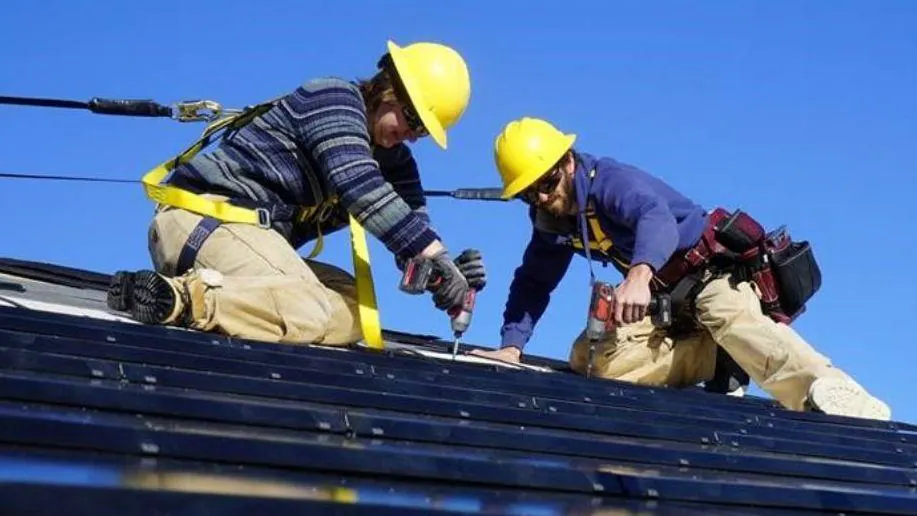
The solar energy industry has seen significant growth in recent years, but one technology has struggled to gain traction: solar roofs. Companies like Tesla have attempted to popularize the concept, but high costs and technical challenges have hindered adoption. According to Kate Collardson, manager of operations at Solar Service of Colorado, some people in the US still dislike the appearance of solar panels, leading to interest in solar roofs that integrate photovoltaic cells into roofing materials.
Solar roofs aim to provide a more aesthetically pleasing alternative to traditional solar panels. Companies like Freesuns, a Swiss firm, are developing products that combine solar cells with roofing materials, making them nearly indistinguishable from traditional roofing materials. However, these products are still more expensive than traditional solar panels. Freesuns CEO Deborah Leroy notes that the company's sales have grown by 20-30% since its founding in 2019, but the industry still faces significant challenges.
One major challenge facing solar roofs is the complexity of installation. Unlike traditional solar panels, which can be installed by a single company, solar roofs require collaboration between roofers, solar installers, and electricians. Additionally, building codes and regulations can be more complicated for solar roofs, making it more difficult for companies to navigate the process. Collardson notes that the added time and paperwork required can be a significant burden for roofing companies.
Another challenge facing solar roofs is the higher cost of repairs. Because solar roofs are integrated into the roofing material, repairs can be more complicated and expensive. Collardson notes that her company charges higher fees for repairs to solar roofs compared to traditional solar panels. Additionally, the use of thermal imaging cameras can help identify issues, but accessing the affected area can be difficult.
Despite these challenges, some companies are working to improve the technology and make solar roofs more viable. Freesuns is using a new technology called "panelized" construction, which involves cutting solar cells into smaller pieces and assembling them into larger units. This approach can help reduce costs and improve efficiency. Additionally, advances in software design may help streamline the design and installation process.
Industry experts believe that solar roofs have a promising future, particularly for historic buildings or areas with strict architectural regulations. Martin Heinrich, a researcher at the Fraunhofer Institute for Solar Energy Systems, notes that solar roofs can provide a valuable source of renewable energy, even if they are less efficient than traditional solar panels. As the technology continues to evolve, it may become more competitive with traditional solar panels.
While solar roofs have yet to gain widespread adoption, some companies remain optimistic about their potential. Freesuns' Leroy notes that as the technology improves and costs decrease, solar roofs may become a more attractive option for homeowners and businesses. With the growing demand for renewable energy, solar roofs may yet become a significant player in the industry.
Key points
- Solar roofs face challenges due to high costs and technical complexities.
- Companies like Freesuns are working to improve the technology and make solar roofs more viable.
- Solar roofs may have a promising future, particularly for historic buildings or areas with strict architectural regulations.