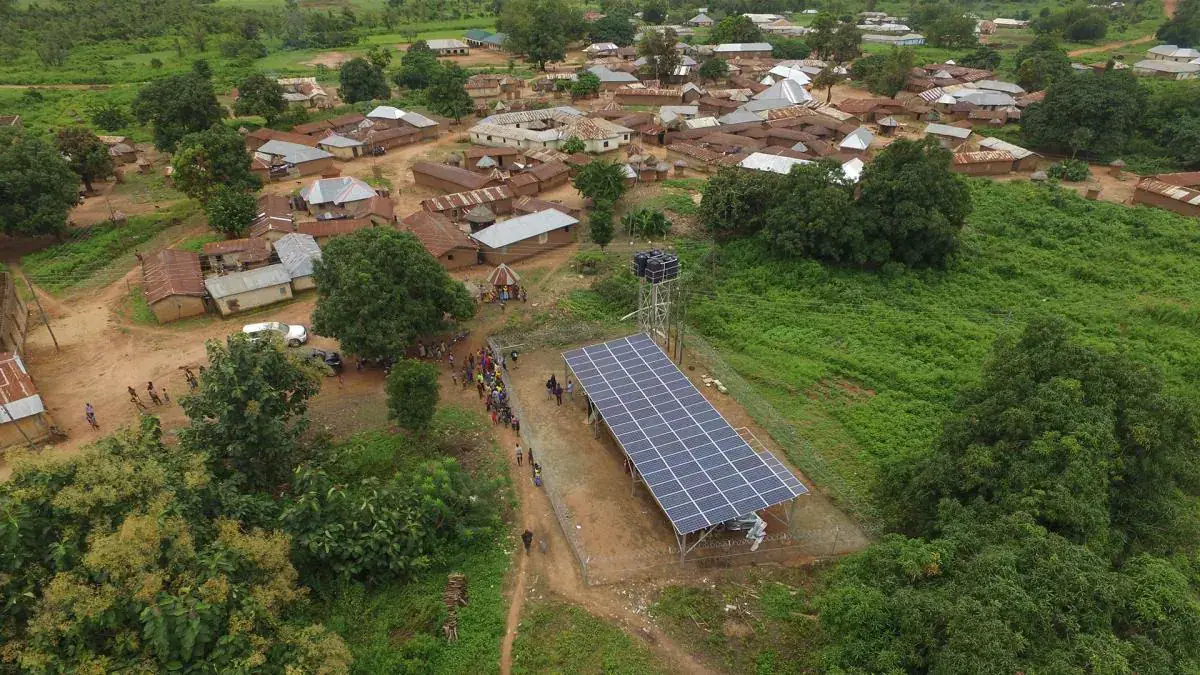
Solar mini-grids offer a practical solution to bring electricity to communities that national grids cannot reliably reach. Artificial intelligence can strengthen this approach by helping planners identify underserved locations, estimate electricity demand, and make better decisions about where systems should be deployed. The possibility that mini-grids could also support digital services, including small-scale computing, creates an interesting link between rural electrification and Africa’s expanding digital economy.
The International Energy Agency, working with the Massachusetts Institute of Technology, has developed an open-source Building-level Electricity Access and Demand Model. This model combines ground-truth electricity consumption data, satellite imagery, and other geospatial information with AI to estimate electricity access and demand at individual buildings across sub-Saharan Africa. Pilot data are available for Ghana, Senegal, and Uganda. This is a valuable planning tool, but it cannot replace field assessments.
A mini-grid does not automatically increase farm incomes; farmers and businesses also need suitable machinery, technical support, access to markets, and working capital. Nigeria’s experience illustrates this connection. The United Nations Development Programme’s work under the Global Environment Facility’s Africa Mini-Grids Programme has emphasised agricultural value chains, recognising that electricity can support processing, storage, and other productive activities.
The World Bank-backed Distributed Access through Renewable Energy Scale-up programme is designed to expand renewable and off-grid electricity access for households, businesses, and public institutions beyond the immediate reach of the national grid. The Federal Government announced that the programme could receive up to US$750 million in support. This is a financing commitment for a broader distributed-energy programme, not a measure of connections already delivered.
Across Africa, the financing challenge remains significant. A 2025 study by The Future of Energy found that, as of early 2025, only 14 per cent of the US$9.1 billion committed to mini-grid electrification had been disbursed. The study identified lengthy due diligence, pre-financing requirements, currency volatility, regulatory uncertainty, and delays in verification as barriers to implementation.
Digital services could create additional demand in rural communities through mobile connectivity equipment, digital payment platforms, local data-processing devices, and edge-computing systems. However, small-scale AI computing is not automatically a solution to mini-grid finances. Computing equipment may require continuous electricity, cooling, connectivity, and specialist maintenance. Its power requirements vary considerably depending on the application.
Africa’s wider data-centre expansion demonstrates the growing relationship between digital infrastructure and energy demand. McKinsey estimated in 2025 that demand for data-centre capacity across the continent could rise from approximately 0.4 gigawatts to between 1.5 and 2.2 gigawatts by 2030. Reliable electricity is an essential foundation for narrowing the digital divide, but connectivity, affordable devices, digital skills, and accessible services are equally important.
Key points
- A credible mini-grid project incorporating digital or computing services should demonstrate who will pay for those services and how much electricity the equipment will consume.
Reporting sources
- Solar Mini-Grids and AI: Creating Opportunity Through Reliable Rural Power · African Leadership Magazine