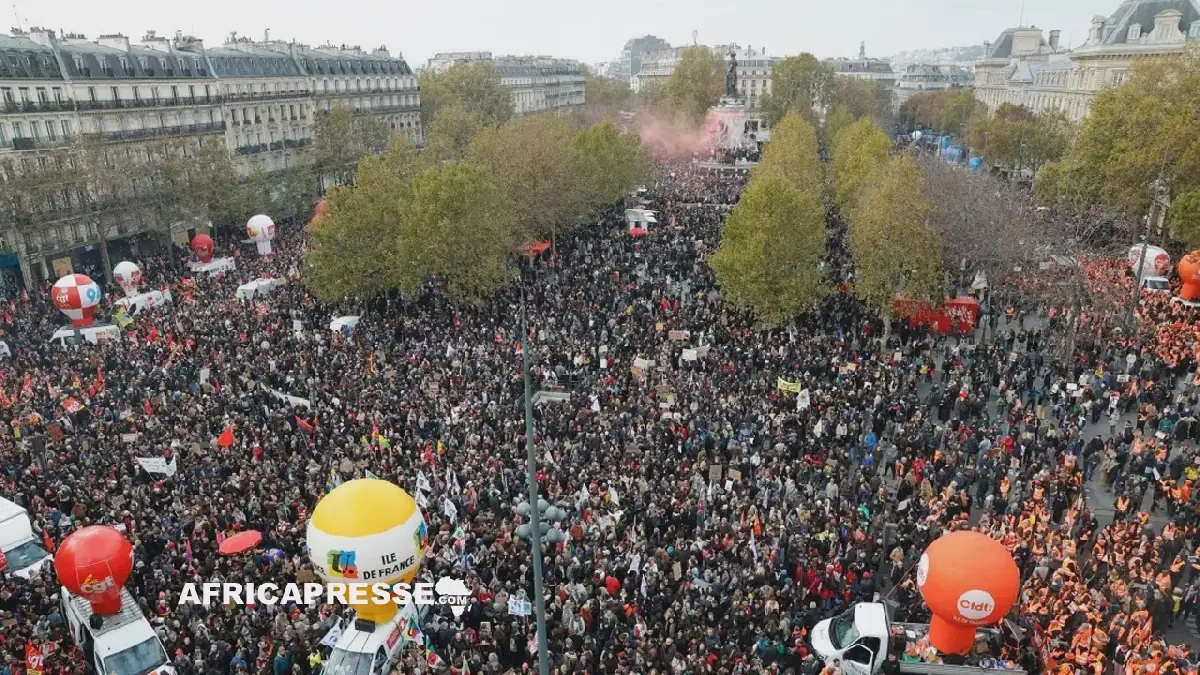
A wave of social mobilization is sweeping across Europe, prompting a re-examination of the continent's democratic institutions and their ability to address the everyday concerns of citizens. The protests, which have been taking place in various countries, are driven by demands for better living standards, jobs, and public services. This movement has drawn comparisons with the Arab Spring, which saw widespread protests across the Middle East and North Africa in 2011.
The protests in Europe are diverse, with different countries facing unique challenges. In Spain and Portugal, the struggle to access affordable housing has become a central issue. In France, protests against the high cost of living have been marked by violent clashes on the fringes of demonstrations. A general strike and day of protests took place on November 5, with unions calling for improved wages, employment, and public services.
The ability of trade unions to secure concrete concessions will be crucial in determining the future of the movement. The protests in Europe have raised questions about the effectiveness of democratic institutions in addressing the needs of citizens. While Europeans have access to democratic processes, such as voting and judicial recourse, which were lacking in many Arab countries, they are still experiencing feelings of disillusionment and disconnection from the political process.
The Arab Spring protests, which began in 2011, were driven by demands for dignity, freedom, and an end to authoritarian rule. In contrast, the European protests are focused on more specific, practical issues, such as housing, wages, and public services. However, both movements share a common thread - the demand for institutions that are responsive to the needs of citizens and can deliver tangible improvements in their lives.
The crisis in Europe highlights the limitations of democratic institutions in addressing social and economic issues. Despite having the mechanisms of representation, citizens can still feel disconnected from the political process and doubt the ability of their governments to effect change. This disillusionment can stem from the gap between the promises of democratic institutions and the lived experiences of citizens.
The concept of dignity is central to both the Arab Spring and the current European protests. Dignity encompasses not only political freedom but also material well-being, including the ability to live a decent life, access education and healthcare, and enjoy a secure retirement. For African societies, which are often observed through the lens of their fragilities, this realization has important implications.
The tensions and protests in Europe and Africa highlight the need for institutions that can listen to citizens, protect their rights, and provide a better future. The comparison between the two regions can be useful if it leads to a deeper understanding of the common demands for dignity, accountability, and effective governance. Ultimately, the success of these movements will depend on their ability to translate protests into concrete, lasting changes that address the needs and concerns of citizens.
Key points
- The protests in Europe are driven by demands for better living standards, jobs, and public services, echoing the Arab Spring's call for dignity and effective institutions.
- The ability of trade unions to secure concrete concessions will be crucial in determining the future of the movement.
- The concept of dignity is central to both the Arab Spring and the current European protests, encompassing not only political freedom but also material well-being.