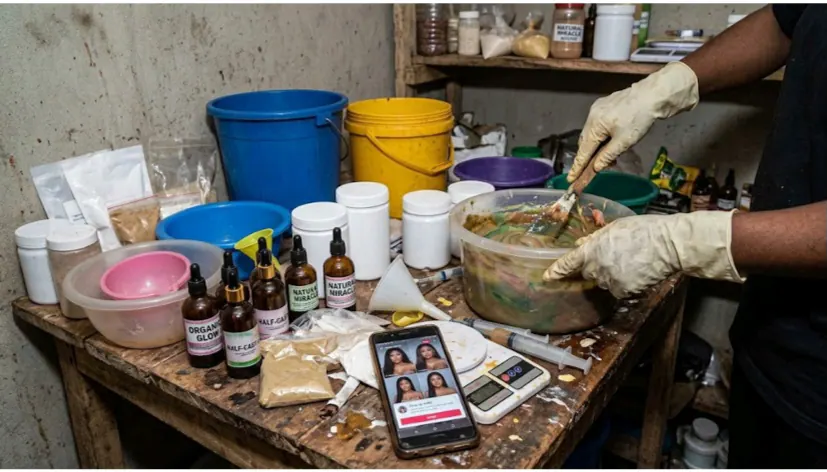
The rise of social media in Nigeria has led to a surge in the sale of unregulated skincare and wellness products, with many vendors claiming that their products are "100 percent natural" and can cure a range of health and beauty issues. These products, often sold through social media handles, promise quick fixes for problems such as skin conditions, weight gain, and fertility struggles. However, the lack of regulation and oversight has raised concerns about the safety and efficacy of these products.
A study published in Scientific Reports found that 10 skin-lightening cosmetics bought from retail outlets in Ilorin, Kwara State, contained mercury, with three products exceeding international safety limits. The study also found that only six of the products were listed with the National Agency for Food and Drug Administration and Control (NAFDAC), and none of them disclosed mercury, arsenic, or hydroquinone on their packaging. This highlights the risks associated with the use of these products, including heavy metal poisoning.
The problem is not limited to skincare products, as the wellness industry also peddles ingestibles such as fertility tonics, detox bitters, and libido boosters. These products are often marketed as natural and safe, but they can be just as hazardous as skincare products. Herbs are active chemical compounds that require careful handling and regulation to ensure safety. However, vendors selling these products on social media often lack the equipment and expertise to measure concentrations and prevent contamination.
Ajoke Mustapha, a Lagos-based litigator, had a personal experience with the dangers of these products. Her parents, concerned about her skin tone, bought her skin-lightening creams from social media vendors. Mustapha used the creams for four days before realizing that they were causing her skin to peel and damage her epidermis. She eventually threw away the creams and returned to using moisturizer and sunscreen.
Pharmacist Adeolu Joseph highlighted the risks associated with the use of these products, particularly when they are marketed as cure-alls for multiple illnesses. He noted that many Nigerians are lax about what they ingest and that the sale of these products on social media is a far more serious problem than what is seen in retail pharmacies. Joseph emphasized the need for regulation and oversight to protect the public from these hazardous products.
The demand for these products is driven by a range of factors, including the desire for quick fixes and the lack of access to formal healthcare. Many Nigerians are turning to social media vendors because they feel that formal healthcare is sluggish, expensive, or indifferent. However, the risks associated with these products far outweigh any perceived benefits, and there is a need for greater awareness and education about the dangers of these products.
The sale of unregulated skincare and wellness products on social media is a significant public health risk in Nigeria. The lack of regulation and oversight has created a chaotic digital bazaar where engaging reels and glowing influencers carry more weight than chemical analysis. There is a need for urgent action to regulate the sale of these products and protect the public from their potential harm.
Key points
- The sale of unregulated skincare and wellness products on social media poses a significant public health risk in Nigeria.
- Many of these products contain hazardous chemicals such as mercury, arsenic, and hydroquinone.
- The lack of regulation and oversight has created a chaotic digital bazaar where engaging reels and glowing influencers carry more weight than chemical analysis.