Many Liberians are struggling to make ends meet as soaring food and fuel prices outrun income growth. Ten Liberians interviewed in Monrovia say growing unemployment, lost livelihoods, and financial hardship in the last two years have pushed them to depend on strangers and charitable support to survive. Joseph, a 48-year-old father of three, is one of them. He lost his job in waste management in 2025 and has been begging for money to feed his family.
Liberia's economy grew 5.1 percent in 2025, according to the African Development Bank, but most families haven't felt the benefits. The growth came mostly from mining royalties to government, not job creation, and extreme poverty still rose to 35.8 percent. The crisis deepened when the Trump administration canceled 27 of 29 USAID programs in Liberia in May 2025, cutting nearly $360 million from health and education.
The government responded to the aid cuts by adding a $0.25 per gallon petroleum surcharge and implementing new patient fees for healthcare. For families already struggling to afford food, the surcharge pushed up transport and food costs, and the hospital fees have deterred many from going for treatment or crippled them financially when they face emergencies. Economist Baba Conteh says economic recovery has not translated into meaningful jobs and stable incomes for ordinary households.
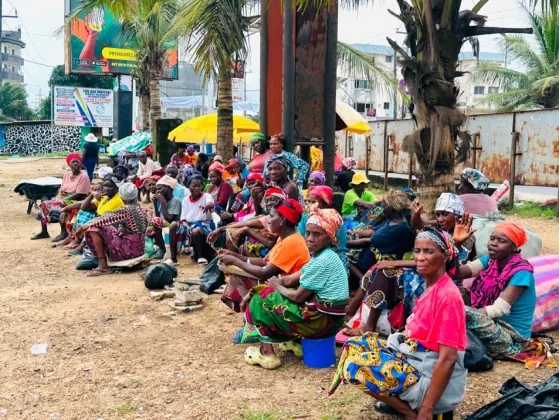
Aid cuts have trickled down throughout the economy, with job loss being a common pathway into poverty. Conteh says that when job loss continues long enough for families to exhaust their savings and sell productive assets, people may become homeless, engage in high-risk survival activities, or depend heavily on public charity. At Vamoma house on Tubman Boulevard, in Sinkor, Esther Kamara leads a group of widows, elderly people, and people with disabilities who gather to seek assistance.
The group had about 280 members in 2024 and has since grown by 50. Kamara says many days the women come to her when they or their children are sick and have no money to take them to hospital, so they just buy drugs and they take it. The drugs are usually antibiotics, bought without a prescription and taken with no medical guidance, making the child likely to build antibiotic resistance.
Support groups are under pressure from growing demand, with requests for help doubling over the last two years. Organizations such as Siakeh Foundation, Kimbo Foundation, and Four Hunger report an increase in requests from families who previously managed to meet at least some of their basic needs but now struggle with food, school fees, healthcare, and other essentials.
Government officials acknowledge the growing need but have limited resources to help. Ministry of Gender, Children and Social Protection officials say the key gap in addressing the issues affecting vulnerable groups is limited resources, preventing the ministry from reaching them.
Key points
- Soaring food and fuel prices have pushed many poor Liberians to beg for survival.
- The crisis deepened after the Trump administration canceled USAID programs in Liberia.
- Support groups are under pressure from growing demand, with requests for help doubling over the last two years.