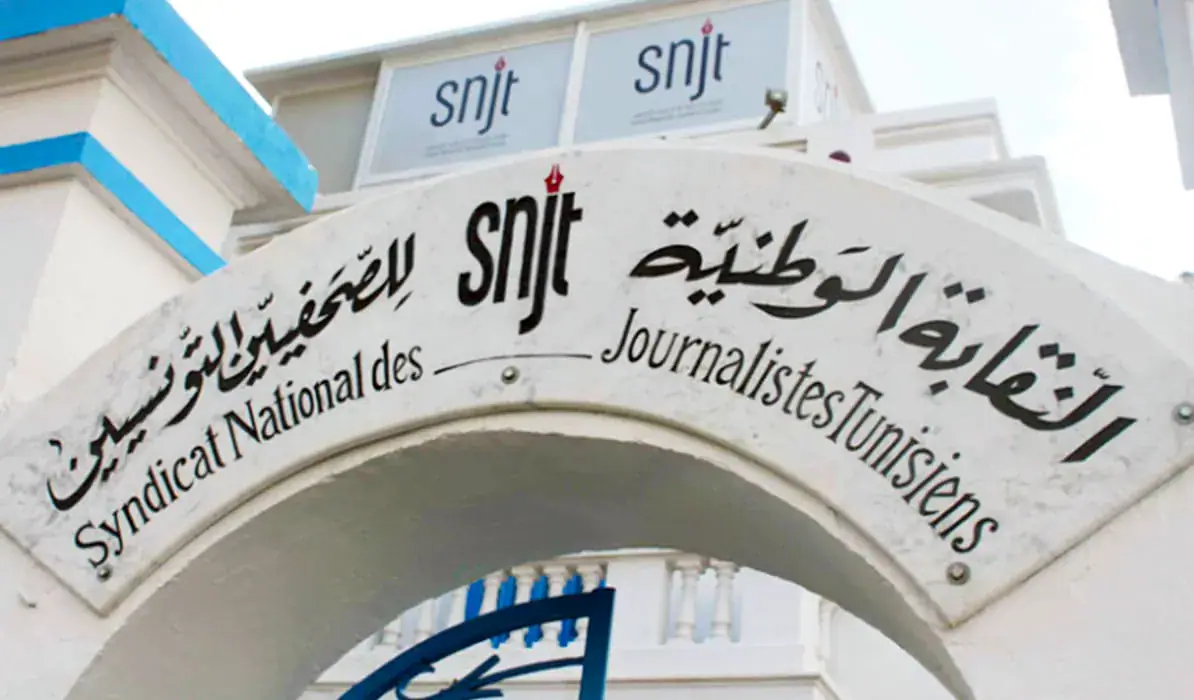
The Syndicat national des journalistes tunisiens (SNJT) is organizing its 7th national congress in Tunis on October 10-11. This significant event will allow participants to define the SNJT's future strategy and elect a new executive bureau. The SNJT, founded in 2008, is the representative organization of Tunisian journalists, defending their moral and material rights, as well as press freedom.
The SNJT has been actively involved in defending journalists' rights, particularly in the face of a deteriorating climate. In September, the syndicate strongly mobilized to defend four detained journalists and initiated consultations for a national general strike in the media sector. The SNJT's president, Zied Dabbar, described the situation as an "state of emergency" and alerted the public to the worrying degradation of the sector and the consequences of pressures on journalists.
The congress comes at a time when Tunisian journalists are seeking cohesion and defending the role of the press in offering a faithful reflection of political, economic, and social realities. The SNJT's doctrine focuses on the conditions of journalistic practice, denouncing pressures on professionals. Recently, the amendment of article 24 of decree-law 54 was introduced, with several modifications perceived as easing the penal grip on the profession.
The SNJT's strategy is expected to be redefined in light of the difficulties faced by the sector. The syndicate will likely show increased vigilance in defending journalists' economic and moral rights. The next executive bureau will have to define the corporation's general orientations in a challenging context and confirm the strong mobilization for the freedom of detained journalists.
The SNJT is participating in a coordination instance with other organizations, including the Union générale tunisienne du travail and the Ligue tunisienne des droits de l'homme. This instance has announced a national march in Tunis on October 17, focusing on economic, social, and political issues, including the degradation of purchasing power and the decline of public services.
Fifteen journalists are candidates for the SNJT's executive bureau, which will be elected during the congress. The candidates include Amine Dhbaibi, Ayman Rabïi, and Zied Dabbar, among others. The next executive bureau will have to concretize the SNJT's orientations and carry the syndical and democratic demands of the profession.
The SNJT's congress is taking place in a context where the debate around freedom of expression is ongoing. The syndicate is expected to clarify its position on the new modalities of applying texts related to freedom of information, particularly decree-law 54. The event will likely reaffirm the importance of press freedom, protection of sources, and editorial independence.
Key points
- The SNJT's 7th national congress aims to define the syndicate's future strategy and elect a new executive bureau.
- The congress is taking place in a challenging context for Tunisian journalists, with concerns about press freedom and the detention of journalists.
- The SNJT is participating in a national march on October 17 to defend liberties and address economic and social issues.
Reporting sources
- SNJT : Le congrès de la cohésion · realites.com.tn