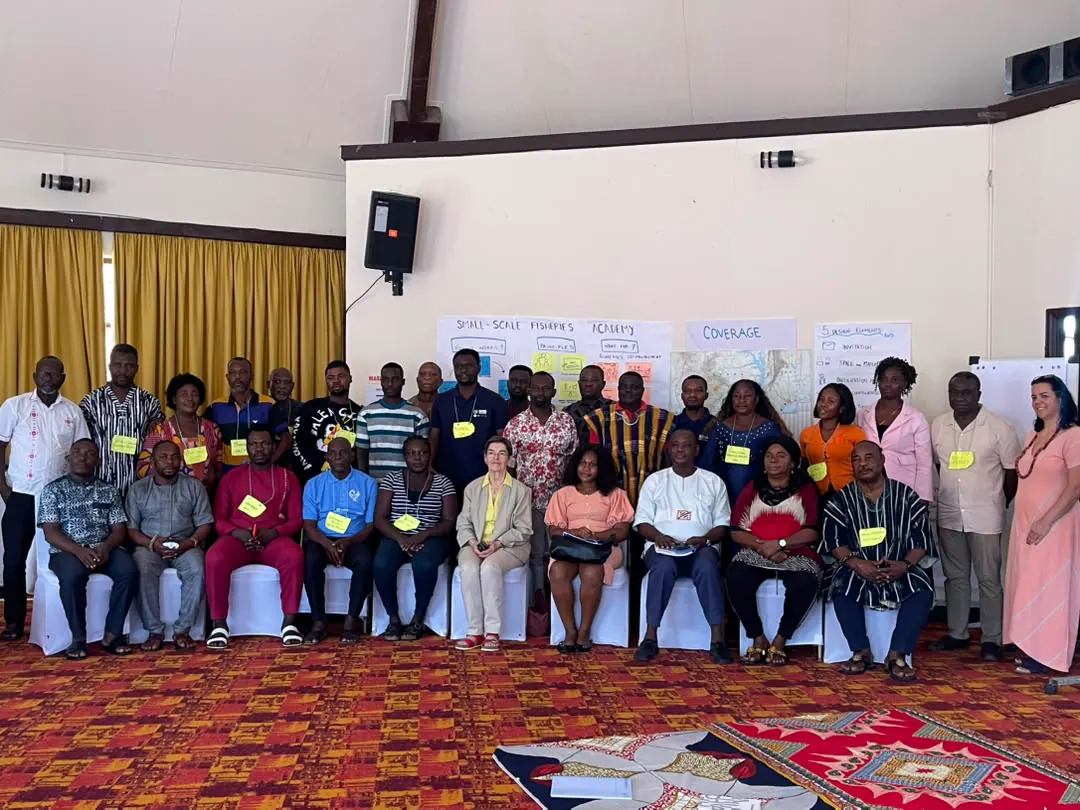
The Small-Scale Fisheries Academy has trained 35 fisheries stakeholders, including six females, from Ghana's four coastal regions in Elmina. The training aimed to strengthen community leadership and lay the groundwork for more effective fisheries co-management. This initiative supports the implementation of the Fisheries and Aquaculture Act, 2025 (Act 1146), which expands co-management arrangements and formally integrates community actors into fisheries governance.
The training was organised by Mundus Maris, a non-profit organisation, and the Canoe and Fishing Gear Owners Association of Ghana (CaFGOAG), with support from Blue Ventures, in collaboration with the Fisheries Commission and the Ministry of Fisheries and Aquaculture. The programme empowers participants to facilitate community dialogues, bringing together diverse groups within fishing communities to discuss challenges and co-create solutions.
The beneficiaries were equipped with skills in community facilitation, dialogue, leadership, and participatory planning. They will help establish community-level fisheries co-management committees in line with Act 1146. The initiative seeks to strengthen community ownership and collaboration with fisheries authorities by creating structured spaces for local stakeholders to participate in decisions affecting their livelihoods and marine resources.
The training included complementary communication activities, such as FishTalks through short audio messages shared via WhatsApp and Community Information Centres. These aim to make information on fisheries legislation and responsible practices more accessible to coastal communities. The Elmina session built on the maiden Academy held in Winneba in June 2026.
Dr Cornelia E. Nauem, President of Mundus Maris, applauded the Ministry of Fisheries and the Fisheries Commission for reforms aimed at formalising Ghana's artisanal fishing sector and improving data collection. She cited the extension of the industrial exclusion zone from six to 12 nautical miles as a critical move to protect inshore small pelagic stocks.
Mr Kenneth Atta, General Secretary of the CaFGOAG, called for an inclusive, fisher-led dialogue to tackle persistent challenges in Ghana's artisanal fisheries sector. He highlighted destructive practices such as the use of explosives and obnoxious chemicals, unapproved fishing gear, and the harvesting of juvenile fish as key drivers of declining fish stocks.
The initiative plans to organise additional community meetings in 20 fishing communities through the Sankofa Fisheries Dialogues over the next three months. Participants and stakeholders have expressed appreciation for the training and called for continued support to promote sustainable fisheries and address challenges faced by fishers, including high illiteracy levels and adverse weather conditions.
Key points
- The Small-Scale Fisheries Academy aims to strengthen community leadership and promote co-management in fisheries.
- The training supports the implementation of the Fisheries and Aquaculture Act, 2025 (Act 1146).
- The initiative seeks to promote responsible fishing practices and sustainable fisheries in Ghana's coastal communities.