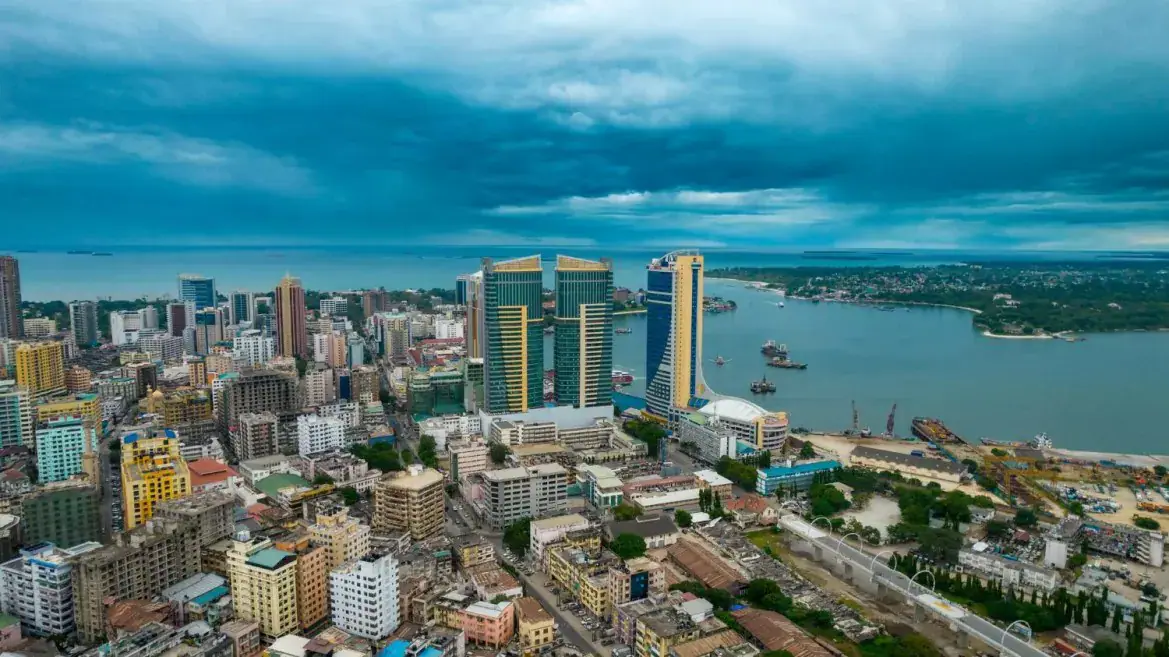
The cost of a small plot of land in Dar es Salaam, Tanzania, can be significantly higher than that of a large acreage in Texas, USA. A 1,000 square meter plot in Masaki, Dar es Salaam, with no house and limited access to utilities, can cost between $700,000 and $1.3 million. In contrast, a four-bedroom house on a quarter-acre in Austin, Texas, with reliable municipal utilities and a freehold title, costs around $400,000 to $500,000.
The high cost of land in Dar es Salaam is not limited to Masaki, with other neighborhoods such as Oysterbay and Msasani also commanding high prices. According to recent data, land in these areas can trade at TZS 3.5 million to TZS 6.5 million per square meter, equivalent to $1,430 to $2,655. Oysterbay specifically averages $1,500 to $2,200 per square meter, with premium plots reaching $3,820. This is in stark contrast to Johannesburg, South Africa, which has a citywide average of $545 to $637 per square meter.
The root cause of the high land prices in Dar es Salaam is not demand, but rather a severe shortage of land that combines secure title, reliable infrastructure, and proximity to amenities. The city's infrastructure is concentrated in a few neighborhoods, including Masaki, Oysterbay, and Msasani, which are the only areas with bankable title, paved roads, and access to international schools and medical facilities. This concentration of infrastructure and amenities drives up prices in these areas.
The diplomatic community plays a significant role in driving up land prices in Dar es Salaam. Embassies, international organizations, and NGOs concentrate their residential demand in the same neighborhoods, paying in USD and setting a pricing floor that is disconnected from local income. This creates a self-reinforcing dynamic where Tanzanian professionals on strong local salaries compete with international buyers and lose out.
The mortgage market in Dar es Salaam also contributes to the high land prices. With mortgage rates ranging from 15 to 19 percent, financing a land purchase is economically irrational for most buyers. As a result, the market becomes cash-only, with wealthy buyers setting prices based on what they can pay rather than what incomes support. This removes the natural price anchor that keeps prices connected to economic fundamentals in most markets.
The status quo benefits the owners of land in Masaki and Oysterbay, including the diplomatic community, international organizations, wealthy Tanzanian families, and foreign investors. These individuals and groups have a direct financial interest in maintaining the current situation, where the rest of the city remains underdeveloped. This creates organized resistance to any redistributive agenda that aims to address the issue.
Kigali, Rwanda, provides an example of how to address the issue of concentrated land prices. The Rwandan government extended paved roads and reliable utilities to emerging districts, relocated government institutions, and anchored commercial development in areas it wanted to develop. As a result, Kigali has a more evenly distributed property price across districts, with a smaller quality gap between prime areas and emerging ones.
Key points
- The high cost of land in Dar es Salaam is driven by a shortage of secure and well-located plots.
- The diplomatic community and international organizations play a significant role in driving up land prices.
- Kigali, Rwanda, provides an example of how to address the issue of concentrated land prices through infrastructure development and land administration reform.
Reporting sources
- Why a Small Plot within Dar es Salaam, Tanzania, Costs More Than an Acre in Texas USA · The Tanzania Times – News from Tanzania, Africa, World, Breaking News, Weather, Environment and Climate Change