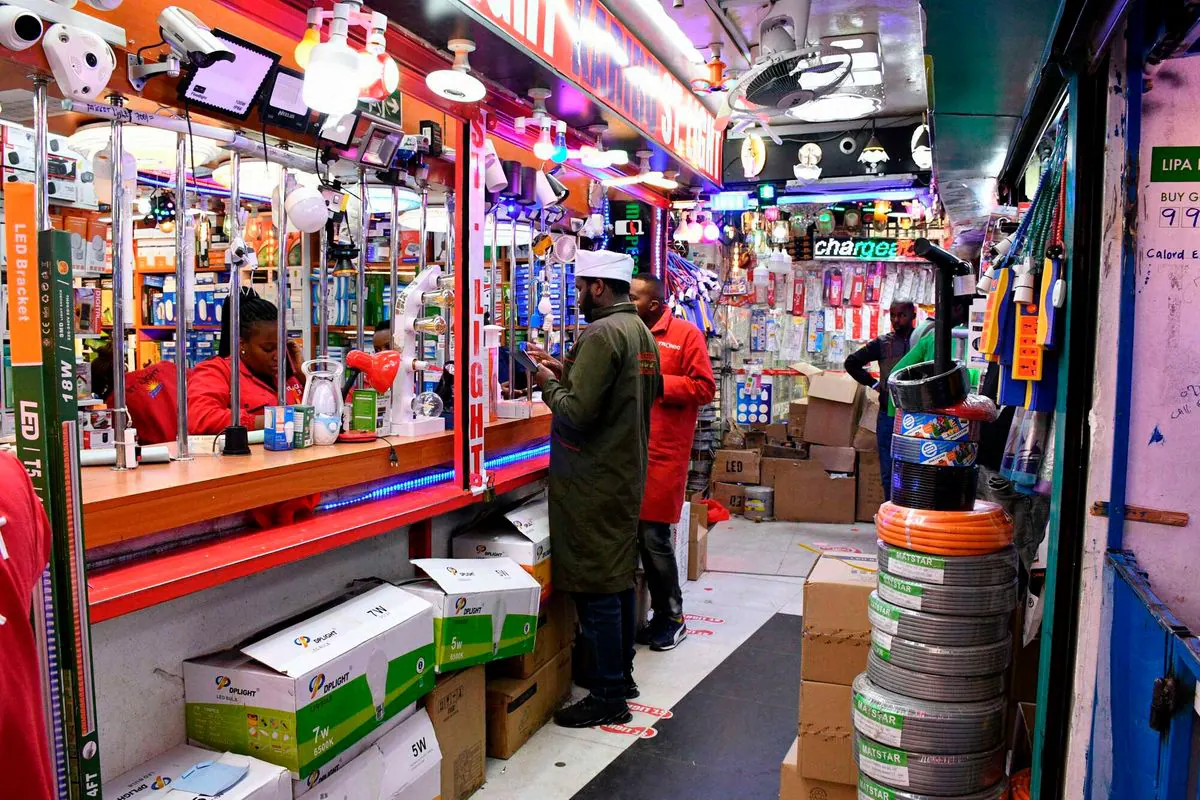
Kenya's economy is largely driven by over 7.4 million micro, small, and medium enterprises (MSMEs), which account for approximately 40 percent of the nation's GDP and employ nearly 15 million people. However, these businesses face a significant challenge: unreliable electricity. Power outages can have varying effects on different MSMEs, from minor inconveniences to major disruptions. For instance, a mechanic may continue working, while a salon or shop may have to halt operations.
A recent survey conducted by BCG and Stahili, involving over 4,500 MSME owners across Kenya, revealed that nearly four in five respondents reported that outages reduced or stopped their operations. Specifically, 79 percent of MSMEs said they reduced or stopped operations during an outage, with 25 percent reporting a complete halt. The survey also found that 43 percent of MSMEs delayed equipment or stock purchases due to unreliable electricity, and 74 percent expressed willingness to pay more for greater reliability.
The impact of power outages varies across different types of businesses. For example, hair salons and shops reported high levels of disruption, with 93 percent and 86 percent respectively saying that outages reduced or stopped their operations. Restaurants and cafes also experienced significant disruptions. In contrast, mechanics and butcheries were found to be more resilient. The survey highlighted that lost trading hours are a visible cost of an outage, while the less visible cost is the investment a business decides not to make due to unreliable electricity.
The second half of 2025 saw an average grid customer experience 3.5 interruptions a month and 8.4 cumulative hours without electricity each month. Although this was an improvement from the same period in 2024, the outage frequency is three times higher and the outage duration 5.6 times higher than the Energy and Petroleum Regulatory Authority's reliability target. These statistics demonstrate the need for reliable electricity to support the growth of MSMEs.
Unreliable electricity not only affects daily operations but also hinders business growth. Forty-three percent of MSMEs reported delaying equipment or stock purchases due to power outages. The businesses most likely to defer investment are also those reporting the greatest operational disruption. This means that the same reliability problem is showing up twice: first as lost activity today, and then as foregone investment tomorrow.
To address the issue of unreliable electricity, many MSMEs are taking matters into their own hands. The survey found that 89 percent of respondents were using some form of non-grid backup, with solar being the most common backup source. Additionally, 74 percent of MSMEs expressed willingness to pay more for greater reliability. This indicates that there is a demand for reliable electricity, and distributed renewable energy providers have an opportunity to meet this need.
The survey's findings have significant implications for distributed renewable energy providers. Rather than convincing MSMEs of the value of reliable electricity, providers can focus on identifying where it matters most and building solutions that meet these needs. By doing so, they can help unlock the growth potential of Kenya's MSMEs and support the country's economic development.
Key points
- Nearly 4 in 5 MSMEs in Kenya report that power outages reduce or stop their operations.
- 43% of MSMEs delay equipment or stock purchases due to unreliable electricity.
- 74% of MSMEs are willing to pay more for greater reliability.