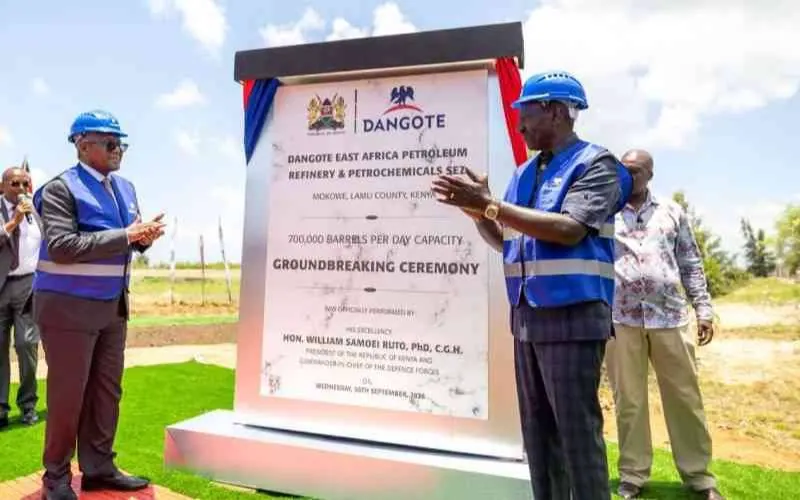
The Lamu port in Kenya is poised to become a major economic hub in East Africa with the construction of a $2.2 trillion refinery project. The project, led by Aliko Dangote, was launched on Wednesday with the arrival of 3,000 metric tonnes of heavy construction machinery on the MV Da Yang. The refinery, expected to be East Africa's largest, will have a capacity of 700,000 barrels per day and will process crude from Lokichar in Turkana County and other African sources.
The project is expected to have a significant impact on Kenya's economy, which has been vulnerable to external fuel shocks. The country imports virtually all its refined petroleum products, and recent disruptions to the Strait of Hormuz have led to soaring pump prices. The refinery will provide a steady supply of refined petroleum products to the region, reducing East Africa's dependence on imported fuel. It will produce over 100 million litres of petrol, diesel, and aviation fuel daily, supplying the entire region.
The economic benefits of the project extend beyond fuel, with at least 60,000 direct jobs expected to be created. The project will also position Kenya as a regional energy hub and provide 1,000 megawatts of electricity from petcoke, with 500MW offered for sale to the Kenyan government. This could lower production costs across the industrial spectrum in a country where reliable and affordable power remains a bottleneck for manufacturing.
The refinery project is part of the LAPSSET corridor, which links Lamu Port to inland trade routes stretching into northern Kenya and beyond. Lamu's deepwater port, with its 17.5-metre draft, can handle massive oil tankers that will service the refinery. The project is expected to anchor related industries, including fertiliser and chemicals, and catalyse activity along the LAPSSET corridor.
However, the project faces several challenges, including concerns over corruption and displacement of residents. The High Court had ordered a pause on construction after over 130 residents of Chandavai moved to court, claiming displacement, property, and environmental destruction tied to preliminary site developments. Lamu leaders have also demanded that most project jobs be reserved for residents.
The issue of where crude will be sourced from for the refinery's massive capacity has also been raised, with Kampala preferring to use its Hoima refinery. Despite these challenges, Dangote has weathered similar obstacles before, including in his native Nigeria. The commercial terms, particularly the electricity sale agreement, will determine whether the promised benefits materialise into affordable and dependable power and genuine industrial transformation.
For a region historically relegated to the periphery of Kenya's economic geography, the refinery represents a rare opportunity. If the promises are kept, and the government ensures all legitimate concerns are addressed, Lamu could shift from a sleepy coastal town to the beating heart of East Africa's energy economy. The project is an investment being made by a fellow African, willing to take risks for a continent he loves and understands.
Key points
- The refinery project will create at least 60,000 direct jobs and position Kenya as a regional energy hub.
- The project will provide a steady supply of refined petroleum products to the region, reducing East Africa's dependence on imported fuel.
- The refinery will produce over 100 million litres of petrol, diesel, and aviation fuel daily, supplying the entire region.