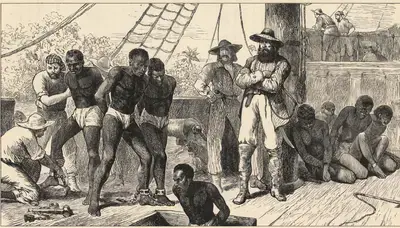
The legacy of the transatlantic slave trade continues to have a profound impact on countries such as South Africa, Brazil, and Haiti. Portugal was the largest carrier of enslaved Africans, transporting over 4.5 million people, mainly to Brazil and Atlantic island outposts. In contrast, the British system was based on strict anti-miscegenation and a rigid binary of black and white, while the Portuguese system encouraged manumission and interracial relationships, leading to a complex system of racial classification based on skin shade, facial features, and hair texture.
The effects of slavery and colonialism can still be seen in modern-day Brazil, where the democracia racial myth emerged, suggesting that the country did not have racism due to its mixed population. However, this myth has been debunked, and it is clear that structural racism is still a major issue. In Haiti, France's involvement in the slave trade had a devastating impact, with the country being forced to pay a massive indemnity of 150 million francs in 1825, which led to a cycle of international borrowing and economic stagnation that lasted for nearly two centuries.
The Dutch West India Company was a major player in the slave trade, with a focus on profit maximization and financial accounting. In Suriname and Curaçao, the Dutch did not impose their language on plantation workers, leading to the development of robust creole languages such as Sranan Tongo and Papiamento. This created a society that was cut off from the Dutch world in terms of access to power and influence.
The British Empire played a significant role in the transatlantic slave trade, turning it into an engine of global capitalism and scientific racism. The profits from West Indian sugar and American cotton funded the Industrial Revolution and the creation of modern banking institutions such as Barclays and the Bank of England. When slavery was abolished in Britain in 1833, £20 million was paid to 46,000 British slave owners as compensation for their "property", but not to the enslaved themselves.
The legacy of slavery and colonialism continues to have a profound impact on countries such as South Africa, with ongoing debates about reparations and apologies. British Conservative MP Kemi Badenoch has stated that Britain should not issue an apology or pay reparations, describing the call for redress as a "navel-gazing distraction". However, critics argue that this approach ignores the fact that the position of many nations in the world economy was the product of colonial extraction.
The debate about Britain's role in the slave trade is not just about history, but also about national identity, moral standing, and the nature of the state. The argument that modern-day British citizens play no role and therefore should not be liable is based on an individualistic notion of justice, which ignores the fact that British institutions continue to produce value from the wealth generated by the trade. Caribbean states, on the other hand, are in serious debt, which is attributable to the structures that emerged after emancipation and their extreme climate vulnerability.
Ultimately, the debate about reparations and apologies for the slave trade is about recognizing the ongoing impact of historical injustices and taking steps to address them. It is not just about "looking back" or "asking for cash", but about acknowledging the legacy of colonialism and taking responsibility for it. As the world continues to grapple with the consequences of slavery and colonialism, it is clear that this debate is far from over.
Key points
- Britain's colonial wealth endures while calls for justice expose deep inequalities
- The legacy of slavery and colonialism continues to have a profound impact on countries such as South Africa, Brazil, and Haiti
- Ongoing debates about reparations and apologies highlight the need for recognition and responsibility for historical injustices
Reporting sources
- Slavery debt is far from settled · Mail & Guardian