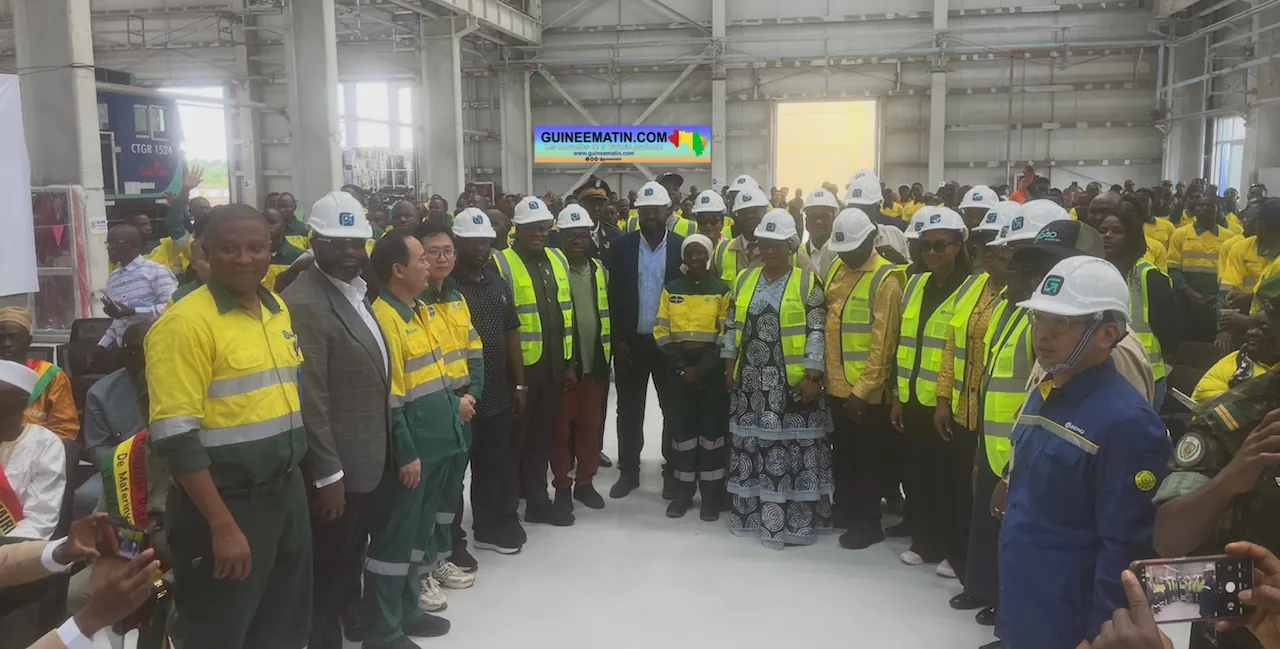
In a significant move to bolster local capacity for the Simandou 2040 project, sixty young Guineans are preparing to depart for China. The initiative, aimed at enhancing the skills of local youth in train operations, is part of the Guinean government's strategy to ensure that nationals play a pivotal role in the project's implementation and operation. The departure ceremony, held at the Moribayah port in Forécariah prefecture, was attended by high-ranking officials, including Djiba Diakité, president of the Simandou Strategic Committee, and General Amara Camara, minister secretary general of the Presidency.
The Simandou 2040 project, touted as a major development lever for Guinea, focuses on harnessing the country's mineral resources to spur economic growth and development. A key component of this project is the construction of extensive railway infrastructure, which will require skilled personnel to operate and maintain. By sending these sixty young Guineans to China for training, the government aims to build a local workforce capable of managing and operating the trains that will be crucial to the project's success.
The training program, set to last four months, is designed to equip the participants with the necessary skills and knowledge to safely and efficiently operate trains. This initiative reflects the government's commitment to maximizing local content and ensuring that the benefits of the Simandou project are shared equitably among Guineans. Upon their return, the trained individuals are expected to play a critical role in the operation of the railway system, contributing to the project's sustainability and success.
During the departure ceremony, the prefect of Forécariah, Colonel Mamadou Lamarana Diallo, expressed gratitude to the government for its efforts in realizing the Simandou project. He praised President General Mamadi Doumbouya for his vision and leadership, which have been instrumental in advancing the project. The prefect's sentiments were echoed by Dr. Moussa Bérété, deputy managing director of the TransGuinean Company (CTG), who emphasized the significance of this training program in achieving the project's objectives.
Dr. Bérété highlighted that the participants, chosen from a large pool of applicants, represent the first wave of Guineans to undergo such training. He stressed that their role will be pivotal not only in operating the trains but also in transferring knowledge to other Guineans, thereby fostering a culture of competence and self-sufficiency. The CTG, in partnership with its stakeholders, is committed to ensuring that the local content aspect of the Simandou project is fully realized.
Fanta Bangoura, an assistant responsible for operations and train driver training, who was the first Guinean woman to drive a Simandou project train, welcomed the initiative. She encouraged the beneficiaries to utilize their training to serve Guinea and contribute to the project's success. Bangoura shared her own experience of driving a train under the project, describing it as an emotional and empowering experience that she hopes the trainees will also enjoy upon their return.
The Simandou 2040 project has been hailed as a transformative initiative for Guinea, with the potential to significantly boost the country's economic development and global standing. By investing in the skills and capabilities of its youth, the government aims to ensure that the project yields lasting benefits for the nation. As the sixty trainees embark on their journey to China, they carry with them the hopes and expectations of a nation eager to reap the rewards of its rich natural resources.
Key points
- The Guinean government has sent sixty young nationals to China for a four-month training program in train driving under the Simandou 2040 project.
- The initiative aims to develop local expertise in railway operations, ensuring that Guineans play a central role in the project's implementation and sustainability.
- Upon their return, the trained individuals will be responsible for operating the trains and transferring their knowledge to other Guineans, contributing to the project's long-term success.