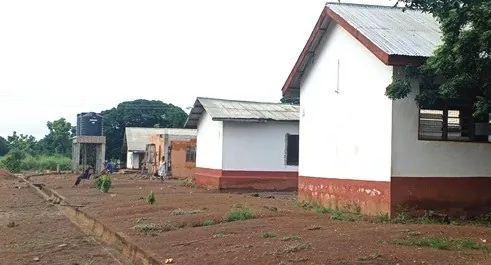
The Nkanchina Nursing College in Ghana's Northern Region, established to address the country's shortage of trained nurses in rural areas, has been operating out of a renovated former leprosy treatment centre for almost six years. The college's goal is to produce community health nurses for underserved areas. However, the current facilities have raised concerns about their adequacy for providing the necessary clinical and theoretical training.
The college's infrastructure has been described as overstretched, with students attending lectures in buildings that were once used for leprosy treatment. This has sparked doubts about whether the physical environment is suitable for nursing students' training. Furthermore, the college's diploma accreditation has been delayed, leaving uncertainty about the validity of the qualifications that graduating students will receive.
Community health nursing colleges like Nkanchina play a crucial role in addressing staffing gaps in Ghana's rural healthcare facilities. These colleges aim to produce nurses who understand the local terrain and are more likely to stay in the area after training. However, if the institution meant to produce these nurses is under-resourced and its certificates are not formally recognized, it may have knock-on effects on the pipeline of new nurses for rural clinics.
Both the college's management and students have called for urgent infrastructure development to enable effective teaching and learning. However, it is unclear what specific developments are required, such as new classroom blocks, dormitories, laboratories, or clinical training spaces, or what the estimated cost and proposed funding sources are.
The source report does not specify which body is responsible for granting the diploma accreditation or provide a timeline for when this might be resolved. Additionally, it is unclear how many students are currently enrolled, how many cohorts have already graduated without accredited diplomas, or what arrangements have been made for those graduates in the meantime.
Chale News has reached out to the Ministry of Health, the Nursing and Midwifery Council of Ghana, and the Ghana Education Trust Fund (GETFund) for comment on the accreditation timeline and any funding commitments toward upgrading the Nkanchina campus. The article was produced with AI-assisted drafting from the sources listed, and updates will be provided with any response received.
For now, students at Nkanchina continue their studies in a facility whose history as a leprosy treatment centre contrasts with its current mission of training the next generation of rural health workers. No confirmed date has been given for when the mismatch between purpose and infrastructure will be resolved, leaving the college's future and its students' qualifications uncertain.
Key points
- The Nkanchina Nursing College in Ghana's Northern Region has been operating out of a former leprosy treatment centre for almost six years.
- The college's diploma accreditation has been delayed, leaving uncertainty about the validity of the qualifications that graduating students will receive.
- Urgent infrastructure development has been called for to enable effective teaching and learning at the college.