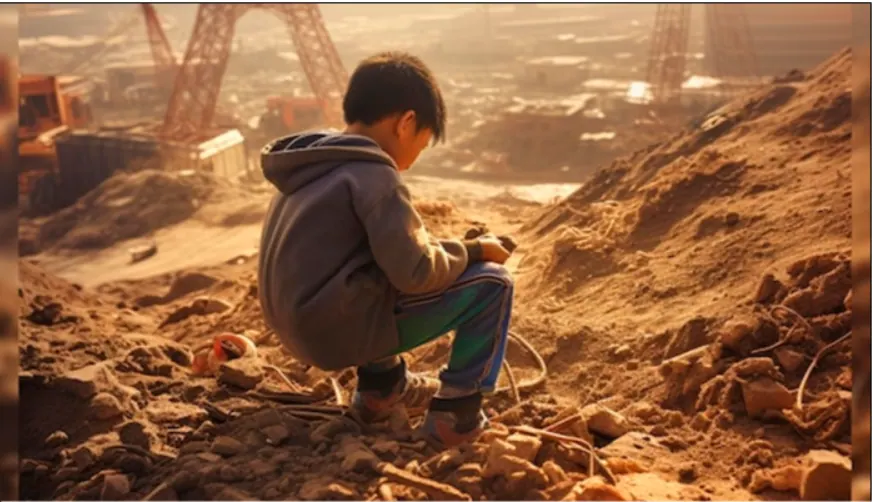
A recent report by the United Nations High Commissioner for Refugees (UNHCR) has highlighted a concerning trend in the education of refugee children worldwide. According to the report, out of 13 million refugee children of school age, 5.8 million were not attending any school in 2025, which translates to 44% of refugee children being out of school. This situation is particularly alarming as it indicates that nearly one in two refugee children globally lacks access to education.
The UNHCR report also reveals a significant decline in school enrollment rates as refugee children grow older. While 65% of refugee children of primary school age are enrolled in school, this number drops to 32% for secondary school age. This trend suggests that exile not only involves a geographical displacement but also a disruption in education, with many refugee children facing significant barriers to continuing their studies.
The report attributes the decline in education access partly to the contraction of international aid. The UNHCR, which had its funding cut by about a quarter in 2025, had received only 32% of the $8.5 billion needed for 2026 by July. This funding shortfall has led to the reduction of operations in several countries and the elimination of thousands of posts, with education being one of the affected areas.
The situation is particularly dire in countries hosting large numbers of refugees. For example, in Chad, which hosts over a million Sudanese refugees, educational services are overwhelmed, with some classes having over 100 students per teacher. The UNHCR had estimated that it could only provide basic assistance to four out of ten refugees in the country in the spring.
The UNHCR report also notes that refugee girls are disproportionately affected by the lack of access to education. While girls and boys have comparable enrollment rates in primary school, the gap widens as they get older, due to factors such as poverty, protection risks, early marriage, and economic pressures on families.
Despite these challenges, there are some positive trends. The report notes that access to higher education for refugees has reached its highest level ever, with 11% of eligible refugee youth enrolled in university or other higher education programs in 2025, up from 9% the previous year. This progress suggests that with sustained funding, initiatives such as scholarships, vocational training, and distance learning can help refugee youth access education.
However, the report's authors warn that the current funding shortfalls threaten to undermine progress made in education access for refugees. The UNHCR has estimated that it needs $370 million for education in 2026, a budget that is already 20% lower than in 2025. The agency's chief, Barham Salih, emphasizes that education is crucial for protecting refugee children and providing them with opportunities for autonomy and a better future.
Key points
- Almost half of refugee children globally lack access to education
- Refugee girls are disproportionately affected by lack of access to education
- Despite challenges, access to higher education for refugees has reached its highest level ever