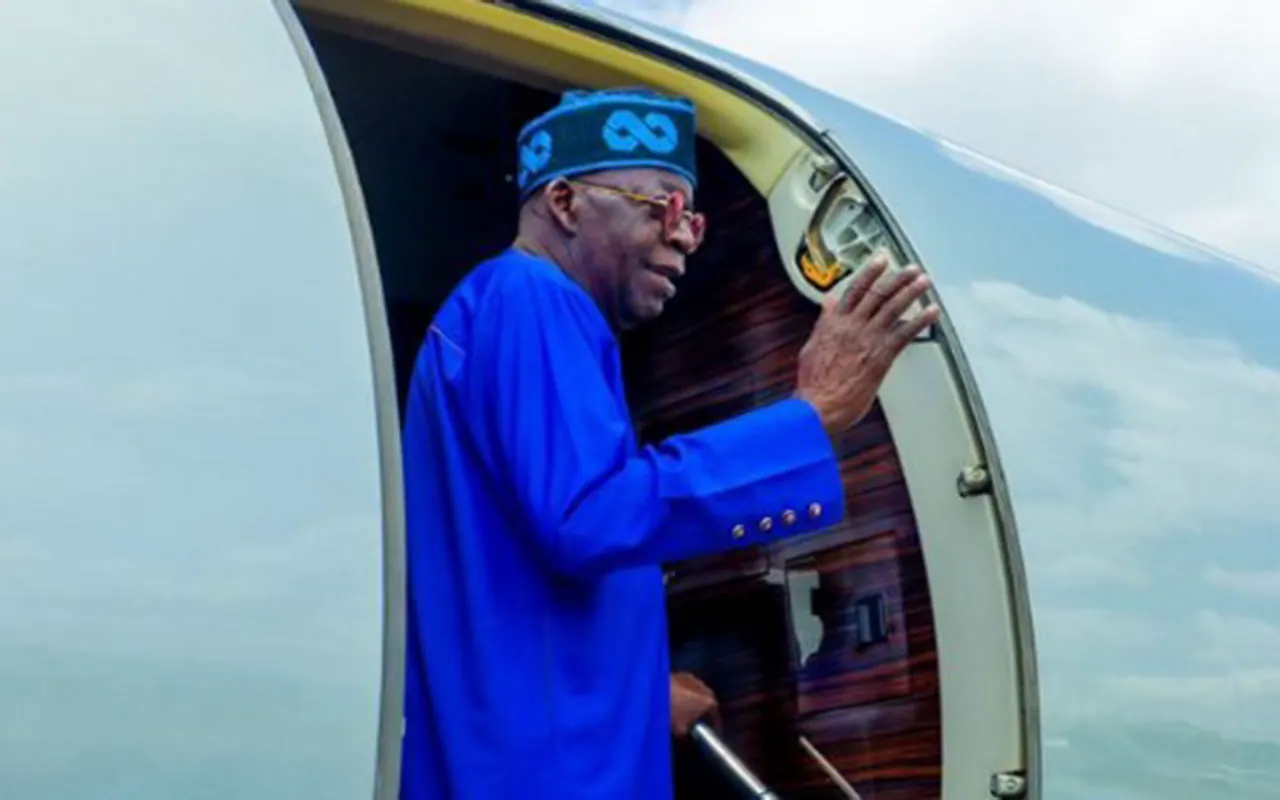
President Bola Tinubu is set to return to Nigeria this weekend after a four-week working vacation in London and Paris. Upon his arrival, he will be met with at least six unresolved crises that require immediate attention. These issues span various sectors, including his party, the economy, the National Assembly, labour, and security. The President's return is highly anticipated as he seeks to address these pressing matters.
One of the key issues awaiting Tinubu is an escalating crisis within his party, the All Progressives Congress (APC). The Progressive Governors' Forum (PGF) is at odds with Minister of the Federal Capital Territory, Nyesom Wike, over his cross-party Rainbow Coalition. The governors argue that this coalition threatens to undermine APC candidates in several states ahead of the 2027 elections. Wike had publicly named some governors who oppose the coalition, describing them as "politically lazy."
The crisis within the APC is further complicated by allegations that some aggrieved governors are exploring an alliance with the African Democratic Congress (ADC) presidential candidate, Atiku Abubakar, to counter Wike's influence. This development has raised concerns about the party's unity and its ability to present a strong front in future elections. It is expected that President Tinubu will meet with the APC governors to resolve the matter.
Another issue awaiting Tinubu is the constitutional questions surrounding his extended leave. Opposition figures, including Atiku Abubakar and Omoyele Sowore, have questioned the constitutionality of his four-week vacation, citing Section 145 of the Constitution. This section requires a written declaration to the National Assembly before a president proceeds on vacation. The presidency has maintained that Tinubu's vacation was a working one, and therefore, the 21-day absence does not apply.
The President also returns to a petrol price crisis, with pump prices ranging from N1,385 to N1,850 per litre, depending on the region. The Minister of State for Petroleum, Heineken Lokpobiri, has ruled out any government intervention, describing the market as "completely deregulated." The downstream regulator has similarly insisted that pricing is governed by "unrestricted free market" provisions in the Petroleum Industry Act.
Labour unions have given the Federal Government a deadline of September 30 to address their demands, including stabilising petrol prices at N500 per litre, announcing an immediate wage award, and committing to a N500,000 minimum wage. The Nigeria Labour Congress has backed these demands as "realistic and long overdue." The Academic Staff Union of Universities has also threatened to resume its suspended strike over unpaid salaries.
Additionally, the President will have to address the issue of custodial deaths, particularly in Minna. This and other pressing matters will require his immediate attention upon his return. The President's ability to effectively address these challenges will be crucial in determining the success of his administration.
Key points
- President Tinubu faces six major challenges upon his return to Nigeria.
- The crises include a party crisis, constitutional questions, petrol price hikes, labour demands, and security issues.
- The President's response to these challenges will be crucial in determining the success of his administration.