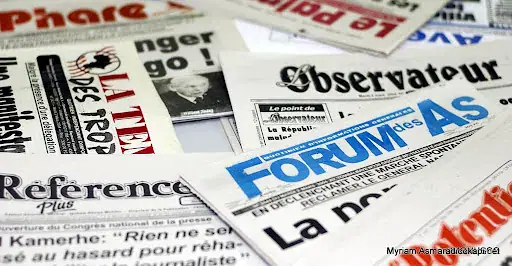
The situation in the Democratic Republic of Congo (DRC) continues to deteriorate, with the country's political and security landscape becoming increasingly complex. The emergence of the Front for the Refoundation of the Nation (FRN), led by former President Joseph Kabila, has added to the country's woes. According to L'Observateur, the FRN's entry into the scene has further complicated the already fragile situation. The multiple peace initiatives launched in Luanda, Nairobi, Dar es Salaam, and Doha have stalled, leaving the country in a state of political and security impasse.
The Congolese Bishops' Conference (CENCO) and the Ecumenical Council of Churches (ECC) have called for an inclusive national dialogue to address the country's challenges. They argue that a dialogue is the only way to address the truth and find a solution to the country's problems. The CENCO and ECC are supported by several partners who share their concerns about the situation in the DRC. The country's eastern regions continue to experience persistent suffering, and the dialogue is seen as a way to bring together all stakeholders and find a lasting solution.
Moïse Katumbi, president of the Ensemble pour la République party and member of the Article 64 coalition, has announced plans to meet with former President Joseph Kabila in Goma. The meeting aims to promote an inclusive national dialogue that involves all stakeholders, including armed groups. The coalition wants to expand its advocacy for a national dialogue that brings together all Congolese stakeholders. However, the government has reacted strongly to the coalition's plans, warning that any meeting with "the enemy" without government approval will be considered a serious offense.
The government has taken a firm stance against the coalition's plans, with Interior Minister Jacquemin Shabani warning that anyone who meets with "the enemy" without government approval will face sanctions. According to Article 192 of the Penal Code, those who engage in such activities will be punished. The government's reaction highlights the challenges facing the country's peace processes and the difficulties of bringing together different stakeholders.
The security situation in the DRC remains a major concern, with the FARDC's spokesperson, General-Major Sylvain Ekenge, revealing that the army is facing significant challenges. The general's statements corroborate President Félix Tshisekedi's concerns about the need to reform the army's integration mechanisms. The case of General François Kamanzi's defection to the FRN highlights the fragility of military integrations and the need for strict loyalty guarantees.
On the international stage, the DRC's Foreign Minister, Thérèse Kayikwamba Wagner, has met with her French counterpart, Jean-Noël Barrot, in Paris. The two ministers discussed ways to strengthen bilateral cooperation and address security challenges in the DRC's eastern regions. The DRC has officially requested French support for the renewal of the MONUSCO mandate. Wagner also denounced the lack of accountability mechanisms in the implementation of the Washington and Doha agreements.
The DRC's Foreign Minister has also expressed concerns about the presence of Rwandan troops on Congolese territory, which she sees as a major obstacle to the neutralization of the FDLR. The minister's statements highlight the complexities of the security situation in the DRC and the need for international cooperation to address these challenges. The situation in the DRC remains complex, with multiple stakeholders and interests at play.
Key points
- The situation in the DRC remains complex due to ongoing political and security challenges.
- The country's peace processes face significant challenges, including the government's reaction to the Article 64 coalition's plans.
- The DRC has requested French support for the renewal of the MONUSCO mandate.