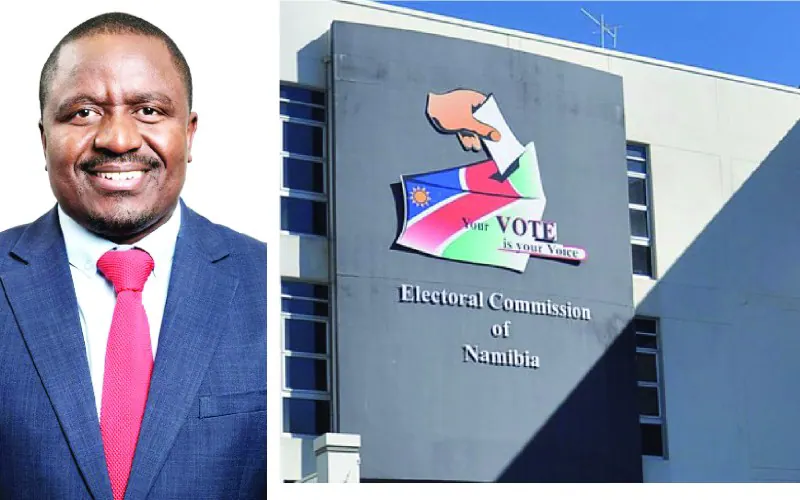
Newly appointed Electoral Commission of Namibia (ECN) chairperson Gerson Sindano has vowed to push for changes to electoral laws to address challenges experienced during previous elections. Sindano, who formally took office last week, said the ECN is currently working on electoral amendment bills which will be consolidated before being taken to political parties and other stakeholders for further input. The proposed changes aim to address current operational needs.
The Electoral Amendment Bill before Parliament proposes changes to the Electoral Act, including provisions on the eligibility of remunerated public servants and members of the National Council, regional councils and local authorities to contest National Assembly elections. It also deals with leave for public servants participating in elections and resignation requirements for those elected to the National Assembly. These changes are expected to improve the electoral process.
Sindano said the ECN wants to change how it engages political parties, moving away from meetings that are mainly called when an issue arises. The ECN plans to build capacity and foster better relationships with political parties. This move is part of the commission's reform push, which comes as it works to rebuild relations with political parties following controversy surrounding Sindano's appointment.
The appointment process was questioned by opposition parties, who raised concerns about Sindano's perceived independence and previous links to Swapo. IPC parliamentarian John-Louw Mouton defended his party's decision to walk out of parliament during the appointment process, citing the need for the ECN to be seen as impartial. The walkout initially left the National Assembly without the required quorum to decide on Sindano's appointment.
Sindano said he did not take the parliamentary disagreement personally, describing it as part of Namibia's democratic process. He emphasized that his task now is to engage those who opposed his appointment and demonstrate through the ECN's work that the commission would act impartially. Sindano aims to convince the nation that the ECN will work in the best interests of all Namibians.
To achieve this, Sindano announced plans to strengthen voter and civic education, including youth ambassador programmes and wider outreach beyond Windhoek. The ECN aims to reach out to the whole nation, not just the capital city. This initiative is part of the commission's efforts to promote a more inclusive and informed electoral process.
Sindano also pointed to political party agents at polling stations as one of the safeguards in Namibia's electoral system. He said the commission would continue to discharge its constitutional mandate "without fear of favour" and in an impartial manner. The ECN's reform push and engagement with stakeholders are expected to enhance the credibility of the electoral process.
Key points
- The ECN plans to push for changes to electoral laws to address challenges experienced during previous elections.
- The Electoral Amendment Bill proposes changes to the Electoral Act, including provisions on the eligibility of public servants to contest National Assembly elections.
- Sindano aims to strengthen voter and civic education, including youth ambassador programmes and wider outreach beyond Windhoek.