The Sinaloa cartel, a prominent Mexican crime syndicate, has been found to be operating in South Africa, using the country as a base for industrial-scale methamphetamine production. According to investigators, the cartel has established a network of labs across southern Africa to supply the lucrative Australian market. The methamphetamine produced in these labs is sold at a significantly higher price in Australia and New Zealand compared to the United States.
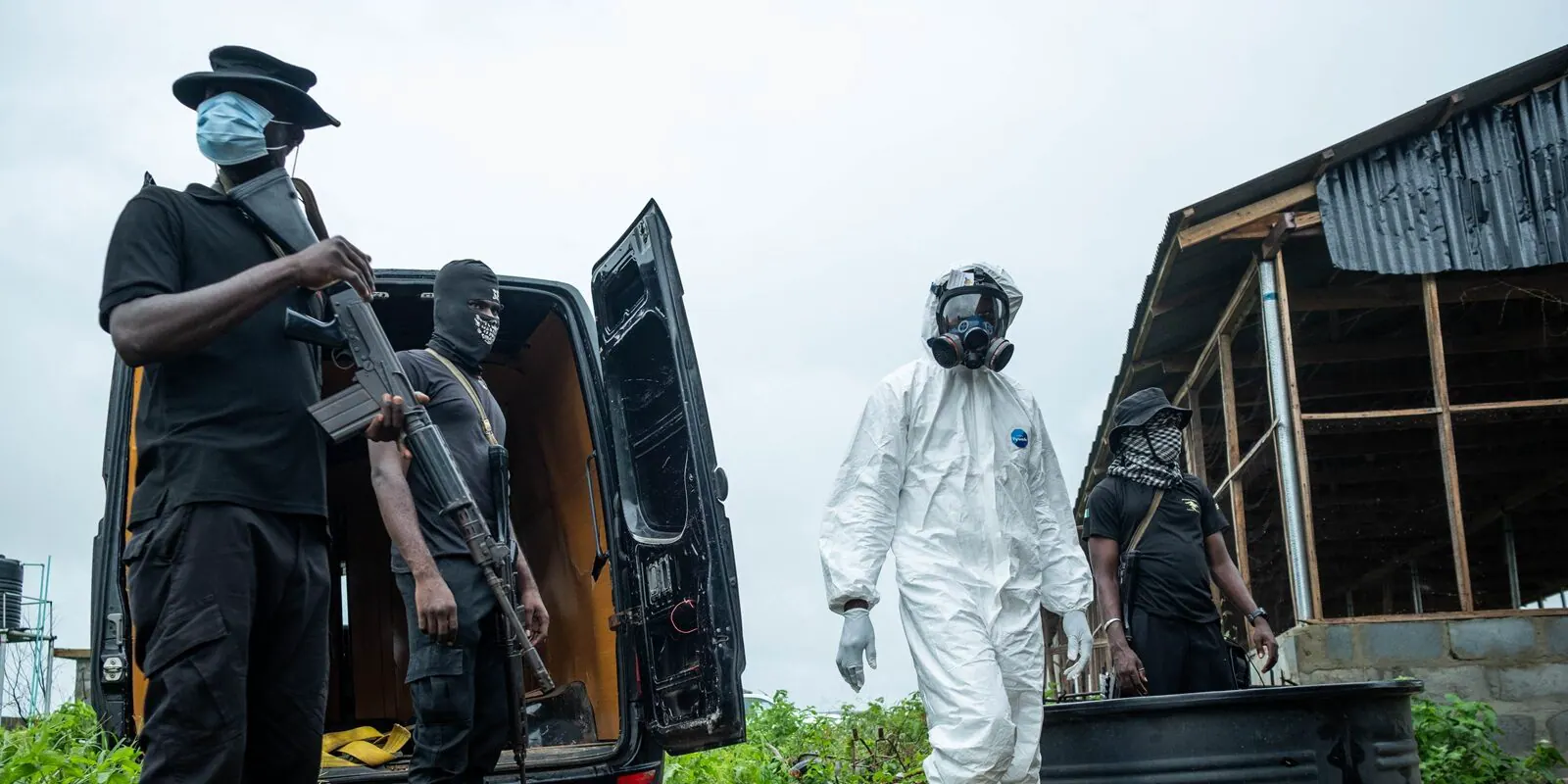
A significant bust was made in May when police raided a game farm near Swartruggens, approximately two and a half hours northwest of Johannesburg. The lab, which was capable of producing five tons of methamphetamine a month, was discovered to be part of the Sinaloa cartel's operation. The investigation revealed that the lab was established by chemists sent by the cartel, who arrived in South Africa on three-month tourist visas.
The Swartruggens lab was just one of at least seven discovered across southern Africa in the last two years. Investigators believe that the cartel chose South Africa due to its strategic location, with easy access to global sea and air connections, as well as corruption. A security source told AFP that South Africa is the "perfect place" to produce methamphetamine.
The methamphetamine produced in these labs is transported to Australia and New Zealand through various means, including sea and air routes. A seizure in January showed that the drug is not just being smuggled in by sea, with a 32-year-old woman arrested at Sydney airport on a flight from South Africa with 39 kg of powdered meth in her bags.
The modus operandi of the Sinaloa cartel in South Africa is similar to that in Nigeria, where four Mexicans have been arrested in busts of meth labs this year. However, the numbers are far higher in South Africa, with 16 Mexicans arrested in swoops on labs since 2024. The first lab bearing the cartel's hallmarks was discovered in the farming town of Marble Hall in 2020.
The cartel's operation in South Africa involves approaching farmers who are struggling, often with offers to rent out their land. The Afrikaner family, who owned the game farm where the Swartruggens lab was discovered, had previously been before the courts for renting out land where the hypnotic sedative mandrax was being illegally made.
The investigation into the Sinaloa cartel's operation in South Africa is ongoing, with police working to uncover the full extent of the supply chain. The use of industrial-scale equipment and chemicals imported from China and India has raised concerns about the cartel's activities in the region.
Key points
- The Sinaloa cartel has established a network of labs across southern Africa to supply the lucrative Australian market.
- The cartel chose South Africa due to its strategic location and corruption.
- The investigation into the cartel's operation in South Africa is ongoing.