A massive industrial-scale methamphetamine laboratory, allegedly set up by the Mexican Sinaloa crime cartel, was busted on a game farm near Swartruggens, South Africa, in May. The lab, capable of producing five tonnes of the highly addictive drug a month, was worth around $1 billion wholesale in Australia. According to Brigadier Devon Naicker, head of the South African Narcotics Enforcement Bureau, the investigation is ongoing, and they are looking into whether the methamphetamine was supplied to Australia through the port of Durban.
The Swartruggens lab is one of at least seven discovered across southern Africa in the last two years, with police believing the Sinaloa cartel established a network of labs to supply Australia and New Zealand. The Australian police confirmed that they had identified increased targeting of Australia's illicit drug market by Mexican cartels. A seizure in January showed that the drug is not just being smuggled in by sea, with a 32-year-old woman arrested at Sydney airport on a flight from South Africa with 39 kilogrammes of powdered meth in her bags.
South Africa is considered the "perfect place" to produce methamphetamine due to its huge expanses to hide labs, global sea and air connections, and corruption. Nearly a third of the country's trade is with China and India, where the crucial chemicals used to make meth are sourced. The cartels' modus operandi involves approaching farmers who are struggling, and the Afrikaner family who owned the Swartruggens game farm had previously been before the courts for renting out land where the hypnotic sedative mandrax was being illegally made.
The Swartruggens lab was discovered after police arrested 13 people, including five Mexicans who were chemists, two Mozambicans, a Zimbabwean, and four South Africans. The Mexicans, who arrived on three-month tourist visas in March 2025, began cooking crystal meth shortly after their arrival. The lab used the P2P method, based on phenyl-2-propanone, with chemicals imported from China and India.
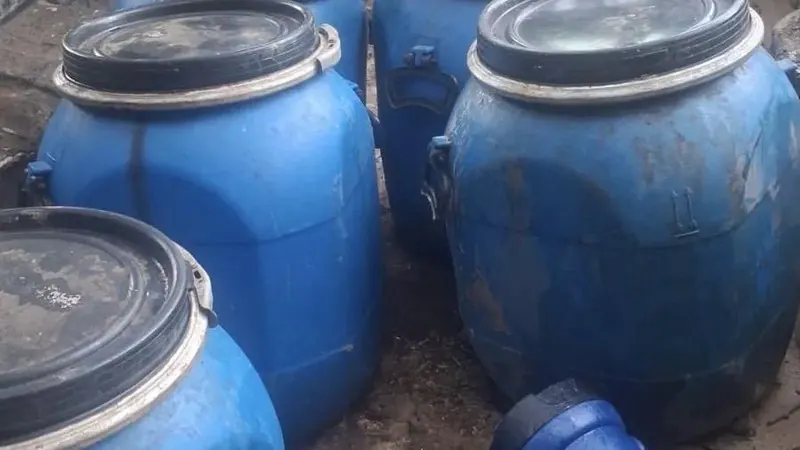
The Sinaloa cartel uses a distinctive method of manufacturing methamphetamine, involving large reaction tanks with a capacity of several hundred litres. Experts say that these tanks are handmade and cannot be found in any store. The cartels bring in their own boilermakers to build these kettles, making it a distinctive marker of their operations.
According to Naicker, high-level Mexicans often come in to set up the labs and leave other Mexicans behind to run the operation. In other cases, they would set it up, teach individuals how to go about doing the production, and only come up and check up on them. Locals would continue with the manufacturing, as found in the lab in Krugersdorp, which South African police dismantled in February 2024.
The investigation into the Swartruggens lab and other similar operations is ongoing, with police working to uncover the supply chain woven across southern Africa to feed Australian demand for the drug. The Australian market is huge, with methamphetamine being the most consumed illicit drug after cannabis, according to a 2024 report compiled with the US Drug Enforcement Agency.
Key points
- The Sinaloa cartel's $1 billion meth lab was busted on a game farm near Swartruggens, South Africa.
- The lab was capable of producing five tonnes of methamphetamine a month, worth around $1 billion wholesale in Australia.
- The investigation is ongoing, with police looking into the supply chain and connections between the lab and other similar operations in southern Africa.