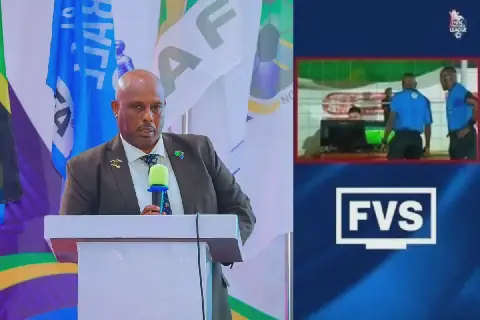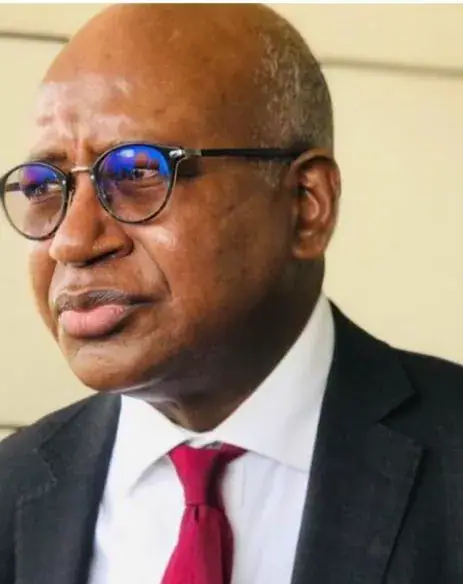
At the first edition of the Simandou Mining Summit in Conakry, Ismael Diakité, founder of DA Ressources Guinée, made a compelling case for diversifying Guinea's mining industry. With his background as an engineer and extensive experience in mining promotion and management, Diakité emphasized the need for a strategic shift towards critical minerals. He stressed that between geological indices and viable deposits, a rigorous exploration is necessary to bridge the gap. According to Diakité, "when we talk about mines, we talk about concrete deposits, and concrete deposits are not just indices or anomalies; there must be a reality, the existence of an economically exploitable deposit."
Diakité acknowledged that bauxite, iron, gold, and diamond are easier to exploit due to their accessibility. However, as Guinea approaches 200 million tons of bauxite exports, the expert emphasized the urgent need to diversify the mining sector for resilience. He noted that "diversification is imposed as an economic necessity and an important factor of resilience." Diakité highlighted that Guinea must make a clear choice, considering both economic gains and environmental impacts. The exploitation of massive mineral deposits has significant effects on the environment, which must be taken into account.
Strategically and geopolitically, Guinea's positioning in the global rush for transition energy materials is crucial. Diakité argued that diversifying the mining sector allows the country to align with the long-term vision of the Simandou 2040 program. One of the advantages of this approach is the financial and environmental accessibility of new mining lines. Diakité explained that "a small lithium mine has nothing to do with the impact of bauxite on the environment... we are not at the scale of a multi-billion dollar project, but at a scale of 200 to 400 million dollars."
In addition to economic benefits, Diakité emphasized that diversification is strategically beneficial for Guinea and geopolitically relevant. The global competition for critical minerals has sparked a geopolitical battle, and Guinea's positioning is advantageous. Diakité stated that "it is really time, and it is opportune, and Simandou 2040 lends itself to this." The program provides a broader perspective on the economic valuation of Guinea's potential, not just its mining resources.
Diakité's call for diversification is supported by the fact that new mining projects have a smaller environmental impact compared to large-scale bauxite mining. He stressed that "the digital industry and energy transition issues" make it essential to focus on critical minerals. By diversifying its mining sector, Guinea can take advantage of the current global trends and position itself for long-term economic benefits.
To achieve this strategic shift, Diakité emphasized the need for government investment in research to make data available to the public administration. He believes that the conditions are in place for this change, provided that the government takes concrete steps to support the mining sector's diversification. This would enable Guinea to capitalize on its mineral resources and create a more resilient economy.
The Simandou Mining Summit 2026 provided a platform for experts like Diakité to share their insights and recommendations for Guinea's mining sector. As the country looks to the future, the importance of diversifying its mining industry and focusing on critical minerals will be crucial for sustainable economic growth and environmental sustainability.
Key points
- Ismael Diakité calls for Guinea to diversify its mining industry, focusing on critical minerals, to ensure long-term economic benefits and environmental sustainability.