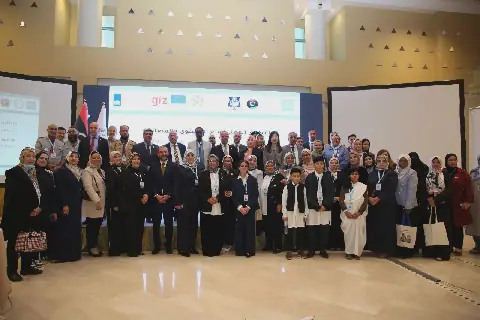
The State Interests and Governance Authority (SIGA) has commended the Ghana Meteorological Agency (GMet) for its progress in operational performance, efficiency, and governance. However, SIGA cautions that weak financial performance could undermine these gains. Professor Michael Kpessa-Whyte, Director-General of SIGA, noted that while GMet has made significant strides in strengthening operations and staff capacity, its financial and economic performance remains a major concern.
Professor Kpessa-Whyte made these remarks at the maiden Annual General Meeting of GMet, where he outlined five priority areas for improvement. These areas include stronger financial discipline and revenue mobilisation, modernisation of meteorological infrastructure, improved data systems and artificial intelligence, strengthened human and technical capacity, and enhanced performance management and accountability. He emphasized that GMet's mandate extends beyond weather forecasting, with critical services for sectors like agriculture, fisheries, and aviation.
The Director-General highlighted the importance of timely and reliable weather forecasts for informed decision-making in various sectors. He noted that investment in weather forecasting and early warning systems is crucial for safeguarding lives, livelihoods, and the national economy. GMet's services enable farmers to make informed planting decisions, help fishermen assess sea conditions, and support communities in preparing for extreme weather events.
Professor Kpessa-Whyte encouraged GMet to explore opportunities to provide specialised climate and meteorological services to institutional clients. This could generate additional revenue while ensuring public weather warnings remain accessible to all citizens. He also called for the effective implementation of revenue provisions under the Ghana Meteorological Agency Amendment Act, 2019 (Act 1002), which entitles GMet to receive portions of specified aviation-related charges and taxes.
On infrastructure development, Professor Kpessa-Whyte urged GMet to prepare a costed multi-year investment plan to identify critical gaps, priorities, and funding requirements. This plan should support investment in modern meteorological equipment, automated weather stations, and enhanced systems for processing and analysing weather data. He also encouraged the Agency to adopt artificial intelligence and machine learning to strengthen forecasting capabilities.
The Director-General emphasized the need for GMet to attract, train, and retain skilled scientists, forecasters, and data specialists to meet the demands of a modern meteorological service. While acknowledging GMet's achievements, Professor Kpessa-Whyte urged management and the governing board to address remaining weaknesses and sustain ongoing reforms. He noted that reliable weather information is becoming increasingly important in the face of growing climate-related and extreme weather risks.
Ultimately, Professor Kpessa-Whyte stated that the true measure of GMet's success is its ability to provide timely and accurate information that enables individuals and institutions to make informed decisions and prepare for weather-related hazards. He stressed that addressing financial sustainability and investing in infrastructure and human capacity are essential for GMet to achieve its mandate and contribute to national development planning.
Key points
- SIGA recommends stronger financial discipline and revenue mobilisation for GMet's sustainability.
- GMet needs to modernise its meteorological infrastructure and improve data systems.
- The Agency must attract and retain skilled scientists and forecasters to meet modern meteorological demands.
Reporting sources
- SIGA lauds GMet’s progress, calls for five key reforms · The Ghanaian Chronicle