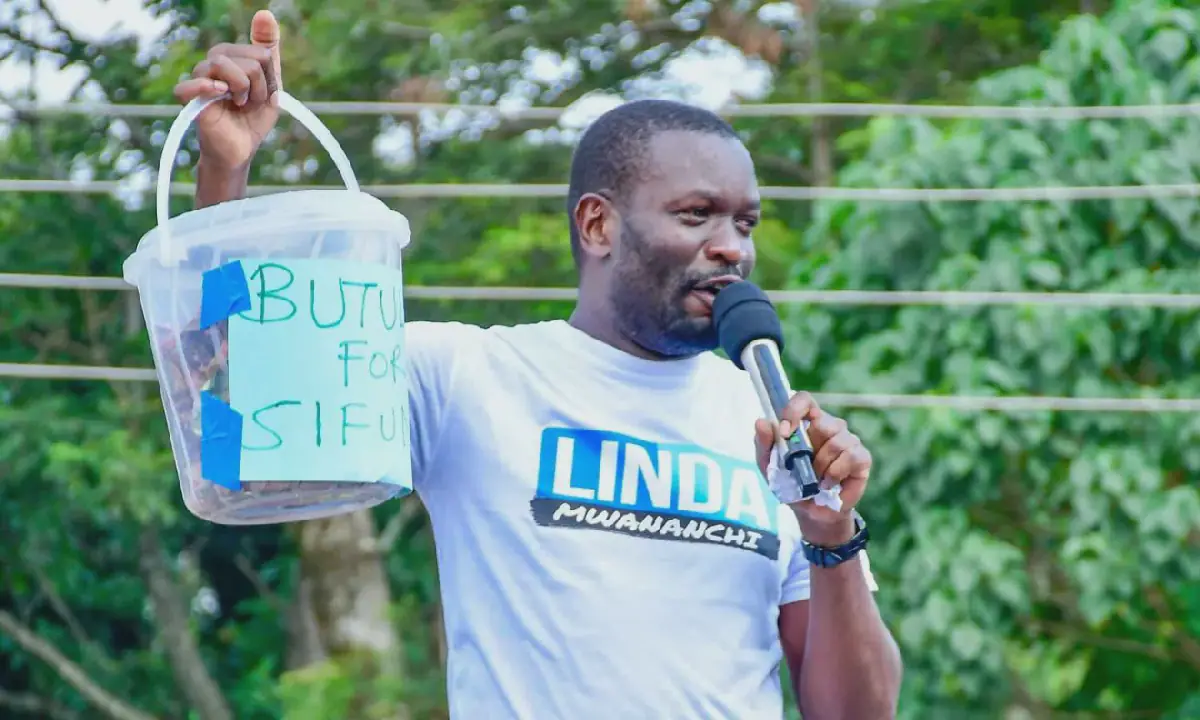
Senator Edwin Sifuna, leader of the Linda Mwananchi movement, has asked the High Court to dismiss a case seeking to compel him and other leaders to explain how funds collected from Kenyans through a Paybill number were used. The case, filed by Alan Masakhalia, demands that Sifuna and the Linda Mwananchi movement provide a full account of all contributions received through the Paybill number 3033049 and other fundraising channels.
Sifuna argues that the High Court has no jurisdiction to hear the case, as the issues raised should be addressed through dispute resolution mechanisms outlined in Article 21 of the Elections Campaign Finance Act. He claims that the case is an attempt to bypass these mechanisms and should be dismissed with costs awarded to him. According to the Act, anyone can file a complaint with the Independent Electoral and Boundaries Commission (IEBC) alleging a breach of its provisions.
The IEBC can then take various actions, including issuing a formal warning, imposing a fine, or disqualifying a candidate or party from campaigning for a specified period. Masakhalia, who contributed Sh55 to the Linda Mwananchi project, wants the court to determine the legal obligations associated with funds collected from the public. He also seeks a ruling on what legal actions can be taken if the project is abandoned, redirected, or changed from its stated purpose.
Sifuna launched the Paybill number on July 21, 2026, urging Kenyans to contribute to the Linda Mwananchi movement. The movement's goal is to support Sifuna's presidential bid in 2027. Masakhalia, however, is concerned that Sifuna may decide not to run for president, transfer his support and the infrastructure built through the project to another candidate, or use the funds for a different purpose.
The case raises questions about the accountability and transparency of funds collected from the public for political campaigns. Sifuna's lawyers argue that the dispute should be resolved through the IEBC, while Masakhalia believes that the court has a role in determining the legal obligations of the parties involved. The court's decision will have implications for future cases involving funds collected for political campaigns.
The Linda Mwananchi movement has gained significant attention in Kenya, with many Kenyans contributing to the project through the Paybill number. Sifuna's decision to seek dismissal of the case suggests that he is keen to avoid further scrutiny of the movement's finances. The court's ruling will provide clarity on the legal obligations of political candidates and movements when collecting funds from the public.
The case has sparked a debate about the need for greater transparency and accountability in Kenya's political campaigns. As the country prepares for the 2027 general elections, the issue of campaign finance is likely to become increasingly important. The court's decision in this case will provide guidance on how candidates and movements should handle funds collected from the public.
Key points
- Sifuna argues that the High Court has no jurisdiction to hear the case.
- The case raises questions about the accountability and transparency of funds collected from the public for political campaigns.
- The court's decision will have implications for future cases involving funds collected for political campaigns.
Reporting sources
- Sifuna ataka kesi ya pesa za Linda Mwananchi itupwe · taifaleo.nation.co.ke