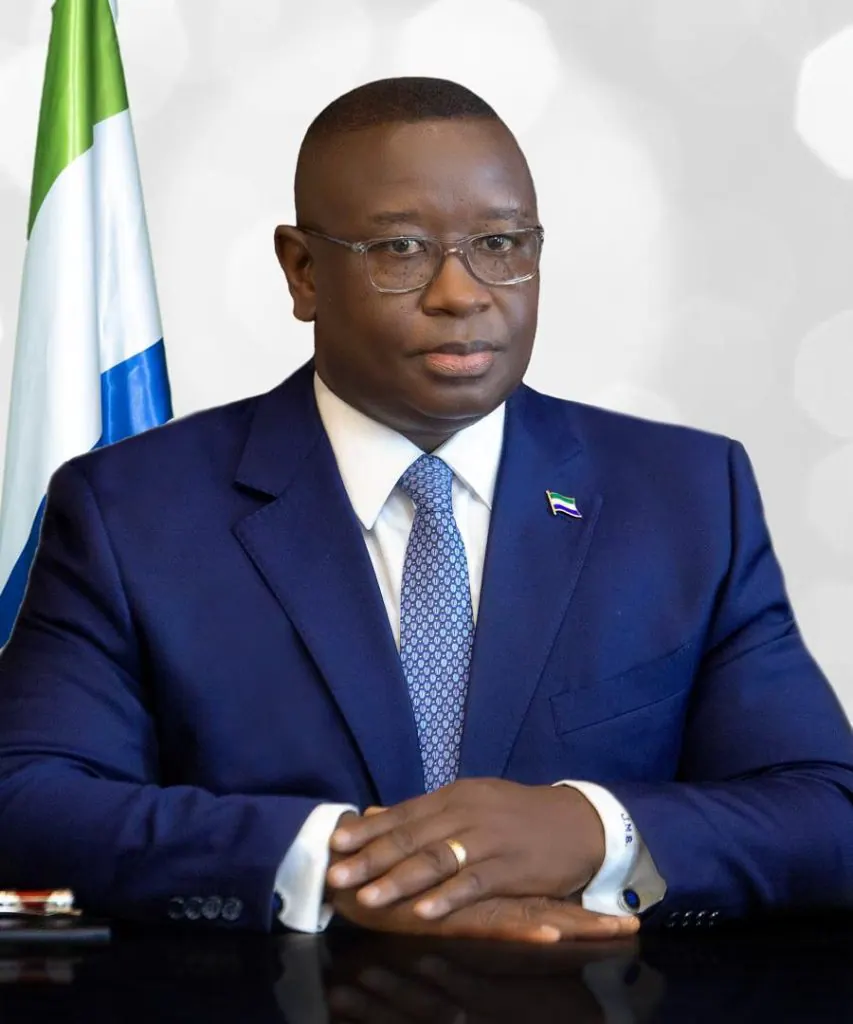
Sierra Leonean President Julius Maada Bio has called for fundamental reform of the United Nations Security Council, emphasizing that Africa's exclusion from permanent representation undermines the legitimacy and effectiveness of the global body. Speaking at the 81st session of the UN General Assembly in New York, Bio argued that the current composition of the Security Council reflects the post-World War II era, rather than the world as it exists today. He stressed that Africa, home to over 1.6 billion people, continues to have no permanent seat on the Council.
Bio linked Africa's representation at the UN to addressing some of the world's major challenges, including peace, climate, food, energy, and technology. He asserted that no durable global solution can be built without African leadership. Sierra Leone, which coordinates the African Union Committee of Ten on UN Security Council reform, is advocating for two permanent seats and five non-permanent seats for African countries. This push for reform aims to give Africa a stronger voice in global decision-making.
The Sierra Leonean leader expressed concern over the prolonged negotiations on reform, which have yet to produce the expected outcome. He called for concrete progress before the conclusion of the current General Assembly session, emphasizing the need for a consolidated model. Bio reflected on Sierra Leone's experience as a member of the Security Council in 2024 and 2025, where the country sought to promote dialogue and cooperation.
Bio stated that meaningful representation should translate into changes in international decision-making and improvements in people's lives. He argued that the imbalance is not limited to the Security Council, citing similar concerns over representation within international financial institutions. This highlights the need for broader reforms to address global disparities.
The President connected Sierra Leone's position on global reform to the historical experiences of African countries. He noted that Sierra Leone's legacy continues to be reflected in enduring disparities in wealth, power, and opportunity across the world. Bio emphasized that the issue should be approached not as a plea for charity but as a call for acknowledgement, formal apology, and fair redress.
Bio stressed that Sierra Leone would continue to pursue its demands for historical justice, without seeking preferential treatment. He highlighted the importance of African leadership in addressing global challenges and the need for the continent to have a stronger voice in international decision-making. This push for reform aims to address historical injustices and give Africa a rightful place in global affairs.
The call for UN Security Council reform is part of a broader effort to address global disparities and give Africa a stronger voice in international decision-making. Bio's statement reflects the concerns of many African countries, which feel that their interests are not adequately represented in global institutions. The issue remains a key challenge for the international community, with many countries pushing for reforms to address historical injustices and promote more equitable global governance.
Key points
- Sierra Leonean President Julius Maada Bio calls for Africa to have permanent UN Security Council seats.
- Bio argues that Africa's exclusion from permanent representation undermines the legitimacy and effectiveness of the UN Security Council.
- The push for reform aims to address historical injustices and give Africa a stronger voice in international decision-making.