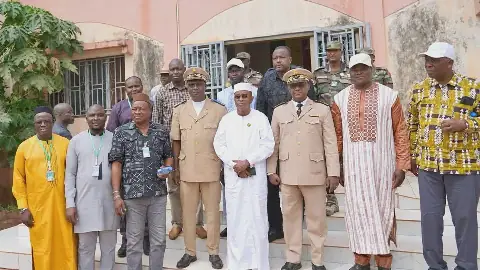
Sierra Leone's Minister of Trade and Industry, Alpha Ibrahim Sesay, recently spoke at the British House of Lords during a networking event for the World Coffee Alliance. He emphasized the need for a global partnership that links climate action, agricultural finance, and stronger supply chains. Sesay highlighted that producer nations should be viewed as partners in value creation, rather than just providers of raw materials. This call for collaboration comes as the global coffee and cocoa sectors face significant challenges.
Sesay's remarks were made after the first day of the World Coffee Innovation Summit (WCIS26) in London. He warned that isolated projects and short-term solutions are inadequate to tackle the interconnected issues affecting the sectors. The Minister stressed that millions of farming families rely on these markets, but production is increasingly threatened by climate change, low yields, fluctuating market demands, and unequal access to capital and technology. He noted that a coordinated response is necessary to address these challenges.
Minister Sesay identified three critical areas for enhanced cooperation: climate, capital, and supply chains. He urged for more comprehensive climate actions that go beyond simply providing seedlings, advocating for farm rehabilitation, improved soil and water management, and supporting regenerative farming practices. Additionally, he noted that forests, soil, water, and biodiversity should be regarded as valuable economic assets. This approach aims to create a more sustainable and resilient coffee and cocoa economy.
On the financial side, Sesay called for stronger connections between agricultural and climate finance. He suggested solutions like blended finance and risk-sharing instruments to attract more capital into the sector. The Minister also stressed the need for transparent and commercially inclusive supply chains. Reliable data and traceability should allow producers improved access to markets without adding additional burdens on farmers. This would help to create a more equitable and efficient market.
Minister Sesay urged a shift from fragmented efforts to cohesive national systems and from short-term transactions to sustainable partnerships. He asserted that producer countries must play a crucial role in securing the future of global coffee and cocoa supplies. In Sierra Leone, these sectors present an opportunity to drive productive investments, enhance value addition, and boost farmers' returns. The Minister emphasized that these measures could help the country capture more value from its agricultural products.
Sesay declared that Sierra Leone is ready to be a dedicated partner in fostering a more resilient, inclusive, and competitive global coffee and cocoa economy. He is leading Sierra Leone's participation at WCIS26, which aims to deepen the country's ties with international investors, buyers, and development partners. The summit provides a platform for Sierra Leone to showcase its potential and attract investment in the coffee and cocoa sectors.
The World Coffee Innovation Summit (WCIS26) is taking place in London, bringing together stakeholders from across the globe to discuss the challenges and opportunities in the coffee and cocoa sectors. Minister Sesay's participation and advocacy for international collaboration highlight Sierra Leone's commitment to being a key player in the global coffee and cocoa economy. The country's efforts to enhance its presence in these sectors are expected to have a positive impact on its economy and farmers.
Key points
- Sierra Leone's Trade Minister Alpha Ibrahim Sesay calls for global partnership on coffee and cocoa, focusing on climate action, finance, and supply chains.
- The Minister emphasizes the need for a coordinated response to challenges facing the sectors, including climate change, low yields, and unequal access to capital and technology.
- Sesay advocates for stronger connections between agricultural and climate finance, and transparent and commercially inclusive supply chains.