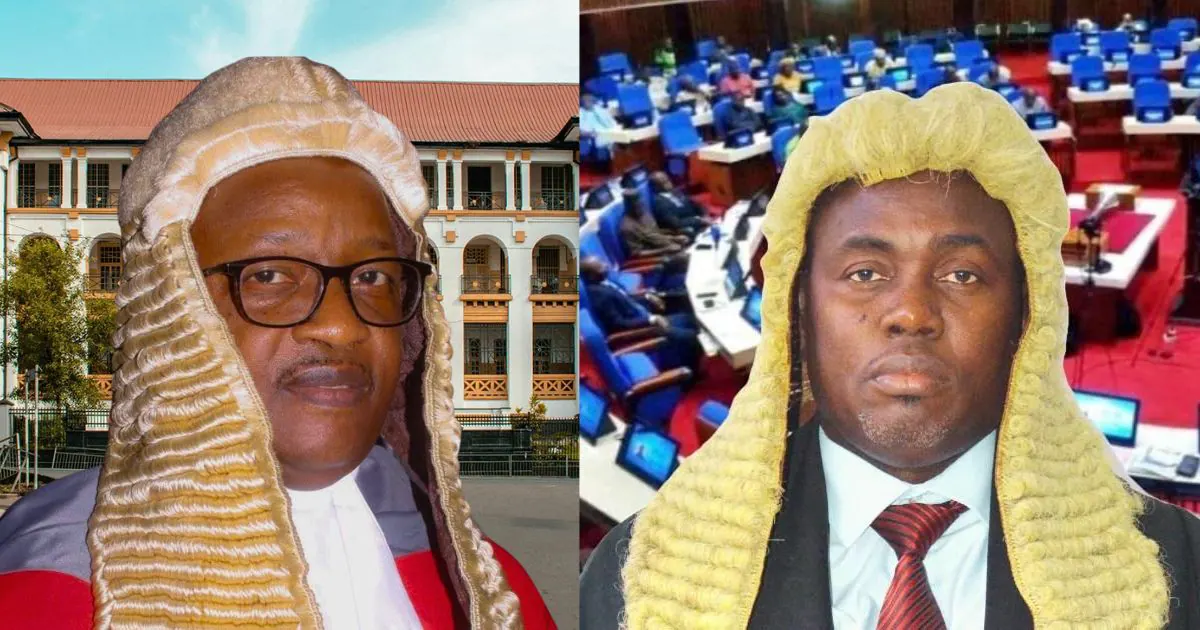
The Supreme Court of Sierra Leone has announced that it will hear all matters related to the Constitutional Amendment Bill 2025 on October 7, 2026. This development has significant implications for the country's constitutionalism, as the court's decision will determine whether the bill was passed in accordance with the Constitution. The bill's passage has been disputed, with some arguing that it did not meet the required two-thirds majority of parliament members. The court's decision will have far-reaching consequences for Sierra Leone's governance and stability.
The 1991 Constitution of Sierra Leone establishes the supremacy of the Constitution and creates a framework that restrains the government and the people. Section 171(15) affirms the Constitution as the grundnorm, the fundamental standard from which all other laws derive their validity. The Constitution limits the powers of the three organs of government, with the Executive responsible for enforcing the law, the Legislature making laws, and the Judiciary interpreting the law. Citizens are also bound by Section 13(a) to abide by the Constitution. The Supreme Court has original and exclusive authority for judicial review under Section 124.
The Constitutional Amendment Bill 2025 has been brought before the Supreme Court through three separate petitions. One petition was filed by the opposition All People's Congress party (APC), another by a sitting member of parliament of the APC, and a third by the President seeking a judicial opinion. The petitions all touch on the central question of whether the bill was passed by the prescribed method of the Constitution, i.e., by a two-thirds majority of the members of Parliament. The Supreme Court is expected to take jurisdiction and consolidate these matters.
Sierra Leone's constitutional history shows that its four major amendments have been intertwined with political advancement. The 1961 Constitution brought independence, the 1971 Constitution transitioned the state to a republic, the 1978 Constitution established a one-party state, and the 1991 Constitution reintroduced multi-party democracy. The current bill advances a significant change at the representative level, from a parliamentary constituency-based system to proportional representation. This has led some to argue that the bill is a vehicle for political advancement.
The Supreme Court's decision will have significant implications for Sierra Leone's constitutionalism. The court's independence and fidelity to the Constitution are being closely scrutinized on an issue that touches the foundation of the nation. Failure by the Supreme Court to meet this test would open a floodgate of constitutional instability. On the other hand, a ruling to uphold the rigid two-thirds threshold would create the constitutional stability that no gun revolution has ever achieved.
The possible approaches to upholding the integrity of the two-thirds threshold under Section 108 have been categorized into three. The first is a rigid approach: a strict two-thirds of the members of parliament. The second is a middle-ground approach: two-thirds of occupied seats. The third is a dangerous and reckless approach: a simple majority or two-thirds of those present. The Supreme Court must decide which approach is reasonable and in line with the Constitution's text.
The Supreme Court's decision will define its constitutional legacy and have far-reaching consequences for Sierra Leone's governance and stability. The court's ruling will determine whether the Constitution's guardrail, the two-thirds threshold, will be upheld or undermined. The nation is closely watching the court's decision, which will either prove that the pen is mightier than the gun in a positive sense or open a floodgate of constitutional instability.
Key points
- The Supreme Court must uphold the rigid two-thirds threshold of the members of Parliament under Section 108 to protect the Constitution from being amended by the ordinary lawmaking process.