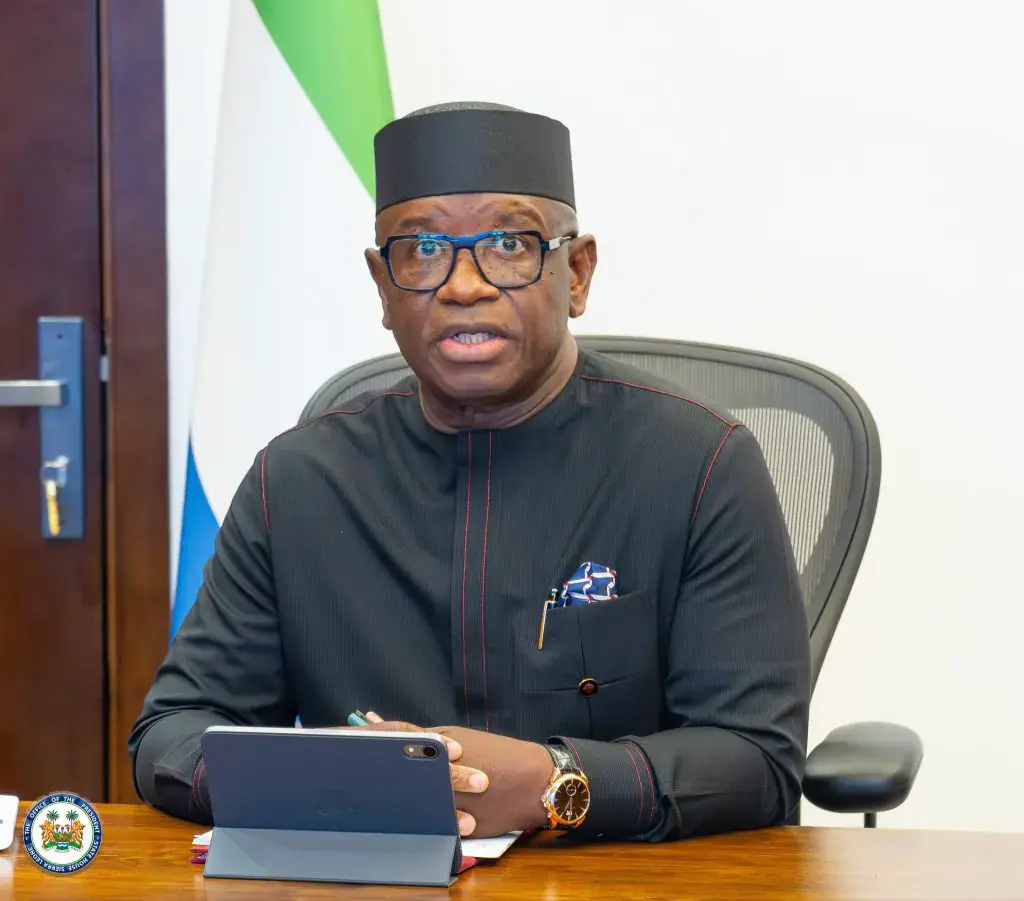
President Julius Maada Bio of Sierra Leone has taken a significant step in promoting global artificial intelligence governance by backing a French-led initiative for stronger safety standards, accountability, and international cooperation. This move places Sierra Leone at the forefront of African engagement in global AI governance. Bio's participation in a high-level virtual meeting convened by French President Emmanuel Macron on November 9, 2026, underscores the growing interest of African countries in shaping the rules for one of the world's most consequential technologies.
During the meeting, Bio outlined three priorities for international cooperation on frontier artificial intelligence security. These priorities include credible and common safety evaluation standards, clear accountability for developers and operators of advanced systems, and effective mechanisms for reporting serious incidents and sharing information about emerging threats. Bio welcomed the proposed Paris Declaration, supporting its focus on shared evaluation standards, accountability, and cooperation on incident reporting.
The high-level meeting brought together leaders and representatives from several countries, international institutions, and leading technology companies to discuss stronger cooperation on the safety and security of advanced artificial intelligence. Participants included representatives of major technology companies such as OpenAI, Anthropic, Microsoft, Mistral AI, and Hugging Face, alongside governments seeking greater international coordination on the evaluation and oversight of powerful AI systems.
For Sierra Leone, participation in the discussions represents an opportunity to contribute to international standards that will influence how artificial intelligence is developed, regulated, and deployed across the world. Although Africa is not yet a major centre for frontier AI development, the continent has a considerable stake in decisions that could affect its economies, institutions, and national security. Bio's intervention reinforces the importance of ensuring that developing countries are represented in discussions traditionally dominated by major technological powers.
As artificial intelligence becomes increasingly integrated into government services, education, healthcare, finance, and business, African countries face growing pressure to strengthen their regulatory capacity while pursuing the opportunities offered by technological innovation. Bio's priorities reflect growing concern that the rapid expansion of artificial intelligence could create serious risks without adequate mechanisms for determining responsibility when systems fail or cause harm.
The proposed Paris framework seeks to advance the objectives of common evaluation standards, greater transparency, clearer responsibilities, and improved coordination among governments, technology companies, and independent experts. This framework builds on growing international commitments to strengthen oversight of frontier artificial intelligence. In September 2026, Sierra Leone joined an initiative advanced by Norwegian Prime Minister Jonas Gahr Støre and Finnish President Alexander Stubb, calling for stronger safety protocols, independent testing, and international coordination.
The debate on AI governance extends beyond technological safety to questions of economic opportunity, digital sovereignty, and participation in international decision-making. Artificial intelligence offers considerable potential to improve agricultural productivity, healthcare delivery, financial inclusion, education, and public administration, but its expansion also presents challenges involving cybersecurity, data protection, misinformation, and unequal access to technology.
Key points
- President Julius Maada Bio of Sierra Leone has joined French President Emmanuel Macron in calling for stronger international safeguards governing artificial intelligence.
- Bio outlined three priorities for international cooperation on frontier artificial intelligence security, including credible safety evaluation standards, clear accountability, and effective incident reporting mechanisms.
- The proposed Paris framework seeks to advance common evaluation standards, greater transparency, and improved coordination among governments, technology companies, and independent experts.