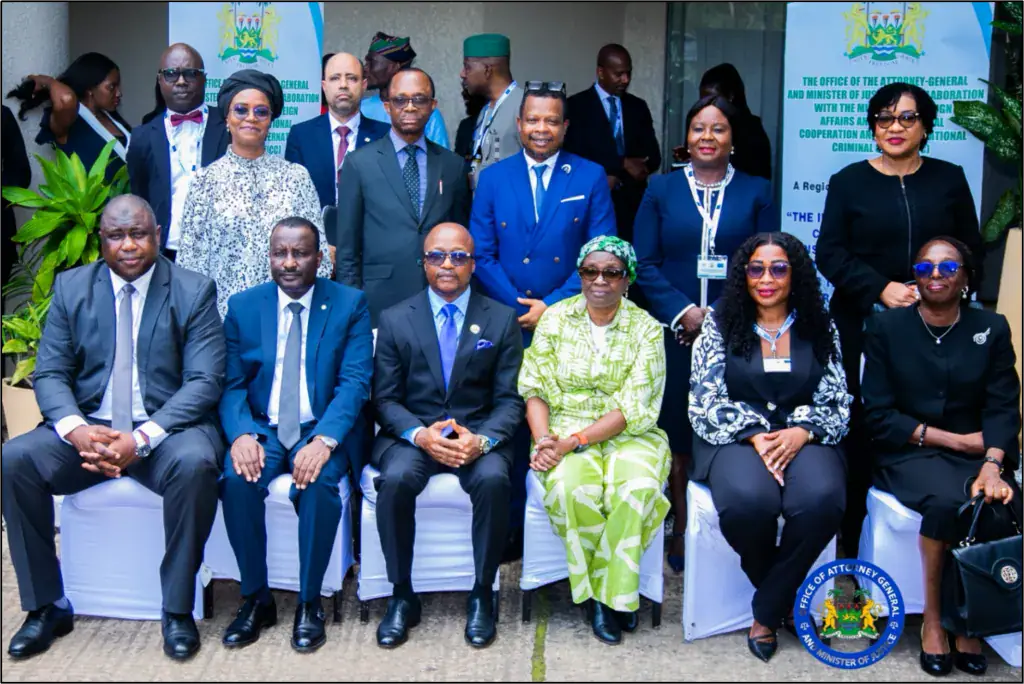
Sierra Leone's Attorney General and Minister of Justice, Alpha Sesay, has reaffirmed his country's commitment to the International Criminal Court (ICC) and called for increased international collaboration to combat impunity for grave crimes. Sesay made these remarks at a two-day regional seminar in Freetown, organised by his office, the Ministry of Foreign Affairs, and the ICC. The seminar focused on the partnership between the ICC and national jurisdictions in addressing international crimes. Sesay highlighted the challenges facing the ICC, including sanctions and political pressure.
Sesay stressed that countries must fulfil their treaty obligations, referencing Article 127 of the Rome Statute, which outlines the withdrawal process and its legal consequences. He also reflected on Sierra Leone's civil war and the establishment of the Special Court for Sierra Leone in 2002. Sierra Leone ratified the Rome Statute in September 2000, and Sesay emphasised the importance of accountability, asserting that "no one is above the law." The Attorney General urged states to strengthen their domestic institutions and legal frameworks to facilitate the ICC's work.
Judge Reine Alapini-Gansou, the ICC's Second Vice President, cautioned that sanctions and political pressures could threaten the Court's independence and effectiveness. She highlighted the dedication of the Court's personnel to serving victims and upholding the rule of law. Alapini-Gansou called for constructive dialogue and acknowledged Africa's contribution to international justice. The ICC relies heavily on states for vital tasks like suspect arrests and evidence gathering, as it does not possess a police force.
Abdoul Aziz Mbaye, the ICC Prosecutor's International Cooperation Adviser, emphasised that national jurisdictions hold primary responsibility for prosecuting international crimes. Mbaye highlighted that effective domestic justice systems are vital for accountability and the Court's overall mission. He spoke on behalf of Acting ICC Prosecutor Mame Mandiaye Niang. Dawda A. Jallow, Attorney General of The Gambia, called for stronger domestic justice systems, better witness protection, and enhanced regional cooperation.
The seminar also featured presentations from other officials, including Mohamed Ould Soueidatt, Mauritania's Minister of Justice, who discussed his country's judicial reforms and its 2014 cooperation framework with the ICC. Emilio Rosseetti, Deputy Head of the European Union Delegation to Sierra Leone, reaffirmed the EU's support for the ICC and acknowledged the legacy of the Special Court for Sierra Leone in advancing international criminal law.
Ibrahim Sorie Yillah, a member of the ICC Trust Fund for Victims Board, stressed the importance of offering meaningful reparations and sustainable support for victims to restore their dignity. The seminar underscored the necessity of fostering partnerships between the ICC and national jurisdictions, calling for cooperation and effective national legislation to uphold international law and ensure accountability for serious crimes.
The seminar concluded with a renewed commitment to international cooperation and the strengthening of domestic justice systems. Key stakeholders emphasised the importance of collaboration in fighting impunity for international crimes. The event highlighted the critical role of national jurisdictions in supporting the ICC's mission and promoting accountability for grave crimes.
Key points
- Sierra Leone reaffirms its commitment to the International Criminal Court and calls for increased global cooperation.
- The ICC faces challenges, including sanctions and political pressure, that threaten its independence and effectiveness.
- Strengthening domestic justice systems is crucial for accountability and the ICC's overall mission.
Reporting sources
- Sierra Leone Strengthens Commitment to ICC, Advocates for Increased International Collaboration · sierraleonetoday.co.com